Living with foot drop is often about solving small practical problems before they become daily frustrations. The right shoes, sensible home changes, suitable walking support and a clear plan for activity can make walking feel calmer and less effortful.
This guide covers the day-to-day side of foot drop: shoes, driving, falls prevention, staying active, emotional wellbeing and equipment choices. It is not a substitute for individual assessment, especially if your foot drop is new, worsening, linked to a stroke or neurological condition, or affecting your ability to drive safely.
Choosing shoes for foot drop
Shoes matter because foot drop changes how the front of the foot clears the floor. A shoe that is easy for someone else can be awkward if you are using a splint, have ankle weakness, or need to lift your knee higher to clear your toes.
What to look for
- A firm heel counter so the back of the shoe holds the heel securely.
- Secure fastening, such as laces or Velcro, so the foot does not slide inside the shoe.
- A wide opening to make it easier to get the foot and any support into position.
- A lightweight shoe, because heavy footwear can increase fatigue and toe drag.
- A supportive sole with enough grip for indoor and outdoor walking.
What often causes problems
- Floppy slip-ons that do not hold the heel or midfoot securely.
- Narrow openings that make it difficult to fit a splint or AFO.
- Heavy boots, especially if ankle lift is already weak.
- Worn soles, loose insoles or shoes that twist easily.
- Elastic laces if your splint needs a firm lace or strap attachment.
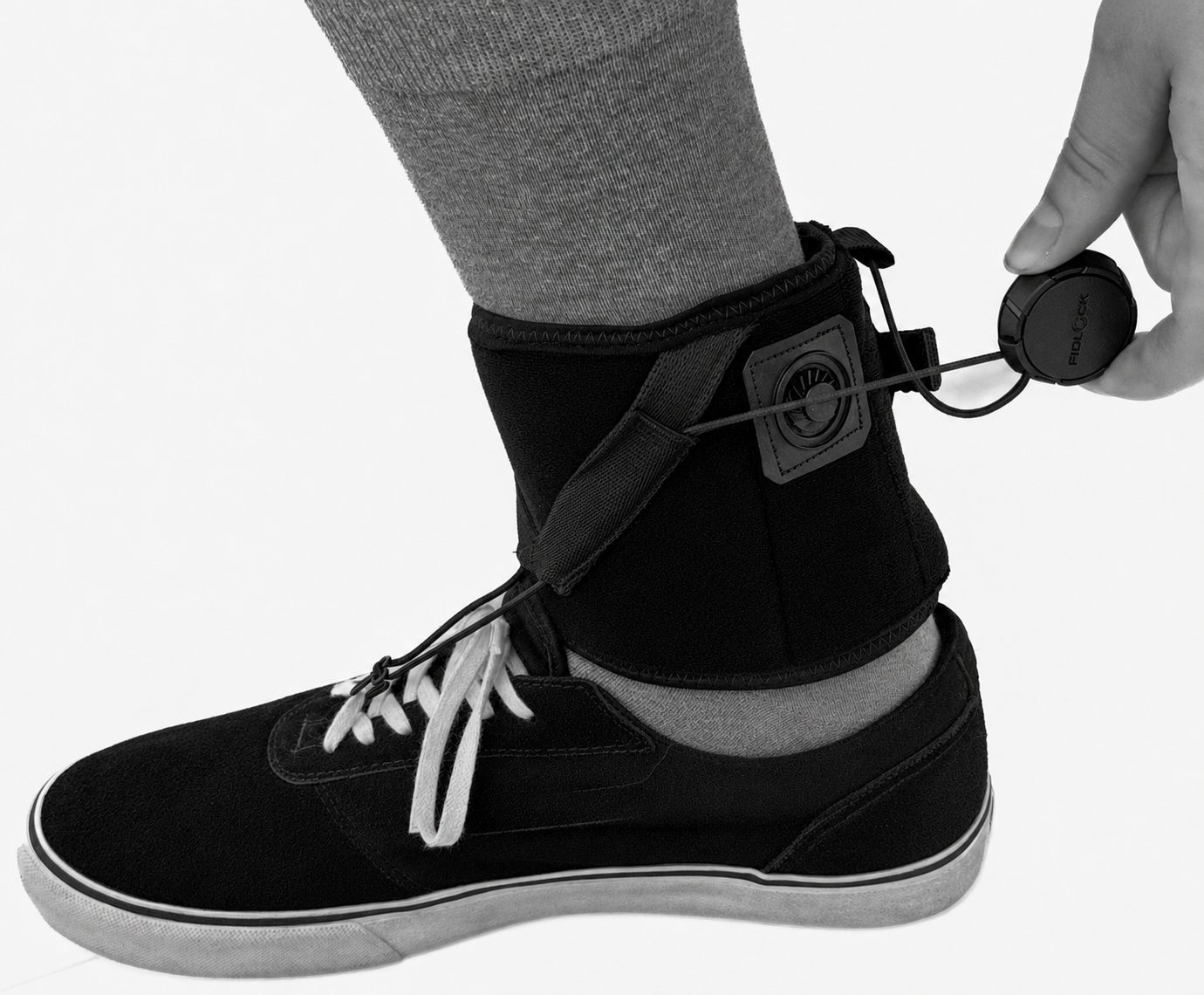
Rigid AFO splints can limit shoe choice because they take up more space inside the shoe. The OrthoPed Foot Drop Splint is designed to work with lace-up or suitable Velcro-fastening shoes, which may give some people more everyday footwear options. Suitability still depends on your foot shape, tone, walking pattern and clinical needs.
Driving with foot drop
Foot drop can affect driving if it changes your ability to move between pedals, control pressure smoothly, react quickly, or maintain a steady foot position. The risk is different for each person. Right-sided foot drop may affect accelerator and brake control directly. Left-sided foot drop may still matter in a manual car because of clutch use, and it can still be relevant if the underlying condition affects balance, coordination, vision, cognition or reaction time.
In the UK, DVLA guidance focuses on whether a medical condition or disability may affect safe driving. Some neurological conditions must be reported, and GOV.UK states that drivers can be fined if they do not tell DVLA about a condition that affects safe driving. GOV.UK's neurological guidance also says chronic neurological disorders that affect coordination or muscle strength may require DVLA notification.
If you have foot drop and drive, check the current GOV.UK medical conditions and driving guidance, ask your GP or consultant, and contact DVLA if you are unsure. Do not rely on general website advice for a personal driving decision.
Practical driving questions to ask
- Which foot is affected, and does it operate the pedals in your current car?
- Can you brake quickly and accurately every time, including when tired?
- Would an automatic car or adapted controls make driving safer?
- Has your clinician advised you not to drive, or to notify DVLA?
- Does your underlying diagnosis, such as stroke, multiple sclerosis or peripheral neuropathy, have specific DVLA rules?
Reducing falls at home
Toe catching is only one part of falls risk. Foot drop can combine with reduced balance, slower reactions, fatigue, poor lighting, clutter, medication side effects or fear of falling. A few home changes can make walking routes easier to manage.
- Remove loose rugs, curled mats and trailing cables from regular walking routes.
- Improve lighting on stairs, landings, hallways and the route to the bathroom at night.
- Use grab rails where they are clinically appropriate, especially around steps, toilets and entrances.
- Keep walkways clear of bags, shoes, pet bowls and low furniture.
- Wear secure footwear indoors if bare feet or slippers increase toe catching.
- Consider a home falls prevention assessment if you have had trips, near misses or a loss of confidence.

A physiotherapist can look at the person and the environment together: gait, strength, balance, sensation, footwear, stairs, walking aids and the layout of the home. That is often more useful than changing equipment in isolation.
Staying active with foot drop
It is understandable to move less when walking feels unpredictable, but activity is often part of keeping strength, stamina and confidence. The safest starting point depends on why you have foot drop and how stable your walking is.
Activities that may be easier
- Seated strengthening and ankle-control exercises.
- Water-based exercise, where buoyancy reduces load and fear of falling.
- Static cycling, if you can position the foot safely on the pedal.
- Short, planned walks with a suitable splint, AFO or walking aid.
What to build into practice
- Regular rests before fatigue causes toe drag to worsen.
- Walking routes with good lighting and predictable surfaces.
- Practice on turns, thresholds and uneven ground if these are your problem areas.
- A progression plan from a physiotherapist if you are recovering after stroke, surgery or nerve injury.
For specific movement ideas, see our foot drop exercises guide. Exercises are most effective when they are matched to the cause of foot drop, rather than copied as a generic routine.
Emotional wellbeing and confidence
Foot drop can be emotionally draining. People often describe frustration at walking more slowly, anxiety about falling, embarrassment about a high-stepping gait, or a tendency to avoid social plans because the route feels uncertain. Those reactions are common and reasonable.
Support can come from several places: your GP, physiotherapist, orthotist, consultant, local rehabilitation team, charities and peer communities. The Stroke Association and MS Society both provide information and community support for people living with neurological conditions that can include foot drop.
Confidence usually improves through safe repetition. That might mean practising one doorway, one step, one kerb or one short outdoor route until it feels less threatening, then gradually widening the challenge.
Support equipment
The right equipment depends on your strength, sensation, tone, skin health, footwear, hand function and goals. Some people need a rigid AFO. Others manage well with a lighter foot drop splint, walking aid, exercise programme or a combination of supports.
The OrthoPed Foot Drop Splint is a patented splint established by Claire Williamson, formerly Claire Narborough. It is designed to help people who find it difficult to lift the front of the foot and want lighter, lower-profile support for everyday walking with suitable shoes.
Could the OrthoPed splint help?
A lighter, lower-profile foot drop splint designed for everyday walking with lace-up or suitable Velcro shoes. £50 with VAT relief, free shipping to England, Scotland and Wales. Suitability depends on your foot shape, tone and walking pattern.
If walking aids are part of the picture, a home equipment assessment can check whether a stick, frame, rail or other aid is helping rather than creating awkward compensations. For rebuilding the walking pattern itself, see walking practice physiotherapy.
Frequently asked questions
What shoes are best for foot drop?
The best shoes for foot drop usually have a firm heel counter, secure fastening, a wide opening, a supportive sole and enough room for any splint or AFO. Floppy slip-ons, very narrow openings and heavy boots are often harder to manage.
Can you drive with foot drop?
Some people can drive with foot drop, but it depends on which foot is affected, whether safe vehicle control is maintained, the underlying medical condition and whether adaptations are needed. In the UK, check GOV.UK/DVLA guidance and speak to your GP or consultant about your own situation.
Does a foot drop splint help prevent falls?
A suitable foot drop splint can reduce toe catching for some people, which may reduce one cause of trips. Falls risk can also be affected by balance, strength, eyesight, medication, home hazards and confidence, so a full falls assessment is often helpful.
Get help with walking confidence
Mobile Physiotherapist provides home visits for rehabilitation, walking practice, falls prevention and equipment advice. We can help you choose practical next steps for safer daily movement.