Foot Drop Exercises — Physiotherapist-Recommended Rehabilitation
The most effective exercises for foot drop strengthen the dorsiflexor muscles, maintain ankle range of motion, stretch the calf, and improve balance and gait. These should be performed daily and adjusted to your ability level, ideally under the guidance of a physiotherapist.
Written by Claire Williamson, Chartered Physiotherapist (HCPC registered) and Director of Buzzy Bees Physiotherapy. Last updated: 26 May 2026.

Safety first
Foot drop has different causes, so not every exercise suits every person. Speak to a physiotherapist, GP or relevant medical professional before starting if your foot drop is new, worsening, linked with pain or numbness, or caused by a neurological condition. Stop any exercise that causes pain, marked fatigue, dizziness, new numbness or loss of balance.
Use a sturdy chair, worktop or another reliable support when standing. If you are at risk of falling, do balance and walking exercises only with supervision. Exercises should feel controlled and purposeful, not rushed.
Ankle dorsiflexion exercises
Dorsiflexion is the movement that lifts the front of the foot and toes towards the shin. These exercises are designed to wake up and strengthen the muscles at the front of the lower leg where appropriate.
Seated ankle pumps
Starting position: Sit upright on a chair with both feet on the floor. Keep the knee pointing forwards and the heel in contact with the floor.
Movement: Lift the toes and front of the foot towards you, then slowly lower back down. Move through the range you can control.
Repetitions and sets: Aim for 10 to 15 repetitions, 2 to 3 sets. Rest between sets if the muscle fatigues quickly.
What it should feel like: You may feel the muscles at the front of the shin working. The movement should be smooth, not forced.
Common mistakes to avoid: Do not lift the whole leg, twist the hip out, or use momentum to flick the foot.
Towel-assisted dorsiflexion stretch
Starting position: Sit with the leg supported in front of you. Place a towel around the ball of the foot, not around the toes alone.
Movement: Gently draw the towel towards you so the foot moves upwards. Keep the knee relaxed and avoid forcing the ankle.
Repetitions and sets: Hold for 20 to 30 seconds, repeat 2 to 4 times.
What it should feel like: A comfortable stretch around the calf or back of the ankle. It should not be painful or cause pins and needles.
Common mistakes to avoid: Do not pull aggressively, curl the toes tightly, or continue if sensation changes.
Resistance band dorsiflexion
Starting position: Sit with the leg out in front. Anchor a light resistance band in front of the foot and loop it over the forefoot. Only use a band if you can move the foot against light resistance without pain.
Movement: Pull the foot up towards you against the band, then return slowly. Keep the knee still and avoid rolling the ankle in or out.
Repetitions and sets: Start with 8 to 12 repetitions, 1 to 3 sets. Quality matters more than quantity.
What it should feel like: The front of the shin should work. Mild muscle effort is normal; cramp or pain is not.
Common mistakes to avoid: Do not use a band that is too strong. Do not let the band pull the foot sideways.
Heel walks, if able
Starting position: Stand near a wall, worktop or rail. This exercise is only suitable if you can lift the front of the foot and balance safely.
Movement: Lift the toes so you are standing more on your heels. Take a few small steps while keeping the toes lifted.
Repetitions and sets: Try 5 to 10 small steps, 1 to 3 times, only if safe.
What it should feel like: A strong but controlled effort in the front of the lower legs.
Common mistakes to avoid: Do not attempt this if it makes you unsteady. Avoid leaning backwards or locking the knees.
Calf and Achilles stretching
Tightness in the calf and Achilles tendon can make it harder to bring the foot up and may affect walking pattern. Stretching should be gentle, especially if you have altered sensation or a neurological condition.
Wall calf stretch
Starting position: Stand facing a wall with both hands on the wall. Place the affected leg behind you with the heel on the floor.
Movement: Bend the front knee and keep the back knee straight until you feel a stretch in the upper calf.
Repetitions and sets: Hold for 20 to 30 seconds, repeat 2 to 4 times.
What it should feel like: A stretch in the calf, not pain in the ankle or foot.
Common mistakes to avoid: Do not let the heel lift, the foot roll in, or the stretch become sharp.
Step calf stretch
Starting position: Stand on a step holding a rail. Place the ball of the foot on the step with the heel near the edge. Only do this if your balance is good enough.
Movement: Let the heel lower gently until a stretch is felt. To target the deeper soleus muscle, repeat with the knee slightly bent.
Repetitions and sets: Hold for 15 to 30 seconds, repeat 2 to 3 times.
What it should feel like: A controlled stretch through the calf and Achilles area.
Common mistakes to avoid: Do not bounce, force the heel down, or try this without a secure handhold.
Balance and proprioception
Foot drop often affects confidence and balance, not just ankle movement. Balance exercises should be scaled carefully and performed near support.
- Single leg stance with support: Stand near a worktop, lightly hold on, and practise taking more weight through the affected leg. If safe, briefly lift the other foot. Start with 5 to 10 seconds.
- Heel-to-toe walking: Walk slowly along a clear path, placing one foot in front of the other. Use a wall or rail if needed.
- Balance board work: This is advanced and should only be done if a physiotherapist has assessed that it is safe for you.
Gait re-training tips
Gait re-training means practising the walking pattern itself. It is most useful when done in short, focused sessions rather than only when you are tired or rushing.
- Conscious heel strike: Practise placing the heel down first if you can do this safely and without forcing the ankle.
- Mirror or video feedback: Watching your walking can help you notice toe drag, hip hiking, knee lifting or uneven step length.
- Low obstacle stepping: With support, practise stepping over very low objects to encourage foot clearance. This should not be done if it increases falls risk.
- Short, frequent practice: A few minutes of good-quality walking practice can be more useful than a long walk with poor control.
How a foot drop splint supports your exercises
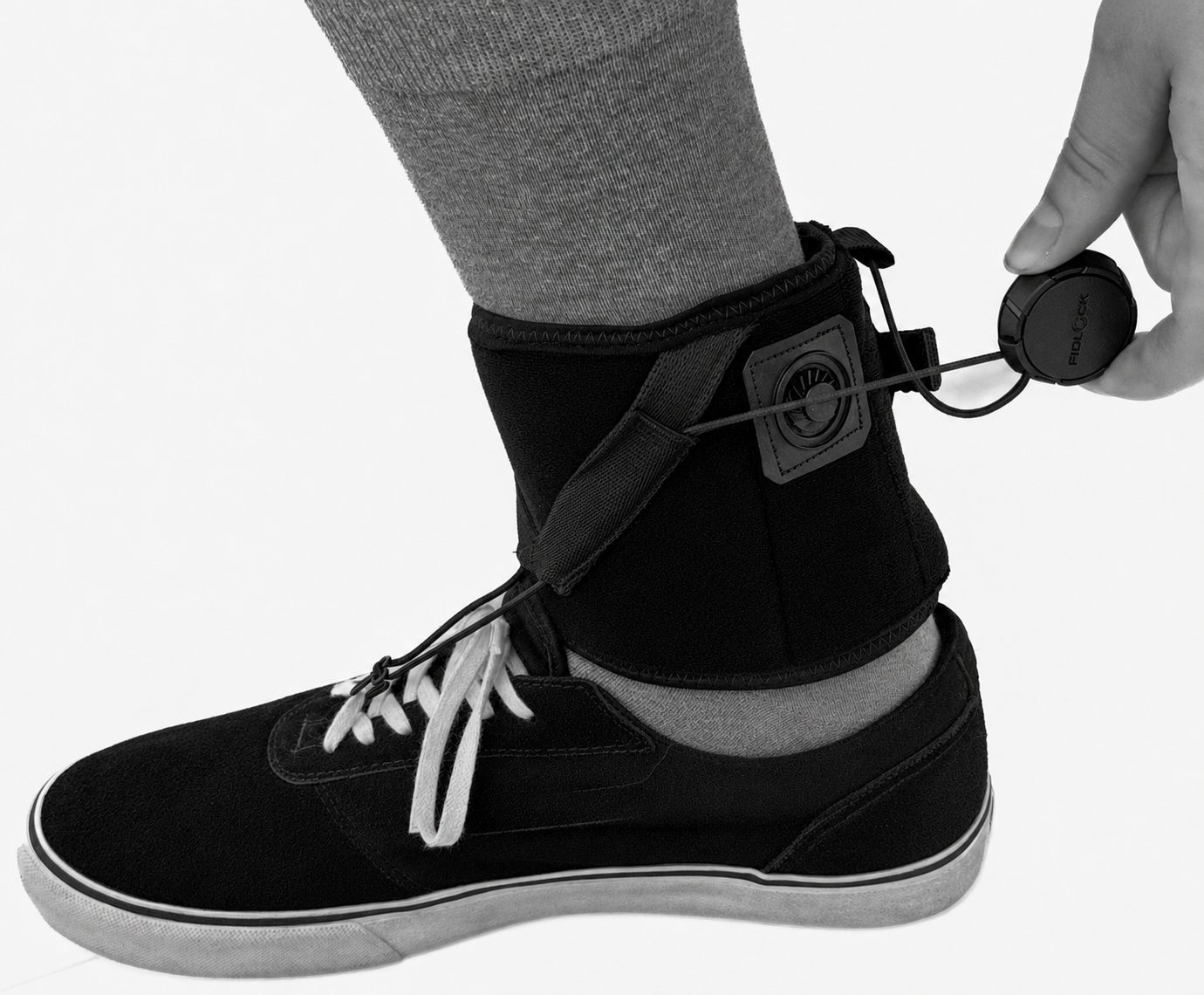
A splint can work alongside rehabilitation by supporting the foot during daily walking while you build strength, range of movement and gait confidence. The right support may reduce toe catching, improve confidence and make it easier to stay active between exercise sessions.
There are several support options, from flexible foot drop splints to more rigid AFO splints. The OrthoPed foot drop splint is a patented, physiotherapist-established option for people who want lighter support for everyday toe clearance with suitable footwear.
Support your walking between exercise sessions
A lighter, shoe-compatible splint can reduce toe catching and keep you confident on your feet while you build strength and gait control. OrthoPed suits suitable mild to moderate foot drop — £50 with VAT relief, free shipping to England, Scotland and Wales. Suitability depends on your foot shape, tone and walking pattern.
When to seek professional help
Get professional advice if your foot drop is new, worsening, linked with pain, causing falls, or making you avoid walking. A physiotherapist can assess strength, ankle range, calf tightness, balance, gait pattern, footwear, walking aids and whether a splint or brace may help.
For neurological causes, see neurological rehabilitation. For gait practice and confidence, see walking practice. You can also visit Claire Williamson's profile or contact our office.