About the OrthoPed splint
The OrthoPed splint is designed for people with foot drop or related walking difficulties where lifting the front of the foot is harder than it should be. It uses a neoprene ankle strap, cord tensioning and a round magnetic clasp to assist toe clearance during walking.
- Patented design: GB2618786.
- Works with lace-up shoes or suitable Velcro-fastening shoes.
- Designed to be used on either the left or right leg when ordered and fitted appropriately.
- Lightweight and lower profile than many rigid AFO options.
- Designed with practical everyday use in mind, including independent application for suitable users.
- Paediatric evidence is available, but current child sizing and availability should be checked directly with OrthoPed.

OrthoPed Foot Drop Splint
A lighter, shoe-compatible splint designed to help reduce toe catching during everyday walking.
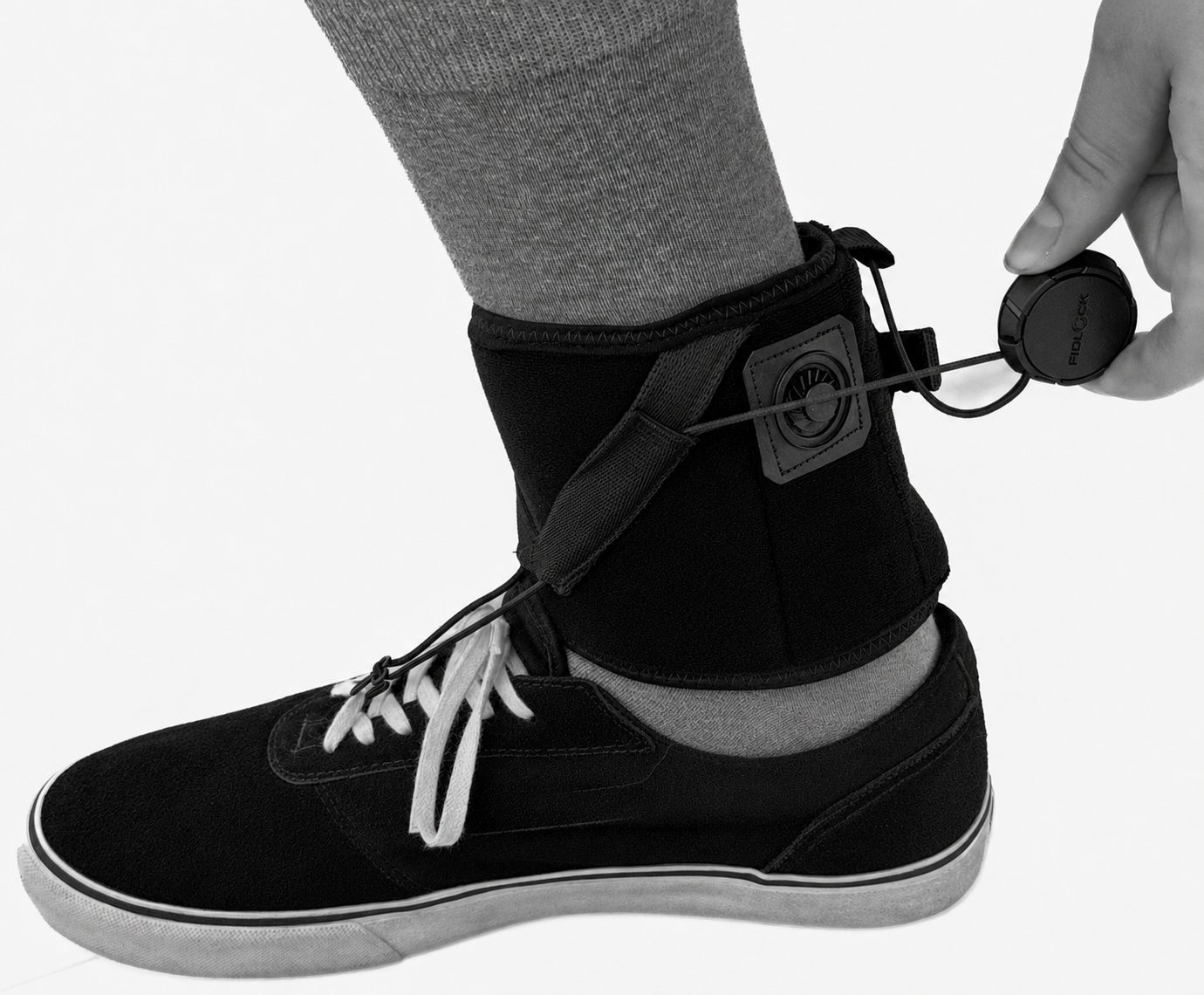
Ready to order
Order OrthoPed Foot Drop Splint
If toe catching is making walking less predictable, OrthoPed is a lighter, shoe-compatible splint designed to help reduce toe catching during everyday walking.
- Designed by a physiotherapist
- Clinically tested
- 6-month guarantee
Not sure of your size?
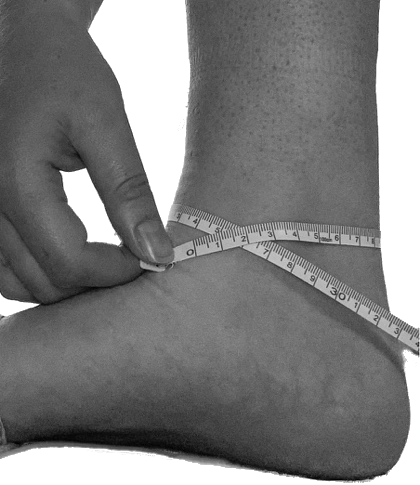
Measure around the widest part of the ankle, then choose the size that covers that measurement.
| Size | Ankle circumference |
|---|---|
| 1 | 13-18cm |
| 2 | 18-21cm |
| 3 | 21-23cm |
| 4 | 22-26cm |
| 5 | 25-27cm |
| 6 | 26-29cm |
| 7 | 29-33cm |
Some sizes overlap. If your measurement sits on a boundary, the OrthoPed team can confirm the fit once your order is received and before it is dispatched.
Secure payment by Stripe.
Lightweight designComfortable to wear all day
Shoe compatibleFits with everyday footwear
Improve mobilityHelps reduce trips and toe catching
Trusted qualityMade to high standards for lasting support
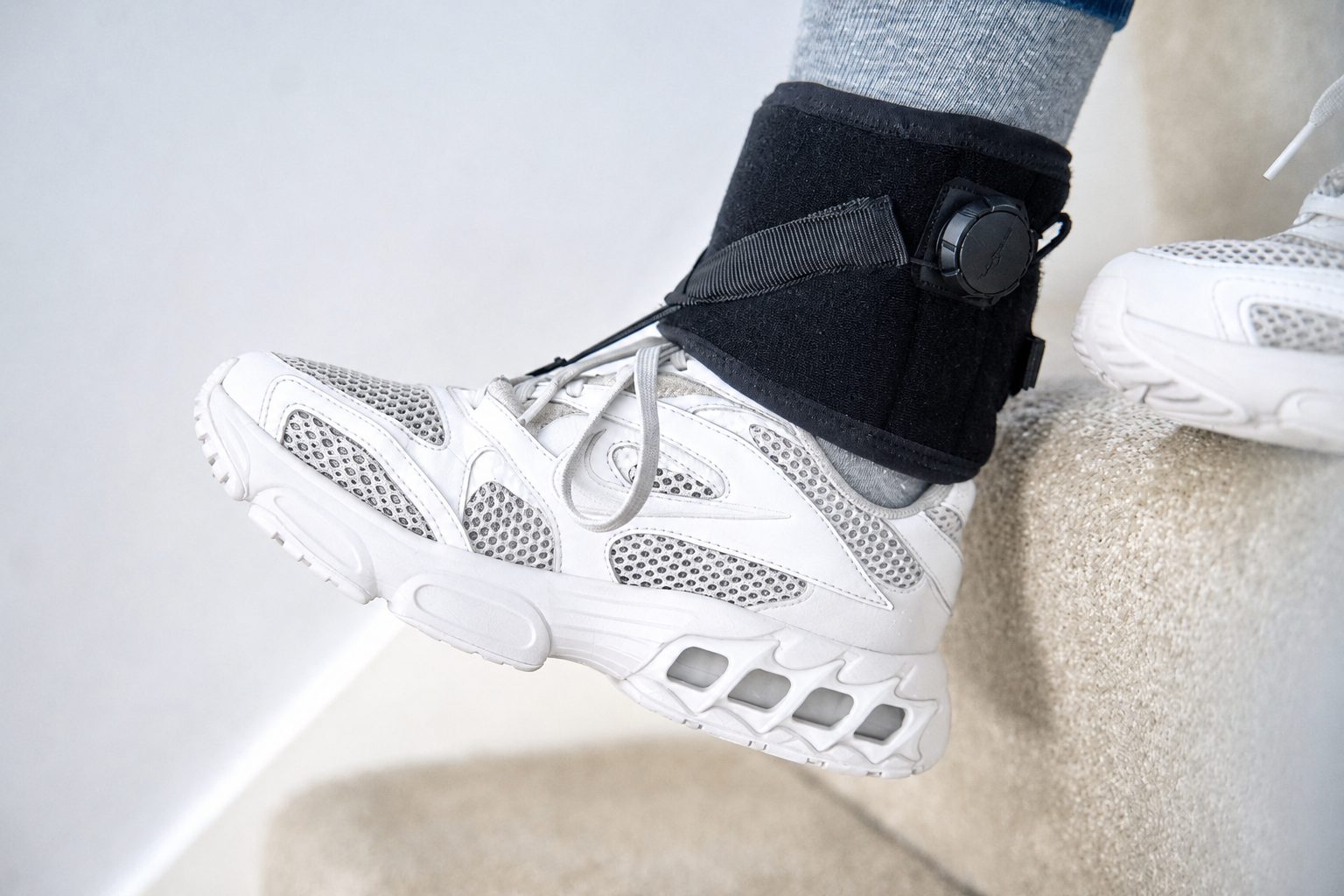
Everyday mobility
Built for real shoes, real steps and daily routines
The OrthoPed splint is designed to sit neatly with suitable footwear, giving light assistance for toe clearance without the bulk of many rigid AFO options.
- Lower-profile support for suitable mild to moderate foot drop.
- Designed for lace-up shoes or suitable Velcro-fastening shoes.
- Secure checkout collects the foot affected and delivery details before dispatch is confirmed.
Tested and proven
OrthoPed states that the splint has been tested in a laboratory by the National Physical Laboratory and in clinical studies with the University of Portsmouth and two NHS Trusts. OrthoPed also states that the splint should last a minimum of six months with regular use and offers a six-month guarantee.
The OrthoPed development programme has been supported by Innovate UK, Innovate UK Business Growth, UK Research and Innovation and SIGHT. Both awards are listed publicly on UK Research and Innovation's Gateway to Research: Laboratory testing and development of a new adult ankle splint (project 10065645) and a feasibility study of the splint's effect on gait in children with foot drop (project 10025587).
The paediatric feasibility study has been written up by researchers at the University of Portsmouth: Feasibility study of a novel, low-cost splint device for children with foot drop. Please note this is a preprint, meaning it has not yet completed peer review, and it looked at children rather than adults — the OrthoPed splint described on this page is for adults with mild to moderate foot drop.
Read the OrthoPed clinical study executive summary
The National Physical Laboratory — the UK's national measurement institute — has published its own account of that testing: OrthoPed gets people with foot drop walking comfortably. NPL describes static testing, in which the splint was pulled from both ends until it failed, and fatigue testing that repeatedly applied and released stress to simulate regular use, with attachments also tested on a 3D-printed foot. Two of the three attachments passed and went forward to human trials; the third failed when its cord snapped, and the results were used to redesign it.
Laboratory testing shows how a splint behaves under load, but not what living with one is like. PFA Research, an independent UK research consultancy, ran a two-phase user study: in-home interviews with people living with foot drop in July 2025, followed by an ethnographic diary study in autumn 2025 that tracked a smaller group over two weeks of everyday use. It looked at how perceptions changed with repeated wear — what got easier, which frustrations persisted, and how comfort, confidence and mobility shifted over time. The findings recorded practical barriers as well as strengths.
OrthoPed is also stocked on the Physio First webshop, the trade store of Physio First, the professional organisation for chartered physiotherapists in private practice, and the splint has been written about by the neurological physiotherapy clinic Physio Function.
Who the OrthoPed splint may help
OrthoPed's FAQ lists the following conditions and presentations as potentially improved through use of the splint:
- Flexible pes planus
- Mild to moderate spastic quadriplegia, diplegia or hemiplegic cerebral palsy
- Hypotonia
- Hypotonic cerebral palsy
- Severe pes planus
- Mild ankle instability
- Intermittent toe walking
- Flaccid paralysis
- Vincristine neuropathy
- Peripheral neuropathy
For suitable mild to moderate foot drop, the aim is simple: better toe clearance, easier everyday walking and a support that fits into real footwear and routines.
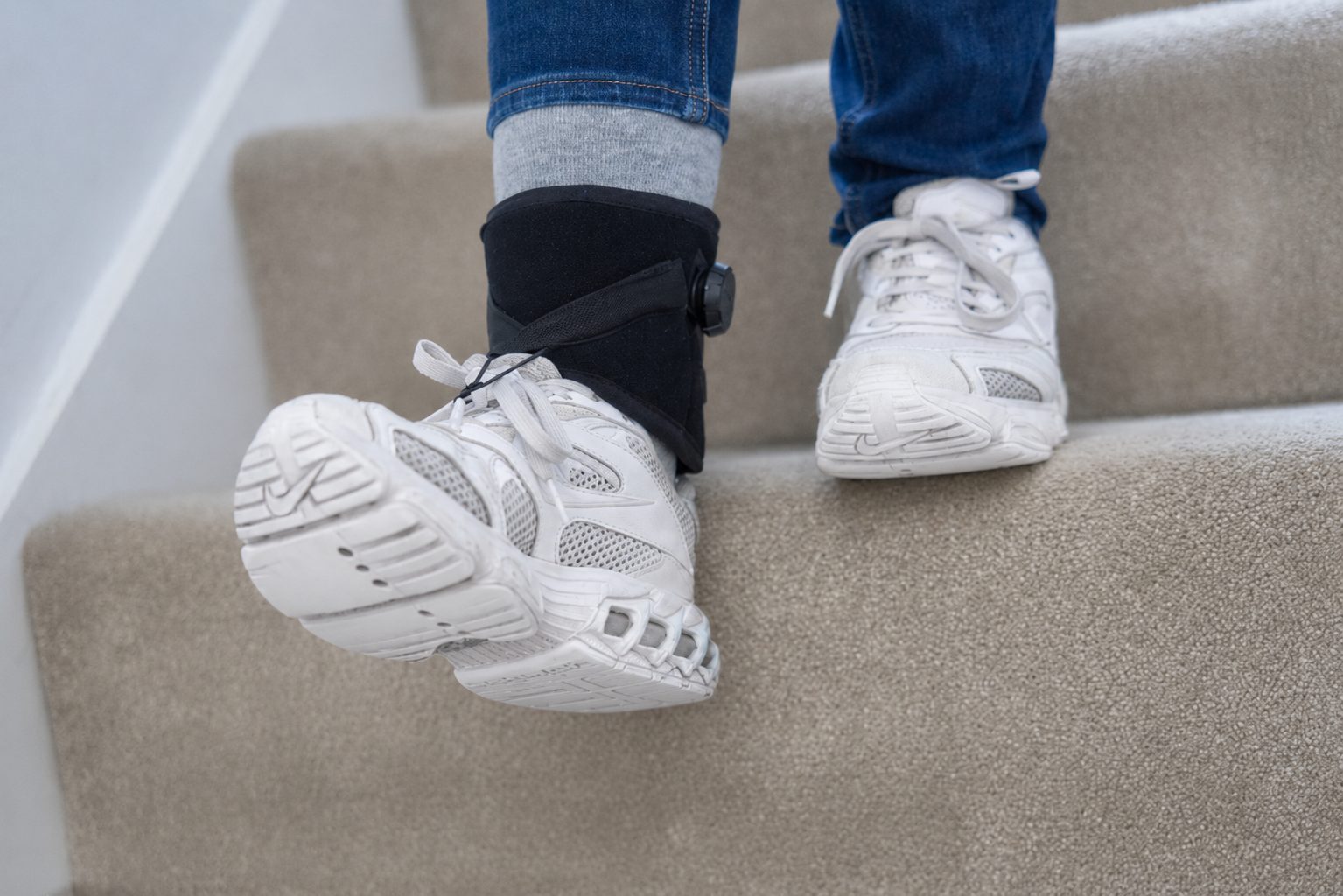
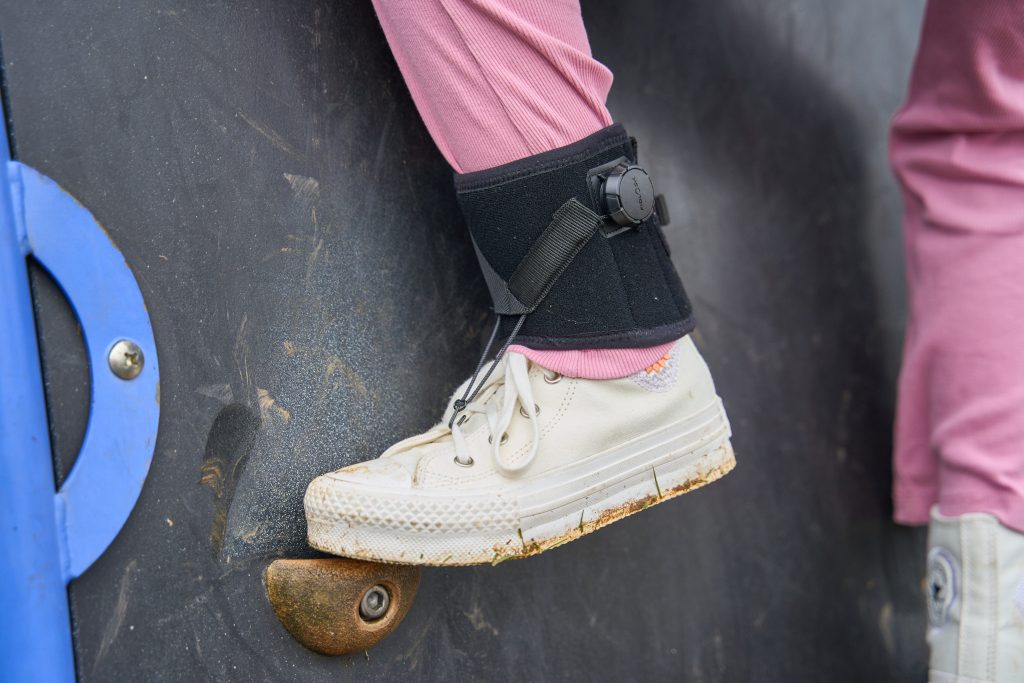
OrthoPed in everyday movement
These product images show the splint in practical settings: walking, stairs, outdoor activity and play.


When to get advice first
OrthoPed is designed as a lighter support for appropriate walking patterns. Get advice before use if any of the following apply:
- Significant equinovarus or valgus.
- Severe hypertonicity.
- Weakness deformity.
- Dominant toe walking.
This keeps the choice clinically sensible without taking away from the main benefit: practical, lower-profile support for toe clearance during everyday walking.
Foot drop aid and walking support device
OrthoPed may appear in searches for a foot drop aid, foot drop walking support, foot drop support device or best foot drop device. In plain terms, it is a lightweight splint designed to help people who find it difficult to lift the front of the foot during walking.
It should be considered as walking support, not a cure for the cause of foot drop. New, worsening or unexplained foot drop should be medically assessed, especially if it follows surgery or comes with numbness, severe back pain, bladder or bowel changes, sudden neurological symptoms or new widespread weakness.
Where OrthoPed may fit
For suitable mild to moderate foot drop, OrthoPed can be considered when the foot remains flexible, shoe compatibility matters, and the main goal is reducing toe catching during everyday walking.
When to compare alternatives
For severe weakness, significant equinovarus or valgus, severe hypertonicity, weakness deformity, dominant toe walking or major ankle instability, compare with AFO and brace options.
Related buying guides
Foot drop brace for shoes and trainers
Footwear-led guidance for lace-up shoes, suitable Velcro shoes, trainers, stairs, comfort and skin checks.
Foot drop corrector
Explains the common search term while keeping expectations clinically honest: a splint supports walking but does not cure foot drop.
What people say
Feedback reported in the OrthoPed Children's Study and related patient and public involvement sessions was strongest around three practical themes: comfort, independence and everyday walking confidence. These comments are study feedback, not a guarantee that the splint is suitable for every size, diagnosis or walking pattern.
"Felt comfortable and looked discreet"
"I can put it on myself"
"Her walking is much better"
Patient and public involvement feedback also highlighted single-handed application, compatibility with lace-up and suitable Velcro shoes, and the need to check current sizing and suitability directly with OrthoPed or a healthcare professional.
Order information
How to decide which OrthoPed splint size to order
Use a tape measure around the widest part of the ankle, as shown below. Keep the measurement handy so the OrthoPed team can confirm fit if needed after your checkout order is received.
| Size | Ankle circumference |
|---|---|
| 1 | 13-18cm |
| 2 | 18-21cm |
| 3 | 21-23cm |
| 4 | 22-26cm |
| 5 | 25-27cm |
| 6 | 26-29cm |
| 7 | 29-33cm |
Some sizes overlap. If your measurement sits on a boundary, the OrthoPed team can confirm any fit concerns after your checkout order is received.

Order the OrthoPed Foot Drop Splint
Secure online payment is now available.
The OrthoPed team will review your order details before arranging dispatch.
About Claire Williamson
Claire Williamson is a Chartered Physiotherapist, HCPC registered, CSP registered and Director of Buzzy Bees Physiotherapy. Older OrthoPed source material refers to Claire Williamson by her former name, Claire Narborough.
Claire established OrthoPed after frustration with existing products for people with moderate foot drop and developed the splint through iterative design, grant funding, laboratory testing and clinical study work.
OrthoPed Footdrop Splint user guide
The video above loads the official OrthoPed Footdrop Splint user guide from YouTube. If the embedded player is blocked by your browser or cookie settings, open the OrthoPed user guide on YouTube. The written sequence below follows OrthoPed's published fitting instructions.
Putting on and removing the splint
Use a sock under the ankle strap for comfort. The splint is designed for lace-up shoes or suitable Velcro-fastening shoes, but not elastic laces.
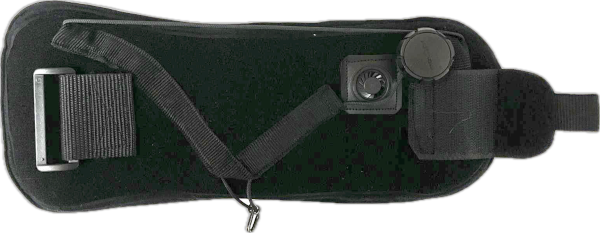
1. Open the strap and clasp
Sit with both feet flat on the floor. Open the neoprene ankle strap and pull the round clasp away from its magnetic base.
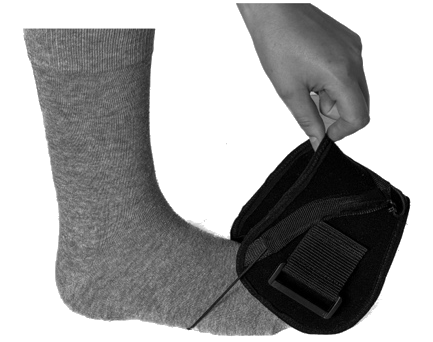
2. Place the foot through the loop
Place your foot through the cord loop while keeping the foot settled and supported.
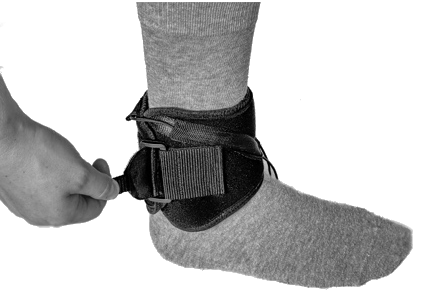
3. Fasten the ankle strap
Wrap the neoprene strap around the ankle, pass the Velcro tab through the buckle and fold it back to secure it. You should be able to fit one finger at the top and bottom of the strap.
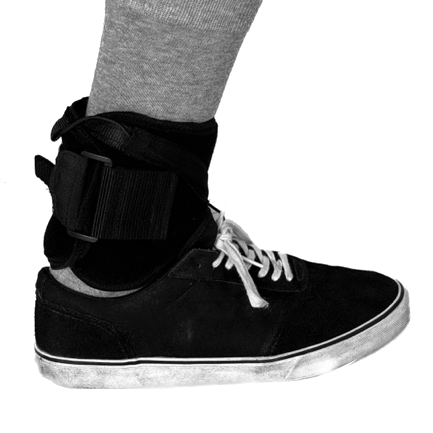
4. Bend the ankle forwards
With the foot flat on the floor, bend the ankle forwards as far as is comfortable so the knee moves towards, or over, the toes.
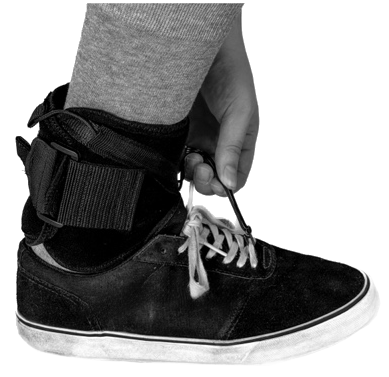
5. Attach the hook to the shoe
Attach the hook to the shoelace or Velcro strap furthest from the ankle. For Velcro shoes, close the shoe's Velcro strap over the hook; the shoe needs a D ring on the bottom strap.
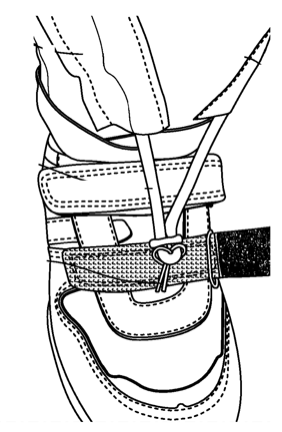
6. Adjust the cord tension
Twist the round clasp to create enough cord tension to walk without catching the toes. The clasp tightens when twisted to the right. With lace-up shoes, recheck the tension after a couple of minutes because the shoelace may move.
Taking the splint off
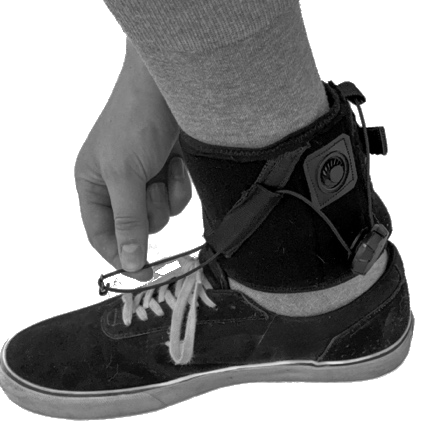
1. Pull the round clasp off its magnetic base to release the cord tension.
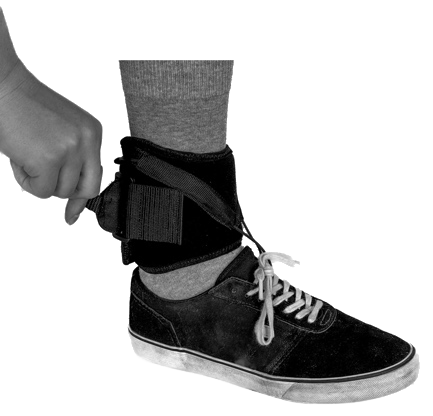
2. Take the hook off the shoe, then open the neoprene ankle strap.
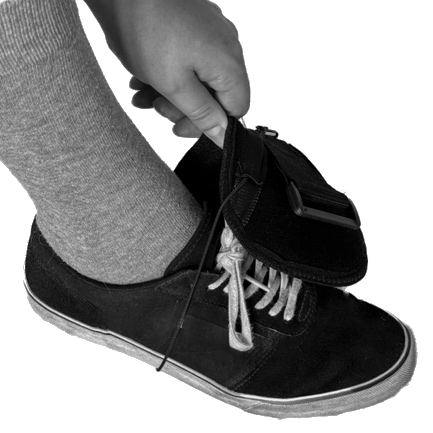
3. Pull the splint off the foot once the strap and hook have been released.
Frequently asked questions
How long should my splint last?
OrthoPed states that the splint has been tested by the National Physical Laboratory and should last a minimum of six months with regular use. OrthoPed also states that it offers a six-month guarantee.
How do I know if the OrthoPed splint is right for me?
OrthoPed is designed for people who find it difficult to lift the front of the foot and want a lighter support that works with suitable shoes. If symptoms are new, changing or complex, clinical advice can help confirm the best support.
How quickly is the splint dispatched?
OrthoPed dispatches orders within 2 working days, with free delivery to England, Scotland and Wales. Due to medical device regulations, OrthoPed cannot currently be shipped to Northern Ireland, the Isle of Man, Jersey or Guernsey. The OrthoPed team check the fit details on your order before it goes out, so if you are unsure of your size you can also email OrthoPed before you order. Returns and refunds are covered by the OrthoPed returns and refunds policy.
How tight should the strap and cord be?
The ankle strap should allow one finger at the top and bottom. The cord tension is adjusted by twisting the round clasp so there is enough support to walk without catching the toes.
Do I need a different splint for each foot?
OrthoPed says the splint can be used on either the right or left leg. When ordering, follow OrthoPed's current sizing and hand-choice instructions.
How do I wash the splint?
OrthoPed advises hand washing and air drying only. Do not place the splint directly on a radiator or other heat source.
Can people with pacemakers use the OrthoPed splint?
The splint uses a magnetic clasp. People with a pacemaker or defibrillator should follow OrthoPed and medical advice before using it.