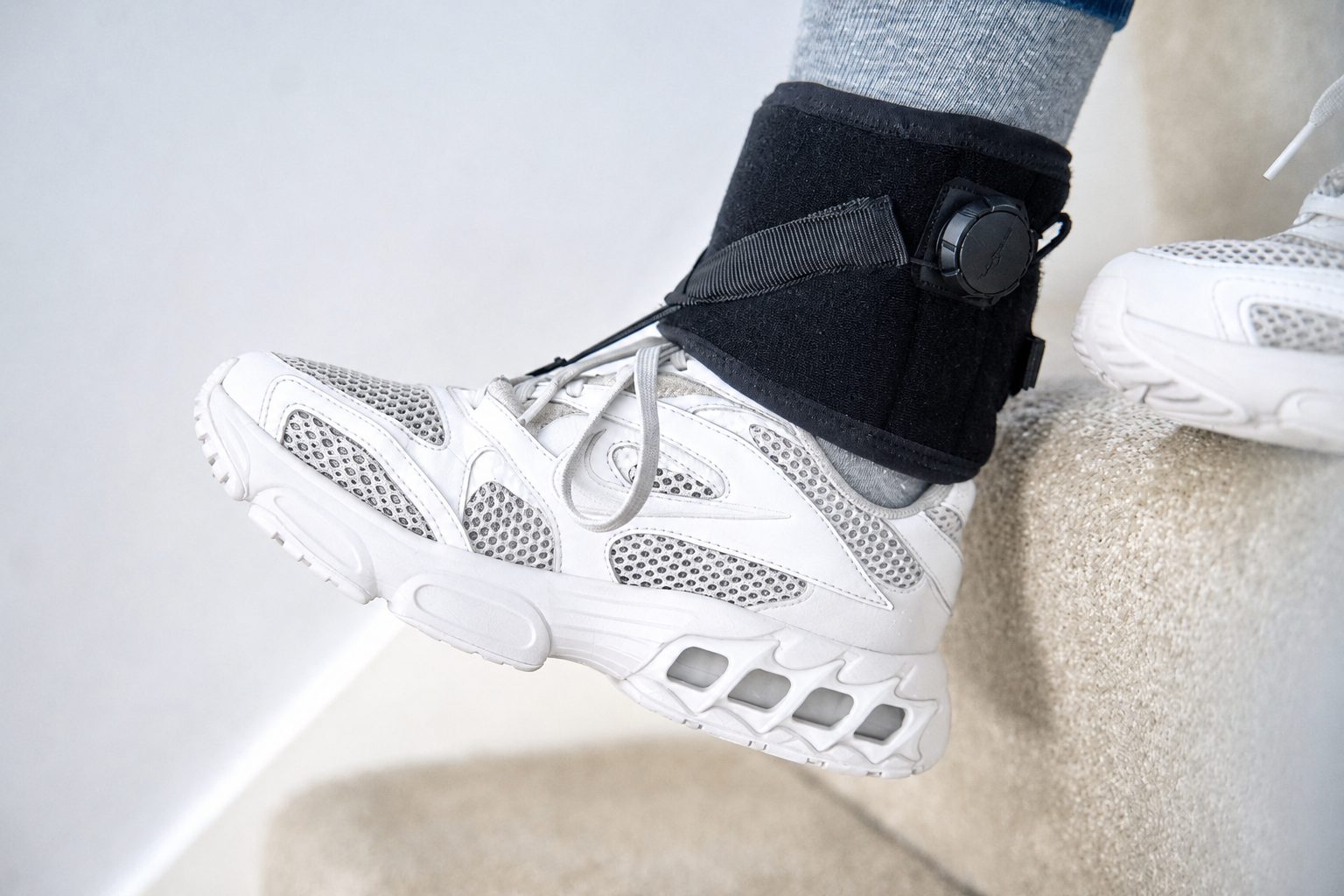
A shoe-compatible brace needs to help toe clearance while still fitting into the footwear you actually use. That is why this page focuses on shoes, trainers, fit and day-to-day walking rather than treating footwear as an afterthought.
New or worsening foot drop should be medically assessed. Seek urgent medical advice if it starts suddenly or comes with severe back pain, bladder or bowel changes, sudden neurological symptoms, new widespread weakness, or symptoms after a significant injury.
What shoe-compatible support needs to do
A foot drop brace for walking with shoes should help the front of the foot clear the floor without creating pressure, pulling the foot into an awkward position or making the shoe unsafe. The exact design matters less than whether it works for the person's gait.
- Enough lift to reduce toe catching.
- Secure shoe fastening so the brace can work consistently.
- Comfort around the ankle, foot and shoe attachment point.
- Enough support for walking indoors, outdoors and on stairs.
- Regular skin checks, especially with reduced sensation or swelling.
Lace-up shoes, Velcro shoes and trainers
Lace-up shoes
OrthoPed fitting instructions say lace-up shoes should be tightened and tied as tightly as is comfortable before the splint is attached. Elastic laces should not be used.
Velcro shoes
For suitable Velcro-fastening shoes, the Velcro shoe needs a D ring on the bottom strap so the hook can sit between the two layers of Velcro.
Trainers
Some trainers may be suitable if they fasten securely and give enough structure. Check the fit, tension and comfort before longer walking.
When a rigid AFO may be more appropriate
A lighter shoe-compatible brace may not give enough control for severe weakness, major ankle instability, significant tone, fixed deformity or complex gait. In those situations, an AFO comparison or orthotics assessment may be safer.
Practical checks before relying on a brace outside
- Fit it while sitting with both feet supported.
- Walk indoors first and check whether toe catching reduces.
- Recheck the cord or strap tension after a few minutes.
- Practise stairs with a rail if balance is reduced.
- Check skin after use. A sock-like mark may be expected, but it should fade within 30 minutes.
Frequently asked questions
Can I wear a foot drop brace with shoes?
Some foot drop braces and splints are designed to work with shoes, but shoe compatibility depends on the device. OrthoPed is designed for lace-up shoes or suitable Velcro-fastening shoes with the correct D-ring arrangement.
What shoes are best for foot drop braces?
Supportive shoes that fasten securely are usually easier to use with a foot drop brace. For OrthoPed, use lace-up shoes or suitable Velcro-fastening shoes, not elastic laces.
Can I wear a foot drop brace with trainers?
A brace may work with trainers if the trainer has suitable fastening and enough structure. Fit, comfort, toe clearance and skin should be checked before relying on it for longer walks.
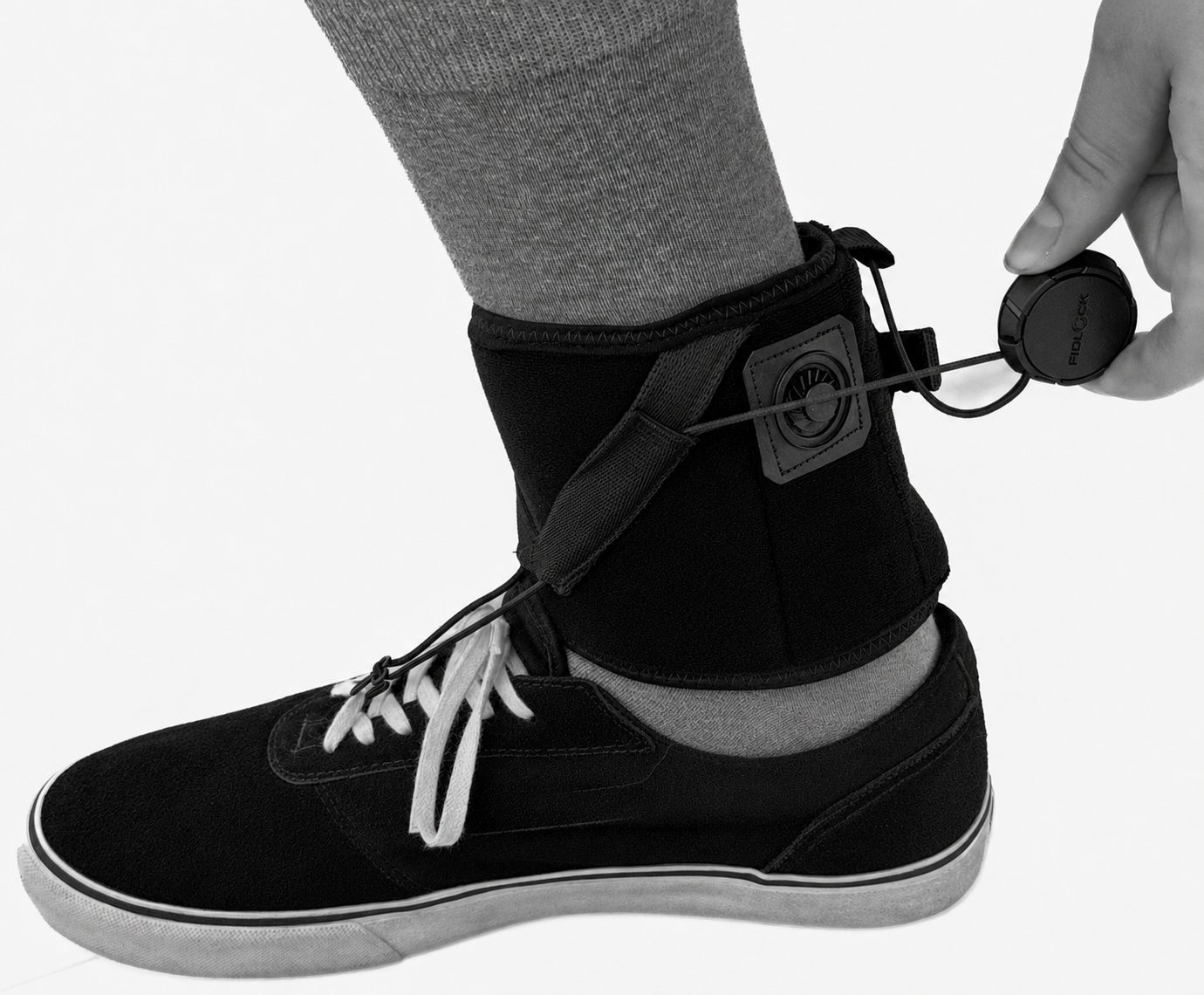
Order OrthoPed
For suitable mild to moderate foot drop, OrthoPed is a lightweight shoe-compatible splint. Check the suitability guidance above before ordering.