People use the words brace, splint and AFO in different ways. That can make choosing support confusing. The useful question is not the label; it is whether the device gives enough help for your walking pattern without causing discomfort, skin problems or extra effort.
If you have foot drop, the right brace may reduce toe catching, improve confidence and make walking feel more predictable. The wrong brace may feel bulky, rub the skin, restrict shoes, or fail to control the foot enough.
You may also see people search for a drop foot brace. In most cases this means the same thing as a foot drop brace: a walking support designed to help the front of the foot clear the floor.

OrthoPed Foot Drop Splint
A lighter, shoe-compatible splint designed to help reduce toe catching during everyday walking.
Ready to order
Order OrthoPed Foot Drop Splint
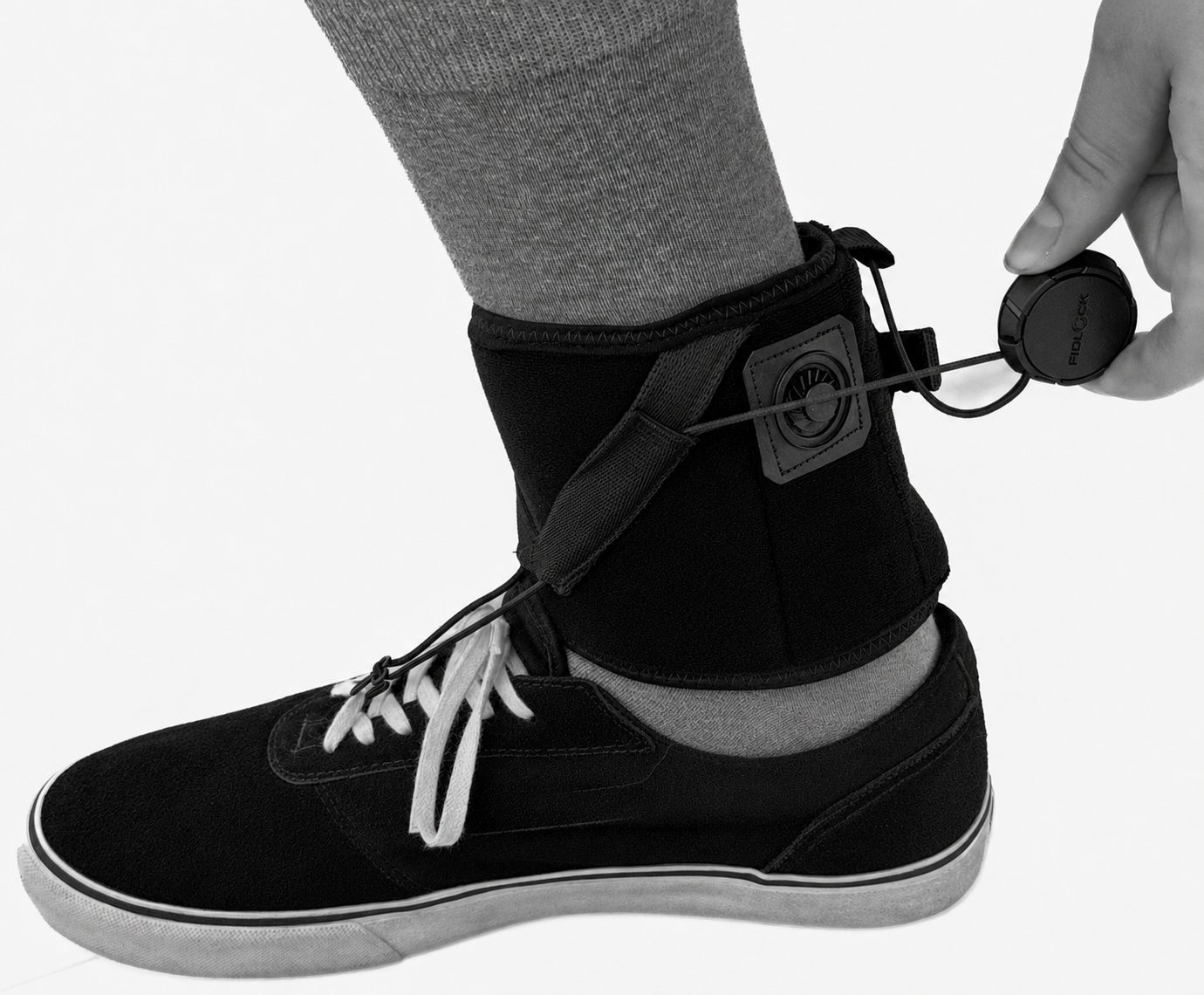
For suitable mild to moderate foot drop, OrthoPed is a lighter, shoe-compatible splint designed to help reduce toe catching during everyday walking.
- Designed by a physiotherapist
- Clinically tested
- 6-month guarantee
Secure payment by Stripe.
Lightweight designComfortable to wear all day
Shoe compatibleFits with everyday footwear
Improve mobilityHelps reduce trips and toe catching
Trusted qualityMade to high standards for lasting support
Brace vs splint vs AFO: what is the difference?
In everyday searches, "foot drop brace" is often used as a general phrase for any device that supports the foot during walking. "Foot drop splint" usually suggests a lighter support, often fabric-based or strap-based. "AFO" means ankle foot orthosis and usually refers to a more structured orthotic device that supports the ankle and foot together.
Splint
Often lighter and more discreet. Usually best suited to mild to moderate problems where the foot remains flexible and strong ankle control is not required.
Brace
A broader term. It may describe a soft support, a dynamic brace, or a more structured device depending on the product and the person using it.
AFO
A clinical orthotic term. AFOs often provide stronger ankle and foot control, which may be needed for severe weakness, instability or complex neurological gait.
How foot drop braces help
A foot drop brace works by improving the position or timing of the foot as the leg swings forward. Depending on the design, it may:
- help lift the front of the foot during the swing phase of walking;
- reduce toe drag and trips;
- reduce the need to lift the knee excessively high;
- improve walking confidence on familiar routes;
- make the walking pattern feel smoother and less effortful;
- support safer practice during walking rehabilitation.
A brace does not treat the underlying cause by itself. Exercises, neurological rehabilitation, nerve recovery, tone management, footwear changes or medical treatment may still be needed.
Foot drop aid, walking support and ankle support
Searches for a foot drop aid, foot drop walking support or foot drop brace ankle support usually point to the same need: something that helps the foot clear the floor while walking. The device still needs to match the cause and severity of the foot drop.
Light walking support
A lighter brace or splint may help suitable mild to moderate toe catching, especially where shoe compatibility and comfort matter.
More ankle control
If the ankle rolls, collapses or needs stronger positioning, compare braces with an AFO assessment.
Product-specific support
The OrthoPed Foot Drop Splint is a lightweight option for suitable mild to moderate foot drop and works with lace-up or suitable Velcro shoes.
Types of foot drop braces
Soft fabric braces
These are usually lightweight supports with straps, cuffs or slings. They may suit mild to moderate foot drop where the ankle does not need strong structural control.
Dynamic braces
Dynamic braces use elastic, springs or adjustable tension to help lift the foot. They need careful set-up so the support assists toe clearance without pulling the foot into an awkward position.
Hinged braces
Hinged or articulated designs allow some ankle movement while still guiding the foot. They are usually chosen and fitted with orthotic input.
Rigid AFO braces
Rigid AFOs provide stronger support where the ankle needs more control. Lighter braces and splints can be a better everyday fit when comfort, footwear and discretion matter most.
Choosing the right brace for your needs
Before comparing products, be clear about what problem you need to solve. A brace for mild toe catching is different from a brace for severe ankle instability, and different again from a brace for high tone after stroke.
- Severity: mild foot drop may only need light assistance; severe weakness often needs more rigid support.
- Shoe compatibility: check whether the brace works with the shoes you actually wear.
- Comfort and discretion: a brace is more useful if you can tolerate it for real daily activities.
- Independent application: can you put it on safely with your hand function, balance and eyesight?
- Skin safety: reduced sensation, swelling or fragile skin needs extra caution.
- Cost and follow-up: factor in fitting, replacement parts, warranty, delivery and whether clinical review is included.
Common foot drop brace options in the UK
UK foot drop brace options usually fall into a few categories: fabric supports that lift from the shoe, elastic or dynamic devices, off-the-shelf AFOs, and custom orthoses supplied through orthotics services. You may see product names such as Foot-Up, Boxia or OrthoPed while researching.
Do not choose only by brand name. Compare the mechanism, shoe requirements, how much control the brace gives, whether it can be applied independently, and whether it matches your clinical presentation.
The OrthoPed alternative
The OrthoPed Foot Drop Splint is a physiotherapist-established alternative for people searching for a lighter foot drop brace. It was established by Claire Williamson, formerly Claire Narborough, and is patented under GB2618786.
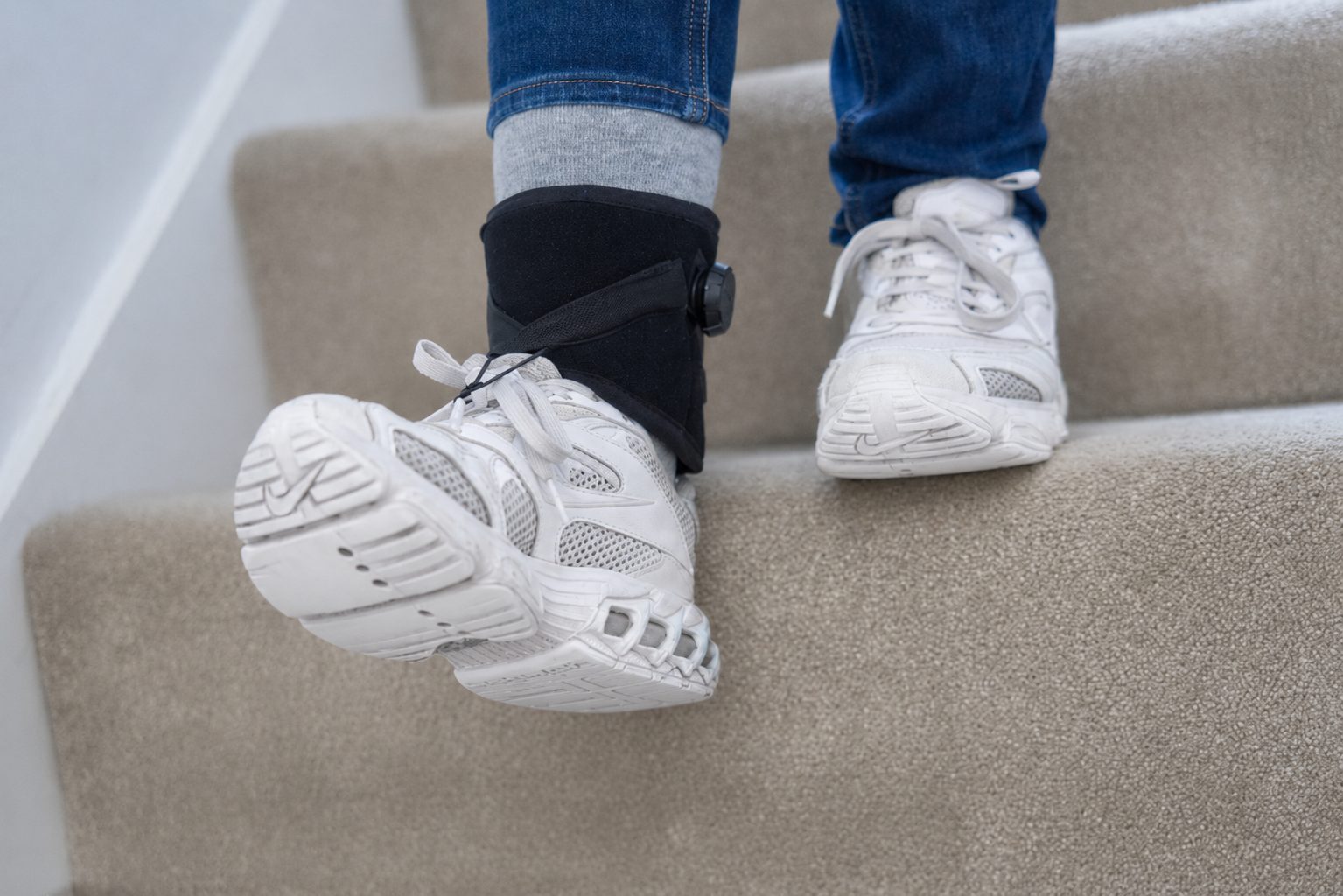
According to OrthoPed, the splint has been tested by the National Physical Laboratory and in clinical studies with the University of Portsmouth and two NHS Trusts. It is designed to be worn with lace-up shoes or suitable Velcro-fastening shoes and can be used on either leg when the correct version and set-up are chosen.
"It is so simple but works"
OrthoPed Children's Study
For mild to moderate foot drop, OrthoPed offers a lighter alternative to many rigid braces. If there is significant equinovarus or valgus, severe hypertonicity, weakness deformity or dominant toe walking, get clinical advice before choosing any brace.
Where to buy a foot drop brace in the UK
You can access foot drop braces through NHS orthotics services, private orthotists, physiotherapy clinics, specialist retailers and some direct manufacturer routes. NHS orthotics can be the safest route for complex needs, severe weakness, neurological tone, children, post-stroke gait or significant deformity.
If buying directly, check whether the brace is suitable for your condition, whether you can fit it correctly, what shoes it needs, whether returns are restricted for hygiene reasons, and what support is available if it rubs or does not help.
Frequently asked questions
What is a foot drop brace?
A foot drop brace is a device worn around the lower leg, ankle or foot to support the ankle and help lift the front of the foot when walking.
Is a foot drop brace the same as an AFO?
The terms overlap. AFO means ankle foot orthosis and usually refers to a more structured brace. Foot drop brace is a broader everyday term that can include soft fabric supports, dynamic braces and rigid AFOs.
Is a drop foot brace the same as a foot drop brace?
Yes. Drop foot brace and foot drop brace are usually different ways of searching for the same type of walking support: a brace or splint that helps the front of the foot clear the floor.
Which foot drop brace is best?
The best brace depends on severity, tone, ankle stability, skin condition, footwear, hand function and walking goals. A professional assessment is recommended before choosing support.
What foot drop aid helps with walking?
Walking support can include a foot drop splint, brace, AFO, walking aid, footwear advice, physiotherapy or Functional Electrical Stimulation. The right choice depends on severity, balance, skin, tone and the cause of foot drop.
Does a foot drop brace support the ankle?
Some braces mainly help toe clearance, while AFOs usually give stronger ankle-foot control. If the ankle is unstable, rolls, collapses or needs firm positioning, an orthotics assessment is sensible.
Order OrthoPed
Ready for a lighter brace option? Order OrthoPed securely online or email OrthoPed with a product question.