Foot drop splints sit within a wider group of walking supports used for foot drop. Their job is practical: help the toes clear the floor during the swing phase of walking, reduce the need for a high-stepping gait, and make walking feel more predictable.
For many people, a splint is an accessible way to make walking feel smoother and more predictable. The right support should match your strength, footwear, balance and the amount of ankle control you need, with lighter splints and ankle foot orthoses both having a place depending on the walking pattern.

OrthoPed Foot Drop Splint
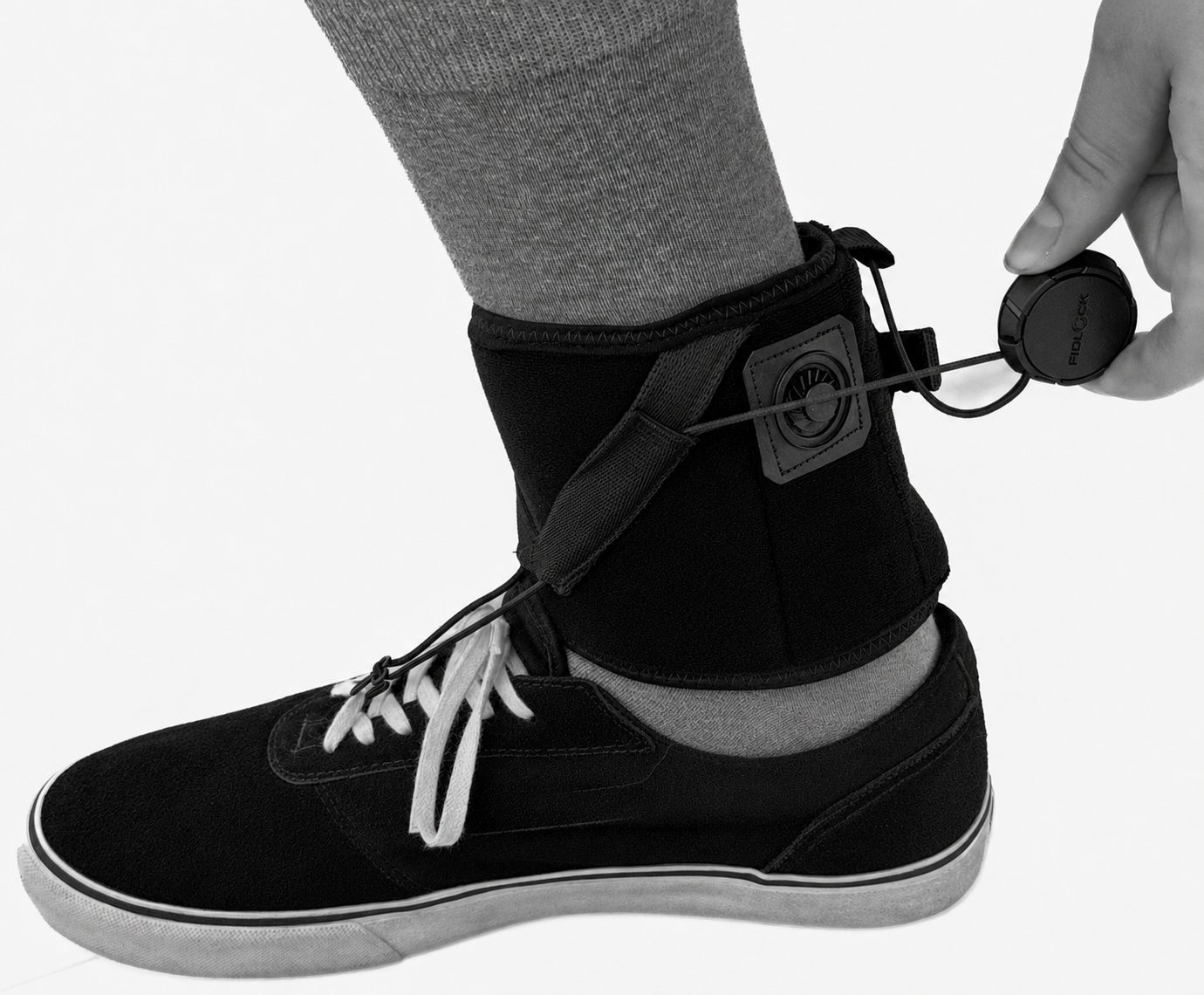
A lighter, shoe-compatible splint designed to help reduce toe catching during everyday walking.
Ready to order
Order OrthoPed Foot Drop Splint
For suitable mild to moderate foot drop, OrthoPed is a lighter, shoe-compatible splint designed to help reduce toe catching during everyday walking.
- Designed by a physiotherapist
- Clinically tested
- 6-month guarantee
Secure payment by Stripe.
Lightweight designComfortable to wear all day
Shoe compatibleFits with everyday footwear
Improve mobilityHelps reduce trips and toe catching
Trusted qualityMade to high standards for lasting support
How foot drop splints work
When the muscles that lift the front of the foot are weak, delayed or poorly controlled, the toes can catch on the ground. A splint adds external support so the foot is held or assisted into a safer position while the leg swings forwards.
Different splints do this in different ways. Some use a fabric ankle cuff and a cord or elastic tension system. Others attach to the shoe or sit partly inside the shoe. Rigid AFOs use a plastic or carbon-fibre shell to control the ankle more strongly.
A good splint should improve toe clearance without creating new problems. If it rubs, changes your balance, increases pain, worsens spasticity or makes walking feel less safe, it needs review.
Who can use a foot drop splint?
A splint may be considered when the foot is flexible enough to be guided into a safer walking position and the person can use the device without skin, balance or tone problems. Conditions and presentations where a lightweight splint may be discussed include:
- mild to moderate foot drop;
- flexible pes planus;
- mild to moderate spastic cerebral palsy patterns, where clinically appropriate;
- hypotonia or hypotonic cerebral palsy;
- mild ankle instability;
- peripheral neuropathy or vincristine neuropathy;
- some cases of flaccid paralysis, depending on control and safety.
This gives a useful starting point when comparing options. A physiotherapist or orthotist can help fine-tune the choice if you have complex symptoms, falls or skin concerns.
When to get extra advice
Most people start by looking for a support that improves toe clearance, feels comfortable and works with everyday shoes. Extra orthotic advice is sensible where the walking pattern is complex, the foot is difficult to position, tone is high, or more rigid ankle control may be needed.
Get professional advice before using a lightweight splint if you have:
- severe foot drop or very poor ankle control;
- significant equinovarus, valgus or fixed deformity;
- severe hypertonicity or strong spasms;
- dominant toe walking;
- reduced skin sensation, open skin, swelling or pressure areas;
- new, unexplained or worsening foot drop.
If symptoms are new, worsening, or linked with other neurological signs, see a GP or appropriate medical professional. Our what is foot drop and foot drop causes guides explain why assessment matters.
Types of foot drop splints
Strap-based fabric splints
These use a soft cuff and a connection to the shoe to assist toe clearance. They are often lighter and more discreet than a rigid AFO, but they give less control for severe weakness or deformity.
Dynamic splints
Some designs use elastic or adjustable tension to assist the foot as the leg swings. Tension needs careful adjustment so the support helps without pulling the foot awkwardly.
Shoe-compatible supports
Some splints are designed to work with everyday shoes. Check fastening type, shoe opening, heel support and whether the device needs laces, Velcro or a specific attachment point.
Rigid AFOs
AFOs are often called splints, but they are usually more rigid orthoses. They may be better for severe foot drop, ankle instability or complex neurological walking patterns.
Features to look for
- Footwear compatibility: the splint should work with shoes you can actually wear day to day.
- Adjustability: tension or support should be simple to fine-tune without guesswork.
- Ease of fitting: independent fitting can matter after stroke or where hand function is limited.
- Comfort: check the ankle strap, skin contact areas and pressure around the foot.
- Clinical suitability: the device should match the cause and severity of foot drop.
- Evidence and durability: look for clear information about testing, guarantee and expected lifespan.
The OrthoPed Foot Drop Splint
The OrthoPed Foot Drop Splint is a patented splint established by physiotherapist Claire Williamson, formerly Claire Narborough. It is designed for people who find it difficult to lift the front of the foot and is intended to help walking feel more typical and energy efficient.
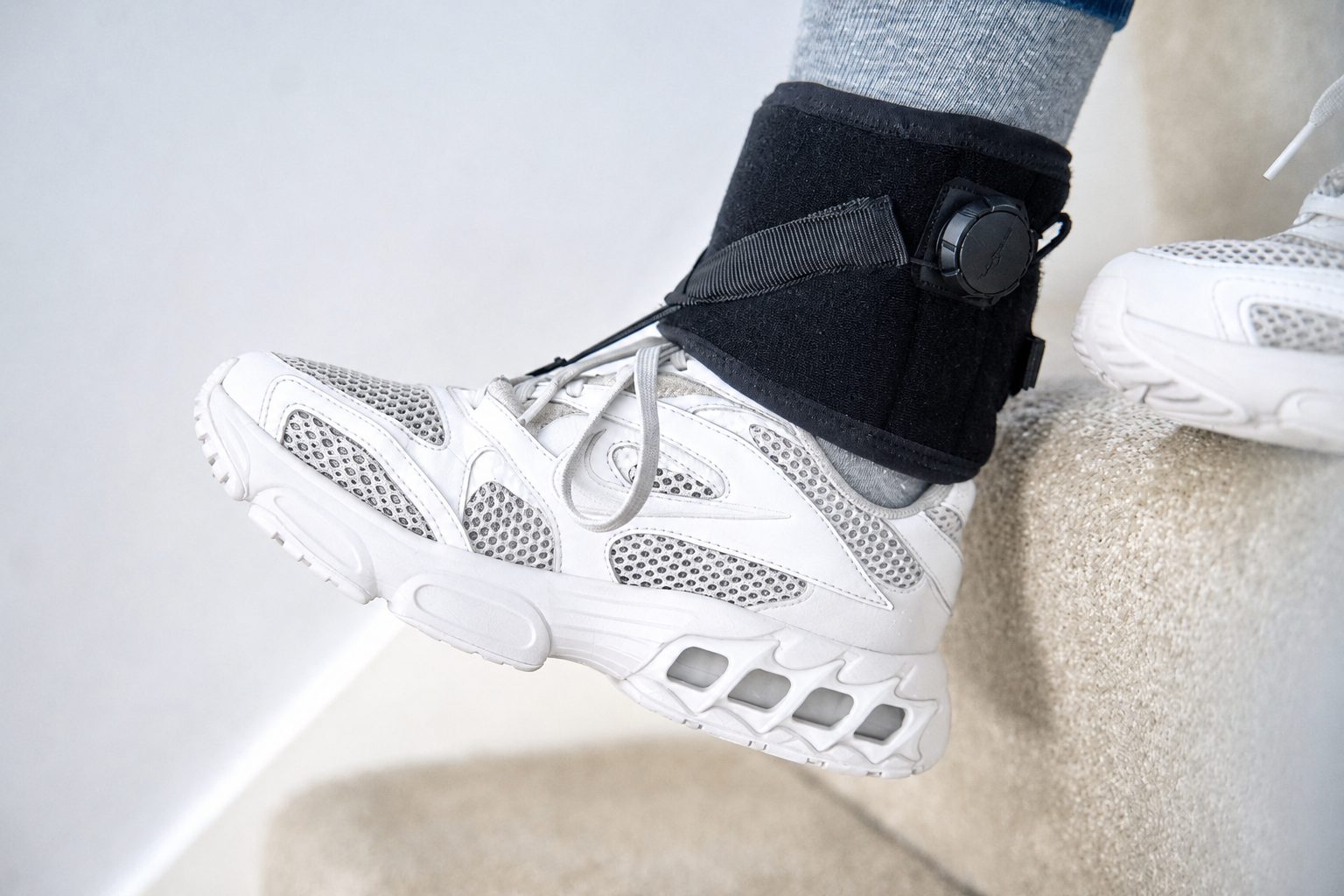
According to OrthoPed, the splint has been tested by the National Physical Laboratory and in clinical studies with the University of Portsmouth and two NHS Trusts. It can be worn with lace-up shoes or suitable Velcro-fastening shoes, and OrthoPed states that it should last a minimum of six months with regular use.
The OrthoPed fitting guide helps you get the best from the splint. The hook should attach to the shoelace or Velcro strap furthest from the ankle, the round clasp is twisted to create enough tension to walk without toe catching, and lace-up or suitable Velcro shoes are preferred over elastic laces. See the OrthoPed product and fitting page for the step-by-step guide.
"It feels more comfortable and doesn't rub or cause blisters"
OrthoPed Children's Study
How to choose the right splint
Start with the walking goal. Is the main issue toe catching, ankle rolling, knee control, spasticity, fatigue, sensation, or confidence? Matching the support to the goal helps you choose well.
For mild toe drag with a flexible foot, a lighter splint can be an excellent everyday starting point. Where the ankle needs much stronger control, comparing AFOs vs foot drop braces or reading our guide to the best foot drop support options can help you choose confidently.
Where to get a foot drop splint
Foot drop splints may be provided through NHS orthotics services, private orthotists, specialist physiotherapy services or direct purchase from manufacturers. NHS routes can be very appropriate, especially for complex needs, but availability and waiting times vary by area.
If buying directly, check sizing, returns rules, hygiene restrictions, fitting instructions and warranty. For new, changing or fall-related foot drop, clinical advice can help you choose the most effective support.
Frequently asked questions
What is a foot drop splint?
A foot drop splint is a support worn around the foot, ankle or lower leg to help lift or guide the front of the foot during walking, reducing toe drag and trips.
Who can use a foot drop splint?
Foot drop splints are often used for mild to moderate foot drop, mild ankle instability, hypotonia, peripheral neuropathy and suitable neurological walking patterns. They are designed to help improve toe clearance and make walking feel more reliable.
When should I get advice before using a foot drop splint?
Get advice if foot drop is new, changing, linked with falls, or affected by significant deformity, severe hypertonicity, dominant toe walking, skin problems or complex weakness.
Order OrthoPed
Ready to move from research to action? Order OrthoPed securely online or email OrthoPed with a product question.