An orthopaedic foot splint (also spelled orthopedic foot splint) is a foot and ankle support designed to stabilise the foot, improve alignment or help lift the front of the foot — for example in foot drop. It is not one single product. "Orthopaedic" refers to the clinical field that deals with bones, joints, muscles and the way we move, so the term covers a range of supports, from rigid AFOs to lighter shoe-compatible splints. For most people searching it, the real question is which type of foot drop support will help them walk more safely.
Foot drop is a symptom, not a diagnosis. New, worsening or unexplained foot drop should be medically assessed, especially if it is sudden, follows surgery, or comes with severe back pain, numbness, bladder or bowel changes or wider weakness.
Did you mean OrthoPed?
If you typed "orthoped foot splint", you may have been looking for OrthoPed, a specific patented foot drop splint — not the general word "orthopaedic". Search engines often auto-correct the brand name OrthoPed to the everyday spelling orthopaedic, which is why the two searches overlap.
OrthoPed is a lightweight, shoe-compatible foot drop splint established by physiotherapist Claire Williamson (formerly Claire Narborough). So if an orthopaedic foot splint is what you searched for, OrthoPed is one specific, physiotherapist-developed option worth knowing about — explained further down this page.
Types of orthopaedic foot splint
Most orthopaedic foot supports for foot drop fall into a few groups. The right choice depends on how much control the ankle needs, your footwear, skin, tone and the cause of the foot drop.
Rigid AFO
An ankle foot orthosis gives stronger ankle-foot control and stability. It suits more significant weakness or instability, but can be bulkier and may need deeper shoes.
Lightweight foot drop splint
A lighter foot drop splint focuses mainly on helping toe clearance for suitable mild to moderate foot drop, and is often easier to wear with everyday shoes.
Foot drop brace
A foot drop brace is a general term covering a range of supports. Compare designs in AFO vs foot drop brace.
Footwear and insoles
Shoe choice matters. A brace for shoes and trainers and secure fastening can make any splint work better.
If you are weighing up options, our best foot drop support guide compares them for real, everyday walking.
Why we recommend the OrthoPed splint
For suitable mild to moderate foot drop where the goal is a lighter, shoe-compatible support, the OrthoPed Foot Drop Splint is our recommended option. That recommendation is based on how it was developed and tested, not on marketing claims:
- Physiotherapist-established: designed by Chartered Physiotherapist Claire Williamson after frustration with existing products for people with moderate foot drop.
- Patented design: protected under GB2618786.
- Independently tested: OrthoPed states the splint has been tested by the National Physical Laboratory and in clinical studies with the University of Portsmouth and two NHS Trusts.
- Shoe-compatible: designed to work with lace-up shoes or suitable Velcro-fastening shoes, and can be used on either foot.
- Accessible pricing: £50 with VAT relief (£60 inc VAT where VAT applies), with free shipping to England, Scotland and Wales and a six-month guarantee stated by OrthoPed.
May suit
Suitable mild to moderate foot drop where the foot remains flexible, the main goal is reducing toe catching, and everyday shoe compatibility matters.
Get advice first
Significant deformity, severe spasticity or hypertonicity, major ankle instability, dominant toe walking, severe weakness or changing symptoms need clinical assessment before choosing any splint.
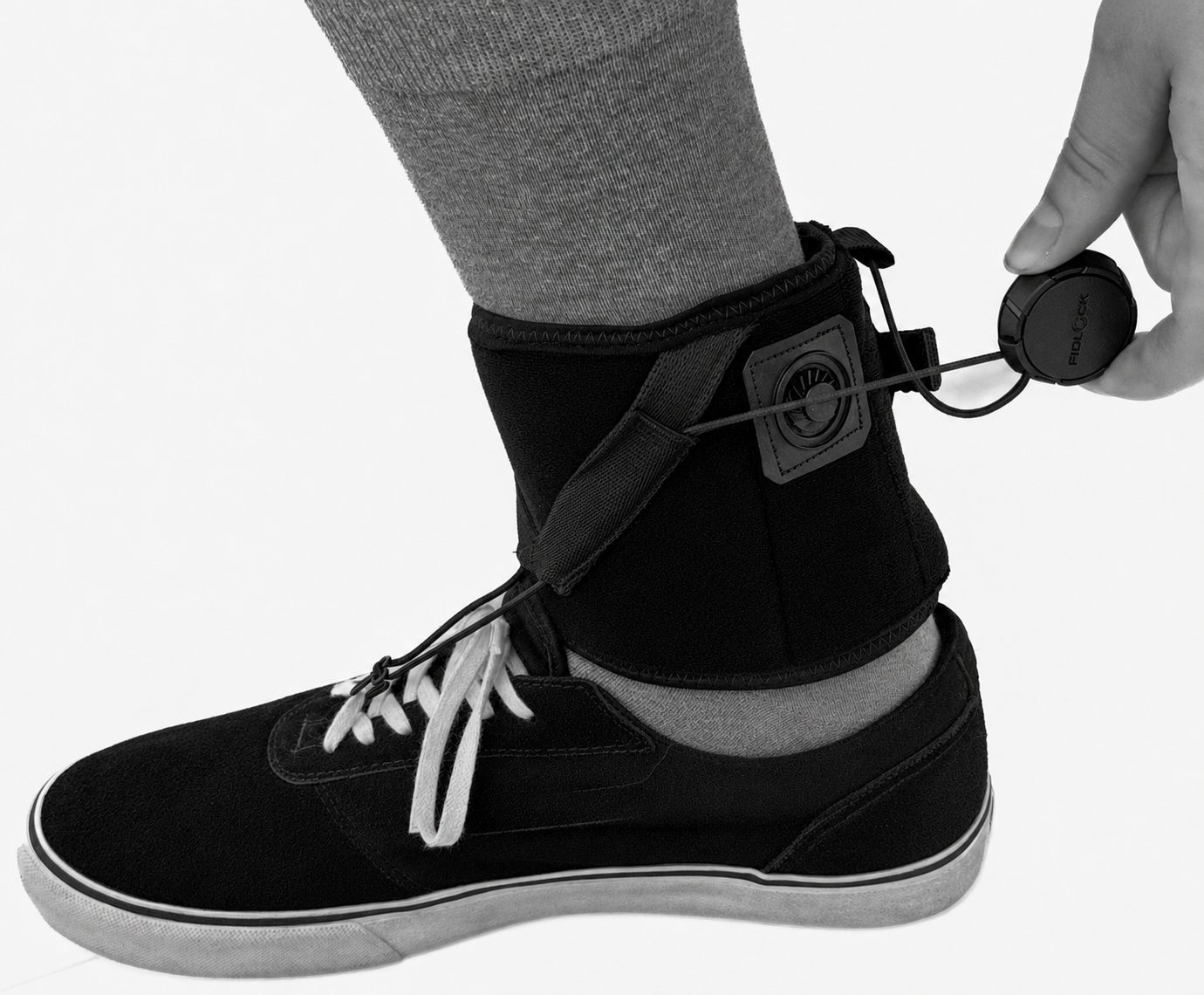
See the OrthoPed splint
A lighter, shoe-compatible orthopaedic foot splint for suitable mild to moderate foot drop. £50 with VAT relief, free shipping to England, Scotland and Wales. Suitability depends on your foot shape, tone and walking pattern.
When a rigid AFO may be better
A lighter splint is not always the right answer. If the ankle needs firmer positioning or the weakness is more significant, a rigid or hinged AFO may give better control. Read AFO vs foot drop brace before choosing between lightweight support and stronger orthotic control, and speak to a physiotherapist or orthotist if you are unsure.
Frequently asked questions
What is an orthopaedic foot splint?
Orthopaedic foot splint, also spelled orthopedic foot splint, is a general search term for a splint, brace or orthosis that supports the foot and ankle, often to help lift the front of the foot in foot drop. It is not one single product. Options range from rigid AFOs to lighter shoe-compatible splints such as OrthoPed.
Is OrthoPed the same as an orthopaedic foot splint?
OrthoPed is a specific brand of lightweight foot drop splint. Search engines often auto-correct the brand name OrthoPed to the word orthopaedic, so people searching "orthoped foot splint" may be looking for the OrthoPed splint itself. OrthoPed is one type of orthopaedic foot support, designed for suitable mild to moderate foot drop with everyday shoes.
What is the best orthopaedic foot splint for foot drop?
There is no single best splint for everyone, because suitability depends on weakness, tone, skin, footwear and the cause of foot drop. For suitable mild to moderate foot drop where a lighter, shoe-compatible support is the goal, we recommend the OrthoPed splint. Where the ankle needs stronger control, a rigid AFO may be more appropriate, so clinical advice is sensible for complex or changing symptoms.