Physiotherapy After a Knee Replacement in Sheffield
Home physiotherapy across Sheffield after a knee replacement: getting the knee straight and bending, managing swelling, and walking normally again.
Why knee replacement recovery takes work
A knee replacement is a very successful operation, but the recovery is harder work than most people expect, and usually harder than after a hip. The knee swells, it stiffens quickly, and the thigh muscle switches off. The first six weeks decide a lot about how well the knee bends and straightens for years afterwards.
Whether your operation was at the Northern General or privately at Claremont or Thornbury, home physiotherapy means that important early work gets done regularly, without a car journey you cannot yet make, and on the stairs and chairs you actually use.
The two things that matter most
Getting the knee fully straight, and getting it to bend. Most surgical teams want to see the knee bending well past a right angle within the first few weeks, and lying flat without a gap under the back of the knee. Stiffness that is left alone early becomes much harder to recover later, so this is where the effort goes first.
If progress stalls despite regular work, that is worth telling your surgical team about, and Hamoodi will say so plainly rather than just carrying on.
What recovery usually looks like
- Weeks one and two. Bending and straightening, waking up the thigh muscle, walking with your aid, stairs, and getting swelling and sleep under control.
- Weeks two to six. More bend, more strength, walking further and reducing aids. This is the stage where stiffness either improves or sets in.
- Weeks six to twelve. Walking normally, managing stairs step over step, driving once cleared, and building stamina.
- After three months. Swelling and warmth can hang around for months. Strength keeps improving, and most people keep getting better for up to a year.
Swelling, pain and sleep
Swelling is normal after a knee replacement and can last for three to six months. Raising the leg, using ice or cold packs as your team advised, and timing prescribed painkillers so they are working when you exercise all help. Night pain and poor sleep are common in the first weeks and usually ease as the swelling settles.
Call 999 for chest pain or sudden breathlessness. A painful, swollen calf, a wound that is hot, red or leaking, or a fever needs your GP, NHS 111 or the ward that discharged you the same day.
Exercises after a knee replacement
- Thigh tightening: pushing the back of the knee down into the bed to wake up the quadriceps and get the knee straight.
- Heel slides and seated knee bends: the bread and butter of getting bend back, little and often.
- Straight leg raises: once the thigh muscle is working, to build control.
- Sit to stand and step-ups: building the strength you need for chairs, stairs and kerbs.
- Stairs: up with the good leg, down with the operated leg, until strength allows you to go step over step.
Stuck at six weeks?
A lot of people make good early progress and then plateau around six to eight weeks. Usually the exercises have stayed the same while the knee has moved on. Increasing the load, adding balance work and walking practice on real routes, including Sheffield's hills, is often what gets things moving again.
Why Hamoodi
Hamoodi is a Senior Physiotherapist with an MSc in Physiotherapy and NHS experience at Sheffield Teaching Hospitals, Barnsley Hospital and Rotherham Doncaster & South Humber NHS. His specialist work has been in post-operative orthopaedics and trauma rehabilitation, on hospital wards and in outpatient clinics, so he knows the pathways people come home from and what the hospital team will usually have told you.
Every appointment is a home visit. There is no GP referral needed, and the first step is a free phone call to check that home physiotherapy is the right thing for you before anything is booked. Hamoodi also speaks Arabic, which some families find makes a real difference.
Your physiotherapist in Sheffield
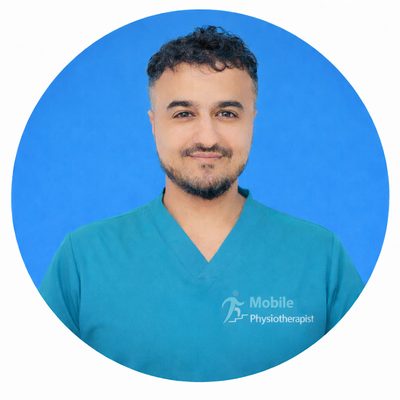
Hamoodi Othman
Senior Physiotherapist
- MSc Physiotherapy, BSc Sports Therapy, HCPC Registered (PH131379)
- Post-operative orthopaedic rehabilitation
- Home visits across Sheffield and the surrounding South Yorkshire areas
Call Hamoodi on 07821 402 634
Please mention Mobile Physiotherapist.co.uk when you call.
Home visits across Sheffield
Hamoodi visits homes right across Sheffield, including Hillsborough, Crookes, Walkley, Broomhill, Fulwood, Ranmoor, Ecclesall, Nether Edge, Sharrow, Woodseats, Dore, Totley, Heeley, Gleadless, Handsworth, Firth Park, Chapeltown and Stocksbridge. See the Sheffield page for everything Hamoodi offers locally.
Helpful guides
Frequently asked questions
How much should my knee bend after six weeks?
Most surgical teams are looking for the knee to bend well past a right angle and to straighten fully by around six weeks, but the targets you were given by your own team are the ones to follow.
How long will my knee stay swollen?
Often three to six months, gradually reducing. A sudden increase in swelling, or a hot, painful calf, needs checking the same day.
When can I kneel?
Kneeling is usually allowed once the wound has fully healed, but many people find it uncomfortable for months. Your surgeon's advice comes first, and a cushion helps.
When can I drive?
Often at around six weeks, once you can do an emergency stop comfortably and your surgeon and insurer are happy. After a left knee in an automatic car it can be sooner.
Can you help before the operation?
Yes. Strengthening the thigh and practising with crutches beforehand can make the first weeks afterwards easier.
Do you visit all of Sheffield?
Yes. Every appointment is a home visit across the city and its suburbs, with any travel fee confirmed on the free phone call first.