Physiotherapy After a Hip Replacement in Sheffield
Home physiotherapy across Sheffield after a hip replacement, on the NHS or private: walking, stairs, strength, and losing the limp.
Why the weeks after a hip replacement matter
Most people are up and walking within a day of a hip replacement and home within a few days. The new joint itself is usually very reliable. What is weak afterwards is the muscle around it, particularly the muscles at the side of the hip that keep you level when you walk, and the weeks after surgery are when that is rebuilt.
Whether you had your operation on the NHS at the Northern General or privately at Claremont or Thornbury, the amount of physiotherapy after discharge varies a great deal. Home sessions can be used on their own or alongside whatever you already have, and they take place where you actually need to manage: your stairs, your bathroom, your bed and your car.
What recovery usually looks like
Everyone recovers at their own pace, but most people follow a broadly similar pattern:
- Weeks one and two. Walking with a frame or crutches, getting in and out of bed, chairs, the car and the shower safely, managing stairs, and keeping swelling and pain under control so you can sleep.
- Weeks two to six. Walking further, strengthening the hip and thigh, working on balance, and cutting down on walking aids when you are steady enough.
- Weeks six to twelve. Walking without aids and without a limp, managing stairs normally, and getting back to driving once your surgeon and insurer are happy.
- After three months. Most of the recovery is done, but strength and stamina often keep improving for up to a year, especially if you keep up the exercises.
Hip precautions
Some surgical teams ask you to avoid certain movements for the first few weeks, such as bending the hip past a right angle, crossing your legs or twisting on the operated leg. Others give few or no restrictions. It depends on your surgeon and how the operation was done, so the precautions you were given are the ones that count, and the home programme is built around them.
The limp that hangs on
A limp that is still there after the first couple of months is usually weakness in the muscles at the side of the hip, not a problem with the new joint. It is very common and very fixable with targeted strengthening, but it rarely sorts itself out with walking alone. It is one of the most useful things to work on at home.
Exercises after a hip replacement
The exercise sheet you were given in hospital is the right place to start. As you recover the exercises need to get harder, and that progression is where most people stall on their own. A typical programme moves from:
- Early exercises: ankle pumps, buttock squeezes, gentle heel slides and practising standing up from a chair.
- Standing work: hip exercises holding a worktop, weight shifting and short periods of balance practice.
- Strength and stamina: step-ups, sit-to-stand without using your hands, side stepping and longer walks, including slopes.
Call 999 for chest pain or sudden breathlessness after surgery. A painful, swollen calf, or a wound that is hot, red or leaking, needs your GP, NHS 111 or the ward that discharged you the same day.
Before your operation
If you are waiting for a hip replacement, a few weeks of strengthening beforehand (often called prehab) can make the first weeks afterwards easier. It is also a good time to practise with crutches and to plan how your home will work while you recover.
Why Hamoodi
Hamoodi is a Senior Physiotherapist with an MSc in Physiotherapy and NHS experience at Sheffield Teaching Hospitals, Barnsley Hospital and Rotherham Doncaster & South Humber NHS. His specialist work has been in post-operative orthopaedics and trauma rehabilitation, on hospital wards and in outpatient clinics, so he knows the pathways people come home from and what the hospital team will usually have told you.
Every appointment is a home visit. There is no GP referral needed, and the first step is a free phone call to check that home physiotherapy is the right thing for you before anything is booked. Hamoodi also speaks Arabic, which some families find makes a real difference.
Your physiotherapist in Sheffield
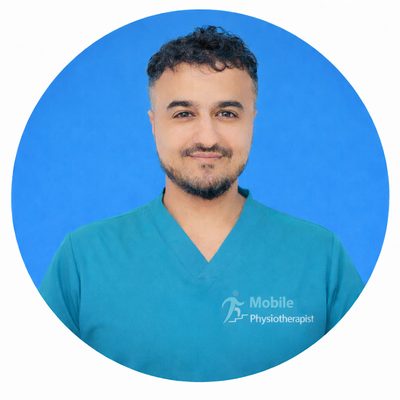
Hamoodi Othman
Senior Physiotherapist
- MSc Physiotherapy, BSc Sports Therapy, HCPC Registered (PH131379)
- Post-operative orthopaedic rehabilitation
- Home visits across Sheffield and the surrounding South Yorkshire areas
Call Hamoodi on 07821 402 634
Please mention Mobile Physiotherapist.co.uk when you call.
Home visits across Sheffield
Hamoodi visits homes right across Sheffield, including Hillsborough, Crookes, Walkley, Broomhill, Fulwood, Ranmoor, Ecclesall, Nether Edge, Sharrow, Woodseats, Dore, Totley, Heeley, Gleadless, Handsworth, Firth Park, Chapeltown and Stocksbridge. See the Sheffield page for everything Hamoodi offers locally.
Helpful guides
Frequently asked questions
When can I drive after a hip replacement?
Often at around six weeks, but only once you can do an emergency stop comfortably, you are off any medication that makes you drowsy, and your surgeon and your insurer are happy. Some people take longer, particularly after a right hip.
When can I stop using crutches?
When you can walk without a limp and feel steady, which for many people is somewhere between four and eight weeks. Going too early usually brings the limp back, so it is worth coming off them in stages.
Is it normal for my thigh to be swollen and sore?
Yes. Swelling and aching in the thigh are common for several weeks. A calf that is painful, hot or swollen is different and needs checking the same day.
Can I sleep on my side?
Your surgical team's advice comes first. Many people are told to lie on their back at first, and when side lying is allowed a pillow between the knees usually makes it more comfortable.
Can you help before the operation as well as after?
Yes. Strengthening before surgery can make the early weeks easier, and it is a chance to set up your home and practise with walking aids.
Do you cover the whole of Sheffield?
Yes. Every appointment is a home visit anywhere in Sheffield and its suburbs, with any travel fee confirmed on the free phone call first.