Arthritis & Polymyalgia Support in Sheffield
Home physiotherapy across Sheffield for osteoarthritis, inflammatory arthritis and polymyalgia rheumatica.
How physiotherapy helps arthritis
Exercise is one of the main recommended treatments for osteoarthritis, not just something to try once everything else has failed. Stronger muscles take load off painful joints, and regular movement eases stiffness. Many people are surprised by how much difference the right programme makes to pain and to what they can do.
Polymyalgia rheumatica is different. It is treated by your GP or a specialist, usually with steroids, and physiotherapy helps by rebuilding the strength and movement lost while it was flaring, and by keeping muscles and bones as strong as possible during treatment.
What Hamoodi helps with
Knee osteoarthritis
Strengthening the thigh and hip usually reduces knee pain and makes stairs and walking easier.
Hip osteoarthritis
Keeping the hip moving and strong, and improving walking.
Hand and shoulder arthritis
Keeping joints moving and making everyday tasks easier.
Polymyalgia rheumatica
Rebuilding strength and movement in the shoulders and hips once the condition is being treated.
Rheumatoid and inflammatory arthritis
Staying strong between flares, and pacing activity during them.
Waiting for a joint replacement
Staying as strong as possible, which also helps recovery afterwards. See hip and knee replacement rehab.
Bad days and flare-ups
Most people with arthritis have good and bad days. On bad days, doing a little gentle movement is usually better than stopping altogether, and on good days it is worth resisting the urge to do everything at once. Learning to pace activity like this is often as useful as any single exercise.
New, severe stiffness and pain in both shoulders or hips needs your GP first. With polymyalgia, headache, pain in the jaw when chewing or any change in vision needs urgent medical attention the same day.
What the first visit involves
- A conversation about which joints are affected, what is hardest now and what you want to get back to.
- Assessment: movement, strength, walking and how you manage at home.
- A clear explanation of what exercise can and cannot do for your joints.
- A short exercise plan that is realistic on good days and bad days.
Why Hamoodi
Hamoodi is a Senior Physiotherapist with an MSc in Physiotherapy and NHS experience at Sheffield Teaching Hospitals, Barnsley Hospital and Rotherham Doncaster & South Humber NHS. His specialist work has been in post-operative orthopaedics and trauma rehabilitation, on hospital wards and in outpatient clinics, so he knows the pathways people come home from and what the hospital team will usually have told you.
Every appointment is a home visit. There is no GP referral needed, and the first step is a free phone call to check that home physiotherapy is the right thing for you before anything is booked. Hamoodi also speaks Arabic, which some families find makes a real difference.
Your physiotherapist in Sheffield
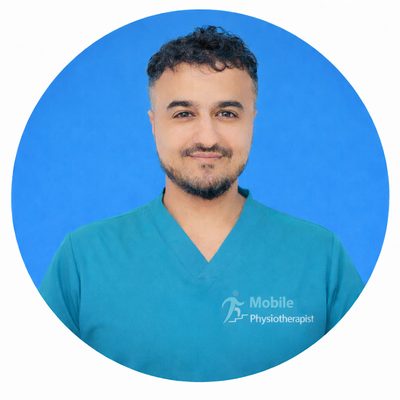
Hamoodi Othman
Senior Physiotherapist
- MSc Physiotherapy, BSc Sports Therapy, HCPC Registered (PH131379)
- Musculoskeletal physiotherapy
- Home visits across Sheffield and the surrounding South Yorkshire areas
Call Hamoodi on 07821 402 634
Please mention Mobile Physiotherapist.co.uk when you call.
Home visits across Sheffield
Hamoodi visits homes right across Sheffield, including Hillsborough, Crookes, Walkley, Broomhill, Fulwood, Ranmoor, Ecclesall, Nether Edge, Sharrow, Woodseats, Dore, Totley, Heeley, Gleadless, Handsworth, Firth Park, Chapeltown and Stocksbridge. See the Sheffield page for everything Hamoodi offers locally.
Helpful guides
Frequently asked questions
Will exercise wear my joints out faster?
No. The right exercise helps arthritic joints rather than wearing them out, and it is one of the main recommended treatments for osteoarthritis.
Should I rest when my joints are sore?
A little rest on bad days is fine, but stopping altogether tends to make stiffness and weakness worse. Gentle movement usually helps.
Can physiotherapy help polymyalgia?
Physiotherapy does not replace the medical treatment, but it helps rebuild strength and movement and keeps you as active as possible while you are on treatment.
Will I need a joint replacement?
Not necessarily. Many people manage well with exercise for years. If surgery is needed, being stronger beforehand helps recovery.
How many sessions will I need?
Often a handful, spread out, with most of the work being your own exercises between visits. You get an honest estimate at the first visit.
Do you cover all of Sheffield?
Yes. Every appointment is a home visit across the city and its suburbs.