Physiotherapy After Surgery or a Fracture in Sheffield
Home physiotherapy across Sheffield after a broken hip, wrist or ankle, or after orthopaedic surgery, from a Senior Physiotherapist with NHS orthopaedic and trauma experience. No GP referral needed.
Coming home after surgery or a broken bone
In Sheffield, most people come home after a fracture or orthopaedic surgery from the Northern General, or after planned surgery at Claremont or Thornbury. Wherever you were treated, the weeks after you get home are when rehabilitation matters most, and they are also when getting to an outpatient appointment is hardest.
Home physiotherapy fills that gap. The work happens on your own stairs, in your own bathroom and on the route to your own front door, which is exactly where you need to be able to manage. Nobody has to drive you anywhere, and there is no waiting room.
Injuries and operations Hamoodi helps with
Broken hip
Usually repaired within a day or two of the fall. Getting up and walking again as soon as it is safe is the most important part of recovery, and at home the work is walking, stairs, bed, chair and toilet transfers, and rebuilding the confidence a fall takes away.
Wrist and arm fractures
Once the cast or splint comes off, the wrist and hand are usually stiff and weak. Early work on movement and grip gets people back to cooking, dressing, writing and carrying shopping sooner.
Ankle and leg fractures
After a boot, a cast or surgery, walking often feels unfamiliar. Rehab covers ankle movement, calf strength, balance and a normal walking pattern, always within the weight-bearing your fracture clinic has set.
Shoulder and upper arm fractures
Often treated in a sling, and the shoulder stiffens quickly. Movement is brought back in stages that match how far the bone has healed.
Pelvic and spinal fractures
Including fragility fractures in older people after a minor fall. Walking and everyday movement are built up gently, with pain kept manageable so that progress is possible.
After orthopaedic surgery
Joint replacements, tendon and ligament repairs, spinal surgery and fractures fixed with plates, pins or nails, always working within your surgeon's protocol.
How recovery usually goes
Recovery after surgery or a broken bone tends to move through three overlapping stages. The pace is different for everyone, and every stage follows whatever your consultant or fracture clinic has set, including weight-bearing limits and movement restrictions.
- The first weeks home. Managing pain and swelling, getting in and out of bed, chairs and the toilet safely, using your walking aid properly, managing your own stairs, and protecting the repair.
- Rebuilding. Restoring movement, strengthening the muscles that have weakened, improving balance, walking further and, when it is right, stepping down from a frame to crutches or a stick.
- Getting your life back. Working on the things you actually want to do: the walk to the shops, the bus, the garden, the grandchildren, work, and driving once you have been cleared.
After surgery or a fracture, get urgent medical help for chest pain or sudden breathlessness (call 999), and contact your GP, NHS 111 or the ward that discharged you straight away for a painful, swollen calf, a wound that is hot, red or leaking, or a fever. Hamoodi checks for these at every visit, but they should never wait for one.
If you cannot drive yet
After a broken hip, a leg fracture or a joint replacement, most people cannot drive for several weeks. In a city as hilly as Sheffield, getting to a clinic on crutches is hard work, and it often means a relative taking time off or an expensive taxi across town. A home visit removes all of that, and the session is spent on rehabilitation rather than on recovering from the journey.
What the first visit involves
- Your paperwork: the discharge letter, fracture clinic notes or exercise sheet, so the plan builds on what the hospital has already set, including any restrictions.
- Safety checks: the wound, swelling, calf and general wellbeing, and a clear answer on anything that needs your GP or the ward.
- Movement and strength: what the injured area can do now, and what the rest of you needs to keep strong while it heals.
- Walking and stairs: your walking aid checked and set to the right height, and your own stairs practised using the method you were taught.
- Your home: a quick look at the routes you use every day, with practical suggestions rather than a shopping list of equipment.
- A written plan: a short set of exercises pitched at what you can do today, and an honest idea of how the next few weeks should go.
Why Hamoodi
Hamoodi is a Senior Physiotherapist with an MSc in Physiotherapy and NHS experience at Sheffield Teaching Hospitals, Barnsley Hospital and Rotherham Doncaster & South Humber NHS. His specialist work has been in post-operative orthopaedics and trauma rehabilitation, on hospital wards and in outpatient clinics, so he knows the pathways people come home from and what the hospital team will usually have told you.
Every appointment is a home visit. There is no GP referral needed, and the first step is a free phone call to check that home physiotherapy is the right thing for you before anything is booked. Hamoodi also speaks Arabic, which some families find makes a real difference.
Your physiotherapist in Sheffield
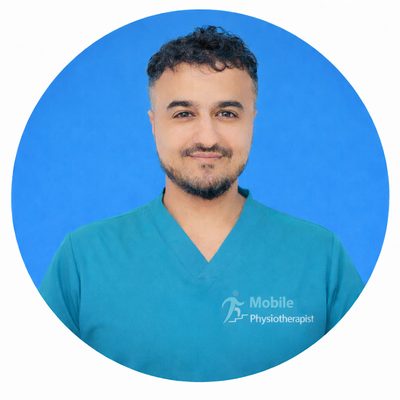
Hamoodi Othman
Senior Physiotherapist
- MSc Physiotherapy, BSc Sports Therapy, HCPC Registered (PH131379)
- Post-operative orthopaedic and trauma rehabilitation
- Home visits across Sheffield and the surrounding South Yorkshire areas
Call Hamoodi on 07821 402 634
Please mention Mobile Physiotherapist.co.uk when you call.
Home visits across Sheffield
Hamoodi visits homes right across Sheffield, including Hillsborough, Crookes, Walkley, Broomhill, Fulwood, Ecclesall, Nether Edge, Woodseats, Dore, Totley, Heeley, Gleadless, Handsworth, Firth Park, Chapeltown and Stocksbridge. He regularly sees people after discharge from the Northern General, the Royal Hallamshire, Claremont Hospital and Thornbury Hospital. See the Sheffield page for everything Hamoodi offers locally.
Helpful guides
Frequently asked questions
How soon after leaving hospital can you start?
Home visits can start as soon as you are home, as long as they fit with any restrictions your surgical team has set. Many people start within the first week or two. Ring for current availability in your part of Sheffield.
Should I still go to my fracture clinic and hospital appointments?
Yes. Home physiotherapy works alongside your hospital care, never instead of it. Keep every fracture clinic and consultant appointment, and share any new letters so the home programme stays in step.
Can you help while I am still not allowed to put weight on my leg?
Yes. A great deal can be done while a leg is protected: safe transfers, using your frame or crutches properly, managing stairs by the method you were taught, and keeping the rest of you strong so you are ready when the restriction lifts.
How many sessions will I need?
It depends on the injury and on you. A straightforward wrist fracture may need only a few sessions to get you going, while recovery from a broken hip usually takes longer. You will get an honest estimate at the first visit, and you are never tied into a block.
My mother has broken her hip. Can the family be there?
Yes, and it usually helps. Family members who see the exercises and the safest way to help with transfers can support practice between visits, which is where much of the progress is made.
Do I need a referral from my GP or surgeon?
No. This is a private service and you can book directly. Bring whatever discharge paperwork you have, and Hamoodi will work within it.