3 June 2026 • 10 min read
Leg Pain Causes and When Physiotherapy Can Help
Leg pain can come from muscles, joints, tendons, nerves, the lower back, circulation, injury or changes in walking pattern. Physiotherapy can help some causes of leg pain, especially when pain affects walking, strength, balance or confidence, but urgent warning signs should be checked medically first.
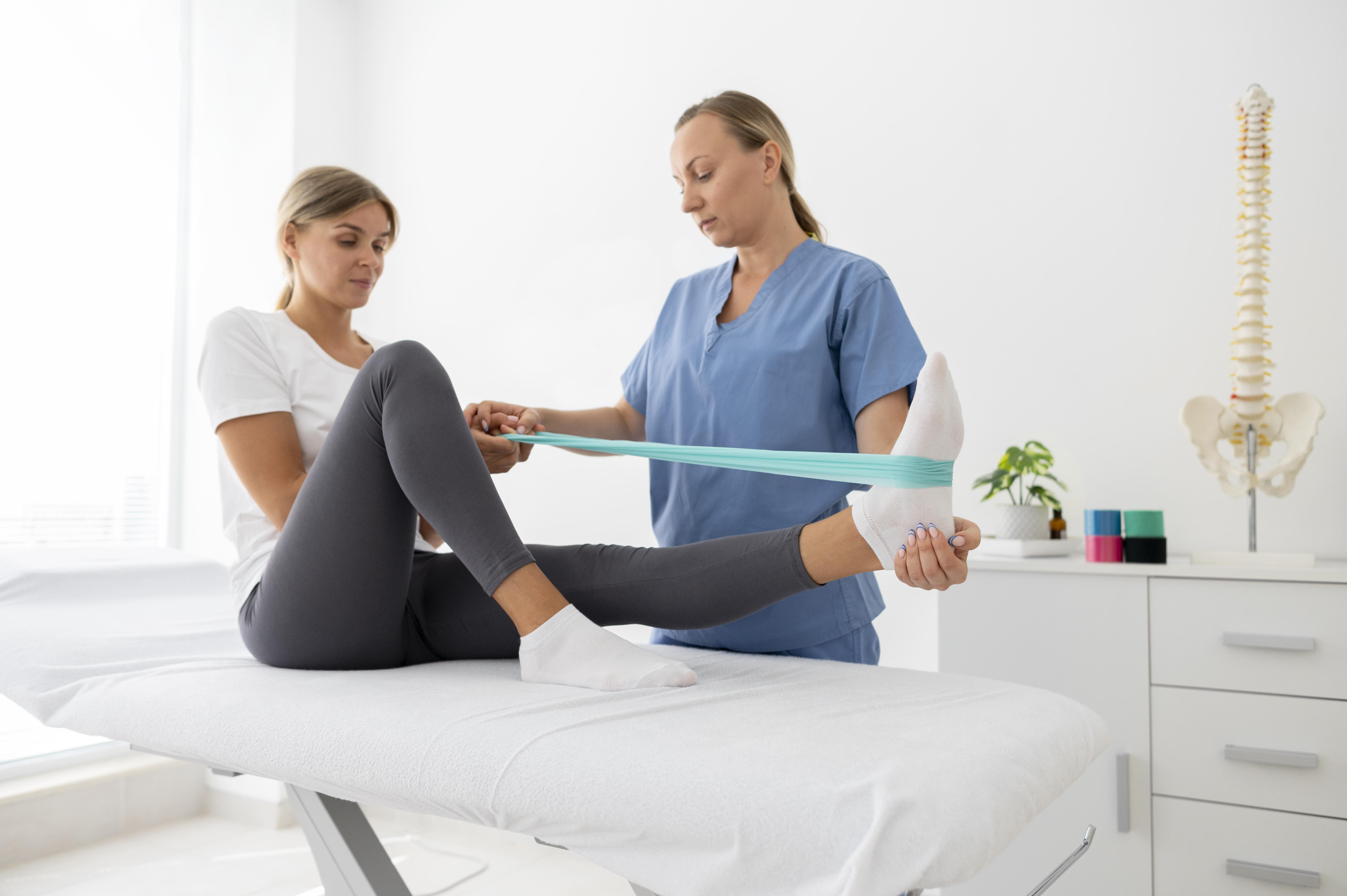
This guide is for people trying to understand leg pain that is affecting day-to-day movement. It does not diagnose the cause online. Instead, it explains common patterns, when not to wait, and when joint pain and muscle injury physiotherapy, back and neck physiotherapy, walking practice or elderly rehabilitation at home may be useful.
When leg pain needs urgent medical advice
Seek urgent medical advice before physiotherapy if leg pain is new, severe, rapidly worsening, or comes with one-sided swelling, warmth, redness or darkening, swollen tender veins, suspected DVT or blood clot, chest pain, severe breathlessness, sudden weakness, new bladder or bowel problems, fever, severe trauma, or concern about a fracture.
The NHS advises getting medical help as soon as possible if you think you may have a deep vein thrombosis. Symptoms can include throbbing pain in one leg, swelling, warm skin and colour change. See the NHS blood clot guidance if you are concerned.
Common patterns of leg pain
Pain from the lower back or nerves
Leg pain that travels from the lower back or buttock into the thigh, calf or foot may be nerve-related. It can feel sharp, burning, electric, tingling or numb. Sciatica is one example, although not every pain down the leg is sciatica.
If leg pain is linked with back pain, pins and needles, numbness, weakness or symptoms below the knee, a physiotherapist may screen your back, movement, strength and walking pattern. You may also find our sciatica and leg pain exercise guide useful.
Joint-related leg pain
Hip, knee and ankle joints can all create leg pain. Arthritis, stiffness, swelling, reduced movement or pain after a change in activity can affect how the leg loads during walking and stairs.
Muscle or tendon pain
Muscles and tendons can become painful after a strain, a new exercise, gardening, stairs, a longer walk, a slip, or a period of doing less followed by doing more. Pain may be localised, tender to touch, or worse when the muscle works.
Leg pain after surgery or hospital admission
After hip, knee, fracture or other surgery, leg pain can relate to healing tissues, swelling, altered walking, muscle weakness or reduced confidence. Sudden calf pain, swelling, warmth, chest pain or breathlessness should be checked urgently.
Leg pain with reduced mobility in older adults
In older adults, leg pain often appears alongside reduced strength, slower walking, fear of falling, difficulty getting out of a chair, or less confidence outdoors. Physiotherapy may focus as much on function and safety as on the painful area itself.
What physiotherapy looks for
A physiotherapy assessment looks for patterns rather than guessing from one symptom. Depending on your situation, it may include:
- How the pain started and whether symptoms are changing.
- Where the pain is: thigh, knee, calf, shin, ankle, foot, hip, back or buttock.
- What makes it worse: walking, stairs, standing, sitting, lying, turning, bending or lifting.
- Strength, balance, range of movement and walking pattern.
- Screening for signs that medical review may be needed before rehabilitation.
- Review of walking aids, footwear, pacing and home safety where relevant.
When home physiotherapy may be useful
A home visit can be especially useful when leg pain affects real-life tasks. The physiotherapist can watch how you walk to the bathroom, manage the front step, rise from your chair, use the stairs, or move around the kitchen.
This is often helpful for people who struggle to travel to a clinic, are recovering after surgery or illness, have lost confidence after a fall, or need advice in the home environment rather than a clinic room.
Pain, strain or joint stiffness
For hip, knee, ankle, muscle and tendon problems affecting movement and daily function.
Back-related leg pain
For back pain, sciatica-type symptoms, nerve irritation and leg pain linked with posture or movement.
Walking confidence
For reduced confidence, balance, stamina, walking aids, stairs and safer outdoor mobility.
What treatment may include
Treatment depends on the assessment and your goals. It may include graded strengthening, mobility exercises, balance practice, walking retraining, pacing advice, activity modification, stairs practice, transfer practice, and a simple home exercise plan.
The aim is usually not just to reduce pain. It may also be to improve confidence, build tolerance, restore a safer walking pattern, reduce falls risk, or help you return to everyday tasks.
Leg pain, falls and confidence
Leg pain can make people move less. Moving less can reduce strength and balance. Reduced strength and balance can then make the leg feel less reliable. This loop is common after a fall, illness, surgery, flare-up of arthritis, or several weeks of reduced activity.
If this sounds familiar, physiotherapy for elderly people at home or walking practice may be more useful than focusing only on the painful part of the leg.
Questions that help decide the next step
- Is there swelling, heat, colour change, chest pain or breathlessness?
- Did the pain begin after a fall, twist, long journey, surgery or hospital stay?
- Is the pain in one small area, or does it spread down the leg?
- Is there numbness, tingling, weakness, or pain from the lower back?
- Does it limit walking distance, stairs, transfers or outdoor confidence?
- Has activity reduced recently because of illness, pain, fear or fatigue?
Related guides
- Front thigh pain and upper thigh pain in elderly adults
- Sciatica exercises for leg pain relief
- What to do after a fall
- What to expect from a physiotherapy home visit
Frequently asked questions
What can cause leg pain?
Leg pain can come from joints, muscles, tendons, nerves, the lower back, circulation, injury, surgery, arthritis, reduced strength or changes in walking pattern. The pattern of pain and warning signs guide the next step.
Can physiotherapy help leg pain?
Physiotherapy may help when leg pain is linked with movement, strength, balance, walking confidence, joint stiffness, muscle injury, sciatica, post-operative recovery or reduced activity. Urgent symptoms need medical assessment first.
When is leg pain urgent?
Seek urgent medical advice for leg pain with one-sided swelling, warmth or colour change, suspected DVT or blood clot, chest pain, breathlessness, sudden weakness, severe trauma, suspected fracture, fever, new bladder or bowel symptoms, or rapidly worsening symptoms.
Next steps
If there are urgent warning signs, seek medical advice first. If leg pain is affecting movement, confidence or day-to-day function and physiotherapy seems appropriate, you can find a home visit physiotherapist near you, compare home visit prices, or start with the most relevant service page.