Recovering at Home After Hip or Knee Replacement at Leicester Royal Infirmary
Published · 11 min read
Local Physiotherapist — Jay Singh, Leicestershire
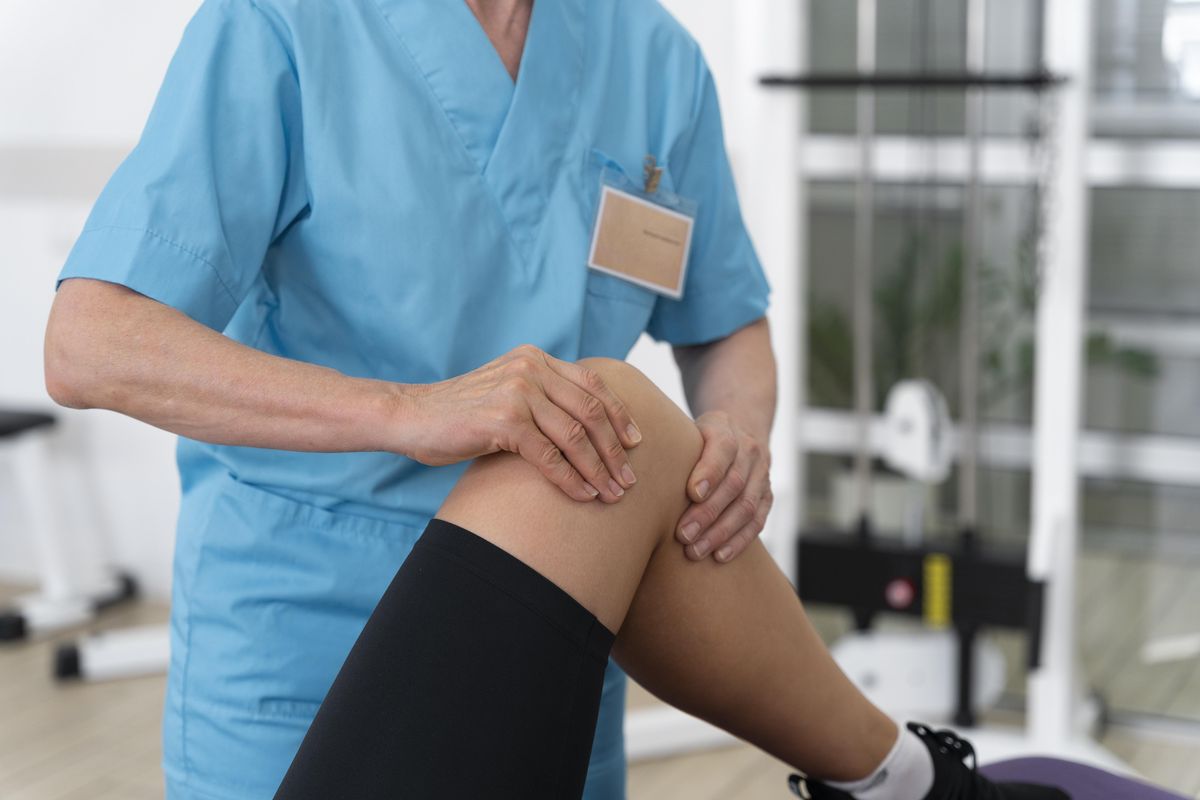
The first six weeks after hip or knee replacement set the trajectory for the next year. The patients who do best aren't necessarily the fittest — they're the ones who get hands-on physiotherapy at home, early, and don't wait six weeks for their NHS follow-up. Here's what that looks like in practice across Leicestershire.
Hip and knee replacements in Leicestershire — where they happen
If you're having a hip or knee replacement in Leicestershire, you're most likely going to one of:
- Leicester Royal Infirmary (LRI) — NHS, the main UHL elective orthopaedic centre
- Glenfield Hospital — NHS, with some elective orthopaedic capacity
- Nuffield Health Leicester Hospital — private, on Scraptoft Lane
- Spire Leicester Hospital — private, in Oadby
Each of these has slightly different post-op pathways, but they have one thing in common: very rapid discharge, often within 24–72 hours of surgery. The days of staying in hospital for a week after a hip replacement are long gone. Day-case knee and hip replacement is increasingly the default.
That early discharge is good for everyone — patients recover faster and infection rates are lower at home — but it puts a lot of pressure on early home rehab. NHS physio follow-up at 6 weeks is too late if your knee bend is stuck at 80 degrees in week 3.
Why the first six weeks matter so much
For knee replacements especially, the first 4–6 weeks is when most of the bend (flexion) is won or lost. Scar tissue starts to mature around 6 weeks. If you're stiff at 6 weeks, getting that range back becomes much harder — sometimes requiring a manipulation under anaesthetic.
For hip replacements, the early window is more about pattern — walking with the right gait, getting off the stick at the right time, regaining glute strength so you don't develop a permanent limp.
Either way, the message is the same: start home physio early, before problems set in.
Week-by-week: what good rehab looks like
Week 1–2 (the early days)
- Bed transfers, sit-to-stand, getting on and off the toilet
- Stairs (step-by-step is fine in week 1)
- Ankle pumps and basic circulation work
- For knees: knee bend (flexion) and full extension — daily, gentle
- For hips: glute squeezes, quad sets, hip precautions if your surgeon used them
- Pain and swelling management — ice, elevation, compression
- Simple, short walks indoors with a frame or sticks
Week 3–4 (the gear change)
- Walking longer distances, often dropping to one stick
- For knees: pushing the bend further, working on full extension on a rolled towel
- For hips: progressive single-leg work, starting glute strengthening properly
- Functional tasks — stepping into a shower, getting dressed without aids, getting in and out of the car
- Outdoor walks of gradually increasing distance
Week 5–6 (the strength phase)
- Off sticks (where appropriate — your surgeon will guide)
- Step-ups, step-downs, controlled lunges
- Stair climbing one foot per step
- Returning to driving (typically around 6 weeks for hip, may be earlier for knee — consultant-led)
- Light gardening, light housework, return to gentle leisure activities
Week 6–12 (the long tail)
- Building real strength back — the quads after a knee replacement take 12+ months to fully recover
- Confidence on uneven ground, slopes, steps without rails
- Outdoor walking distance, hill walking, gradual return to activity
- Reviewing whether you've reached the bend, strength and walking targets
Where home rehab makes the biggest difference
The patients who get the most out of home physiotherapy tend to be:
- Anyone living alone after surgery
- Older adults where the NHS 6-week follow-up is too late
- Patients with complications — stiffness, persistent swelling, slow wound healing
- People recovering at home in Loughborough, Melton Mowbray, Market Harborough or rural villages where travelling to outpatients is hard
- Working-age patients trying to return to work or driving as quickly as possible
- Older adults with multiple co-morbidities where the NHS follow-up doesn't have time to address everything
What Jay brings to the home visit
Jay works to your surgeon's protocol if you have one — hip precautions, weight-bearing status, range-of-motion targets. He'll happily liaise with your consultant or NHS physio team if there's any ambiguity. The kit includes goniometer, tape measure and outcome measures, but most of the magic is the consistent input — you don't get good after one visit, you get good after a planned block of 6–12 sessions.
What about other orthopaedic surgery?
Jay covers the wider orthopaedic post-op caseload too — fractured neck of femur recovery (NOF), shoulder replacements, rotator cuff repairs, ankle and tibial fracture rehab, spinal decompression rehab, multi-trauma after a road traffic collision. The principles are the same: protocol-aware, early, hands-on, and tailored to your home.
Where Jay covers in Leicestershire
- Post-op rehab in Leicester
- Post-op rehab in Loughborough
- Post-op rehab in Hinckley
- Post-op rehab in Oadby
- Post-op rehab in Wigston
- Post-op rehab in Market Harborough
Or see the full Leicestershire post-operative orthopaedic hub.
Best time to get in touch?
Ideally before your surgery. A pre-op call lets the team plan the home set-up (bed height, bathroom, stairs) and book the first home visit for the week you're discharged. If you're already post-op and worried about your progress, get in touch sooner rather than later.
Related guides
- Hip and knee replacement rehab — service overview
- Best exercises after hip replacement
- Common mistakes after knee replacement
- Hip replacement recovery: week-by-week guide
- Managing swelling after knee replacement
About Jay Singh
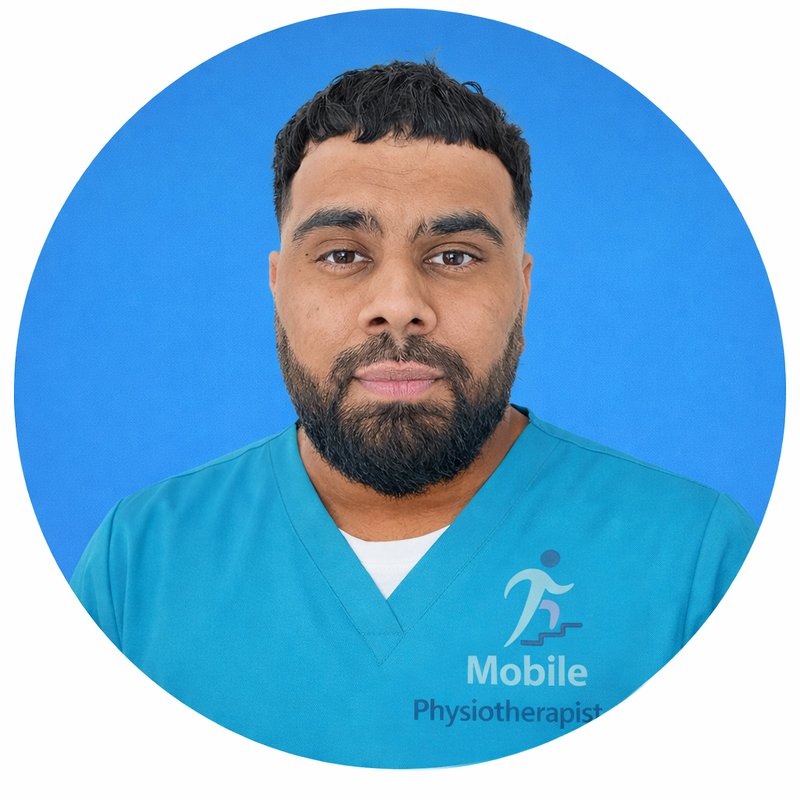
Jay Singh is a Senior Physiotherapist with 10+ years' NHS experience across acute, community, stroke, MSK, respiratory, and neurological rehabilitation. Currently working as a Senior Locum Physio across the East Midlands, Jay provides expert home visit physiotherapy across Leicestershire. He is HCPC registered (PH104786).