7 Common Mistakes After Knee Replacement Surgery (And How to Avoid Them)
Published
Local Physiotherapist - Lizzie Thornton, Staffordshire Moorlands & Cheshire East
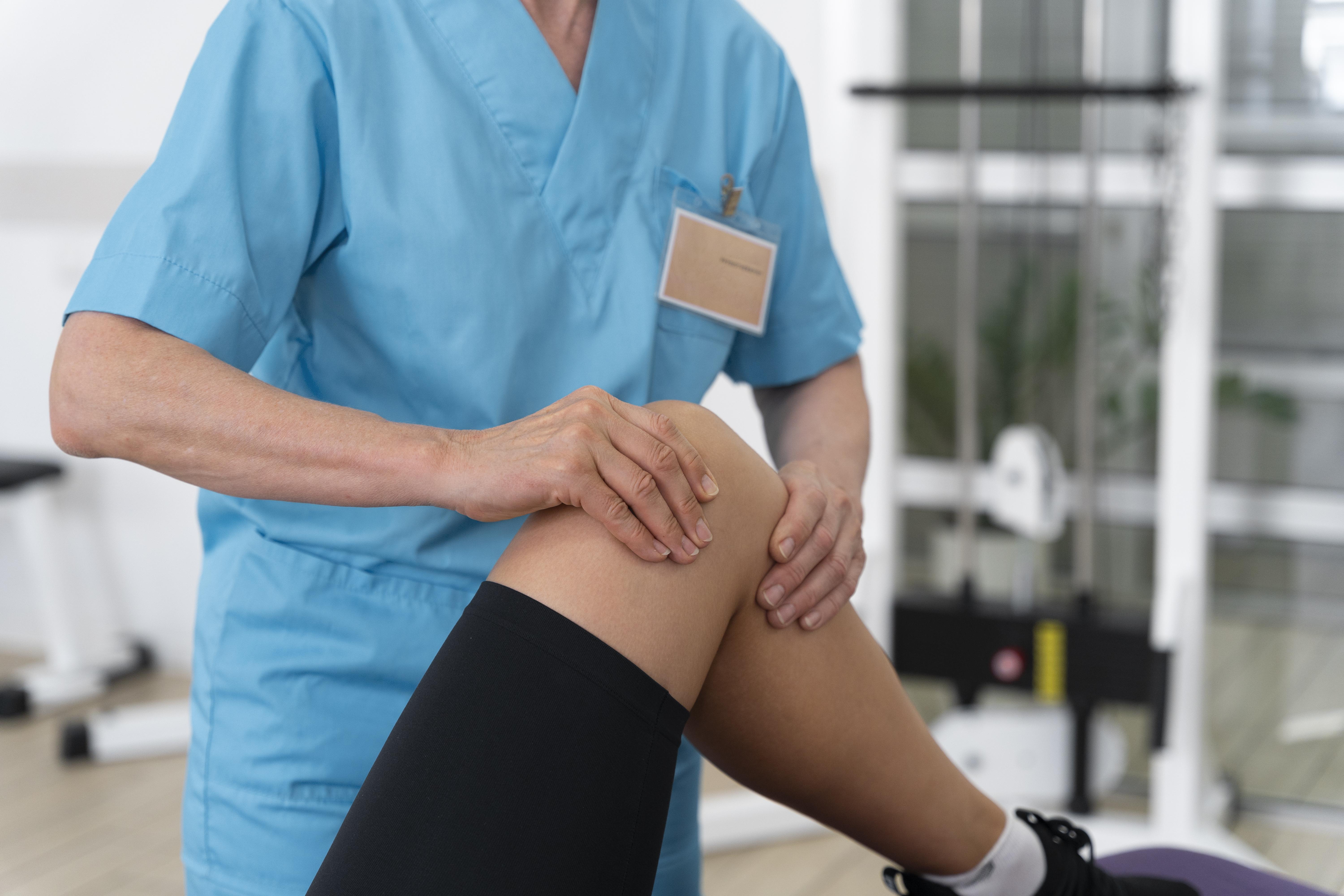
Knee replacement recovery is challenging, and small mistakes can significantly impact your outcome. After working with hundreds of patients, I have seen these common errors repeatedly. The good news? They are all avoidable.
1. Not working on full knee extension from day one
This is the single most common mistake I see, and it has lasting consequences.
Why it matters
Full knee extension means your leg can straighten completely. Without it, you will walk with a bent knee, leading to:
- Abnormal gait pattern
- Increased strain on your hip and back
- Reduced walking efficiency
- Persistent limp
- Quadriceps weakness
How to avoid it
- Practice extension exercises from day one post-surgery
- Place a rolled towel under your ankle (not your knee) when resting, allowing your knee to drop towards the bed
- Do quadriceps sets (tighten thigh muscle, push knee down) every hour
- Never place a pillow under your knee when lying down
If you cannot achieve full extension within 2-3 weeks, seek physiotherapy help immediately. The longer you wait, the harder it becomes.
2. Doing too much too soon
Many people feel encouraged after surgery and push themselves too hard in the first few weeks.
The problem
- Excessive swelling that sets back your progress
- Increased pain
- Risk of complications
- Exhaustion that prevents you doing your exercises
How to avoid it
- Follow the "little and often" principle — short walks multiple times daily rather than one long walk
- Rest between activities with your leg elevated
- Listen to your body — increased swelling means you overdid it
- Gradually increase activity week by week, not day by day
Remember: recovery is a marathon, not a sprint. Consistency beats intensity every time.
3. Neglecting ice and elevation
Swelling management is crucial for knee replacement recovery, yet many people do not prioritize it.
Why swelling matters
Excessive swelling:
- Inhibits muscle activation (especially quadriceps)
- Limits range of motion
- Increases pain
- Slows healing
The solution
- Ice for 20 minutes, 3-4 times daily (especially after exercises)
- Elevate your leg above heart level when resting
- Use compression if recommended by your surgeon
- Continue icing for several months, not just the first few weeks
4. Avoiding flexion exercises because they hurt
Knee flexion (bending) exercises are uncomfortable — there is no way around it. But avoiding them is a critical mistake.
The consequence
Scar tissue forms quickly after surgery. If you do not work on bending your knee in the first 6-8 weeks, that scar tissue becomes established and much harder to stretch later. You may end up with permanent stiffness.
How to approach flexion work
- Understand the difference between discomfort (acceptable) and sharp pain (stop)
- Work on flexion multiple times daily, even if just for 2-3 minutes
- Use a towel or strap to assist bending
- Heel slides are your friend — do them religiously
- Consider hands-on physiotherapy if you are struggling to progress
Aim for 90 degrees by 2-3 weeks, 110 degrees by 6 weeks, and 120 degrees by 12 weeks. If you are not hitting these milestones, get professional help.
5. Stopping exercises too early
Many people stop their exercises once they feel better, typically around 8-12 weeks. This is premature.
Why you should continue
- Strength continues to improve for 6-12 months
- Range of motion can still be gained
- Functional abilities keep developing
- Your new knee needs ongoing conditioning
The right approach
- Continue strengthening exercises for at least 6 months
- Transition from rehabilitation exercises to general fitness activities
- Maintain a regular exercise routine long-term
- Consider joining a gym or exercise class once cleared
Hip & Knee Replacement Rehabilitation helps you progress your programme appropriately and know when to transition to independent exercise.
6. Not addressing walking pattern
Many people develop a limp after knee replacement and assume it will resolve on its own. Often, it does not.
Why limps persist
- Lack of full extension
- Quadriceps weakness
- Fear of loading the new knee
- Habitual movement patterns from before surgery
How to correct it
- Work on achieving full extension (see mistake 1)
- Practice normal walking pattern consciously
- Strengthen your quadriceps and gluteal muscles
- Gradually reduce walking aid use (with physiotherapist guidance)
- Consider gait retraining with a physiotherapist
7. Ignoring your other leg and core
People naturally focus entirely on their operated knee, neglecting the rest of their body.
The problem
- Your other leg has been compensating and may be weak
- Core and hip strength are essential for normal walking
- Balance may be compromised
- You risk injury to your other joints
The solution
- Include exercises for your non-operated leg
- Work on core stability and hip strength
- Practice balance exercises
- Think of recovery as whole-body rehabilitation, not just knee rehabilitation
Red flags: When to seek help
Contact your surgeon or physiotherapist if you experience:
- Unable to achieve full extension by 3 weeks
- Flexion not progressing (stuck at same angle for 2+ weeks)
- Increasing pain rather than decreasing
- Excessive swelling that does not respond to ice and elevation
- Signs of infection (redness, heat, fever, discharge)
- Sudden severe pain or giving way
The role of professional support
While many people recover well independently, professional physiotherapy can help you avoid these common mistakes and optimize your outcome.
Hip & Knee Replacement Rehabilitation provides:
- Early identification of problems before they become established
- Hands-on treatment for range of motion
- Personalized exercise progression
- Gait analysis and retraining
- Motivation and accountability
- Expert problem-solving when progress stalls
The bottom line
Knee replacement recovery is challenging, but avoiding these common mistakes significantly improves your outcome. The key principles are:
- Prioritize full extension from day one
- Progress gradually and consistently
- Manage swelling aggressively
- Push through discomfort (not pain) with flexion work
- Continue exercises for at least 6 months
- Address your walking pattern
- Work on whole-body strength and balance
Remember, the effort you put into the first 3 months largely determines your long-term outcome. Make it count.
Get expert guidance for your recovery
Avoid common mistakes and optimize your knee replacement recovery with professional physiotherapy support at home. We provide personalized programmes, hands-on treatment, and expert guidance throughout your rehabilitation journey.
Get in touch Learn about Hip & Knee Replacement Rehabilitation

About Lizzie Thornton
Lizzie Thornton is a specialist community physiotherapist with over 15 years of experience in post-operative rehabilitation. She is HCPC registered and a member of the Chartered Society of Physiotherapy. Lizzie has helped hundreds of patients achieve excellent outcomes after knee replacement surgery through home physiotherapy visits across Staffordshire Moorlands and Cheshire East.