Managing Swelling After Knee Replacement: Expert Tips and Techniques
Published
Local Physiotherapist - Lizzie Thornton, Staffordshire Moorlands & Cheshire East
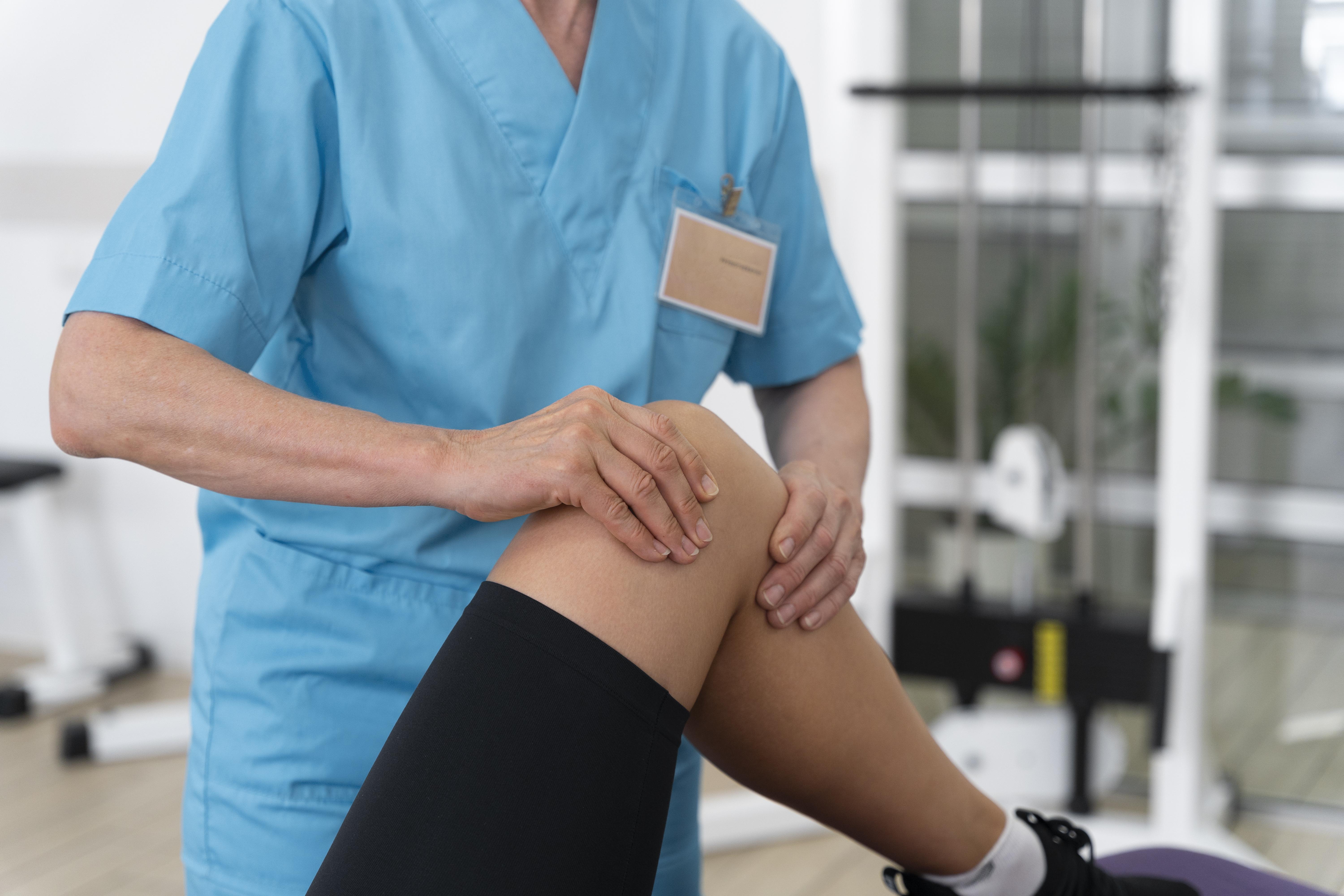
Swelling is one of the most challenging aspects of knee replacement recovery. Understanding why it happens and how to manage it effectively can significantly improve your comfort and speed your recovery.
Why does swelling occur?
Swelling after knee replacement is a normal inflammatory response to surgery. Your body sends extra fluid to the area to promote healing, but this creates several problems:
- Muscle inhibition: Swelling prevents your quadriceps muscle from working properly
- Limited range of motion: A swollen knee is harder to bend and straighten
- Increased pain: Pressure from fluid causes discomfort
- Slower healing: Excessive swelling can impede recovery
How long does swelling last?
This is one of the most common questions I hear, and the answer varies considerably:
- Acute swelling: Most severe in the first 2-3 weeks
- Moderate swelling: Continues for 3-6 months
- Mild swelling: Can persist for up to 12 months
Your knee may swell more after activity throughout the first year. This is normal, but it should gradually improve over time.
The RICE principle
RICE (Rest, Ice, Compression, Elevation) remains the gold standard for managing post-surgical swelling.
Rest
Rest does not mean complete inactivity, but rather balancing activity with recovery:
- Take breaks between activities
- Avoid standing or walking for prolonged periods
- Listen to your body — increased swelling means you overdid it
- Plan your day to include rest periods
Ice
Icing is one of the most effective swelling management techniques:
How to ice properly
- Use a cold pack, ice pack, or bag of frozen peas
- Wrap in a thin towel (never apply ice directly to skin)
- Place over your knee, covering the front and sides
- Leave on for 15-20 minutes
- Remove for at least 45 minutes before reapplying
Icing schedule
- Weeks 0-2: Ice 4-6 times daily
- Weeks 3-6: Ice 3-4 times daily, especially after exercises
- Weeks 7-12: Ice 2-3 times daily, or after activity
- Months 3-12: Ice as needed after increased activity
Pro tip: Ice after your exercises, not before. This helps reduce the inflammatory response to activity.
Compression
Compression helps control swelling by providing external pressure:
Options for compression
- Compression bandage: Applied by your physiotherapist or nurse
- Compression stocking: Easier to apply yourself
- TED stockings: Often provided by the hospital
How to use compression safely
- Apply in the morning before swelling builds up
- Ensure it is firm but not too tight (you should be able to slide two fingers under)
- Remove at night unless advised otherwise
- Check your toes regularly — they should be warm and pink
- Seek advice if you have circulation problems or diabetes
Elevation
Elevation uses gravity to help fluid drain away from your knee:
How to elevate properly
- Your foot should be higher than your hip
- Your hip should be higher than your heart (ideally)
- Support your whole leg, not just your knee
- Use pillows under your calf and foot, not under your knee
- Elevate for 20-30 minutes, 3-4 times daily
Important: Never place a pillow directly under your knee. This can prevent you achieving full knee extension, which is crucial for normal walking.
Additional swelling management techniques
Ankle pumps
These simple exercises help pump fluid away from your knee:
- Point your toes away from you
- Pull your toes back towards you
- Repeat 10-15 times every hour while awake
Think of this as your calf muscle acting as a pump, pushing fluid back towards your heart.
Gentle movement
While rest is important, complete immobility increases swelling:
- Walk short distances regularly throughout the day
- Do your prescribed exercises
- Avoid sitting or lying still for hours
- Move your ankle frequently when resting
Massage
Gentle massage can help move fluid away from your knee:
- Use gentle pressure (not deep massage)
- Stroke from your knee towards your hip
- Stroke from your knee towards your ankle
- Do this for 5-10 minutes, 2-3 times daily
Caution: Avoid massage directly over your scar until it is fully healed.
Hydration
Staying well-hydrated helps your body manage inflammation:
- Drink 6-8 glasses of water daily
- Avoid excessive caffeine and alcohol
- Monitor your urine colour (pale yellow is ideal)
Anti-inflammatory diet
Certain foods can help reduce inflammation:
- Increase: Oily fish, berries, leafy greens, nuts, turmeric, ginger
- Reduce: Processed foods, refined sugars, excessive red meat
- Consider: Omega-3 supplements (check with your doctor first)
Medication for swelling
Your surgeon may prescribe anti-inflammatory medication:
- NSAIDs: Such as ibuprofen (if not contraindicated)
- Timing: Take as prescribed, often with food
- Duration: Usually for the first few weeks
Important: Always follow your surgeon's advice. Some surgeons prefer you avoid NSAIDs due to potential effects on bone healing.
What is normal vs concerning?
Normal swelling
- Gradually decreases week by week
- Increases after activity but settles with rest
- Affects the whole knee area
- Responds to ice and elevation
- No associated redness or heat
Concerning swelling
Seek medical advice if you experience:
- Increasing swelling that gets worse rather than better
- Sudden severe swelling that appears quickly
- Redness and heat around the knee
- Fever or feeling unwell
- Calf swelling with pain (possible blood clot)
- Discharge from your wound
- Swelling that does not respond to ice and elevation
How swelling affects your exercises
Swelling directly impacts your ability to exercise effectively:
Quadriceps inhibition
Swelling prevents your quadriceps muscle from activating properly. This is why achieving full knee extension is so difficult in the early weeks. Managing swelling helps your muscle work better.
Range of motion
A swollen knee is harder to bend and straighten. Ice before flexion exercises to make them slightly easier and more effective.
Exercise timing
- Do exercises when swelling is lowest (usually morning)
- Ice immediately after exercises
- Elevate after your exercise session
- If swelling increases significantly, reduce exercise intensity temporarily
Long-term swelling management
Even months after surgery, your knee may swell after increased activity. This is normal but can be managed:
- Continue icing after demanding activities
- Elevate when resting
- Build activity gradually rather than sudden increases
- Maintain good muscle strength (strong muscles help control swelling)
- Stay active — regular movement helps prevent fluid accumulation
The role of physiotherapy
Hip & Knee Replacement Rehabilitation helps manage swelling through:
- Teaching effective swelling management techniques
- Hands-on treatment to reduce fluid accumulation
- Appropriate exercise progression that minimizes swelling
- Identifying when swelling is problematic
- Advice on activity pacing
Common mistakes to avoid
- Doing too much too soon: The main cause of excessive swelling
- Stopping icing early: Continue for months, not just weeks
- Not elevating properly: Your foot must be higher than your hip
- Sitting with knee bent for hours: This increases swelling
- Ignoring swelling signals: Increased swelling means reduce activity
Realistic expectations
Understanding what to expect helps reduce anxiety:
- Week 1-2: Significant swelling is normal
- Week 3-6: Swelling should be noticeably improving
- Week 7-12: Moderate swelling, especially after activity
- Month 3-6: Mild swelling that comes and goes
- Month 6-12: Minimal swelling, mainly after demanding activities
- After 12 months: Most people have no noticeable swelling
The bottom line
Swelling management is crucial for successful knee replacement recovery. The key strategies are:
- Ice regularly (3-4 times daily for the first 3 months)
- Elevate properly (foot higher than hip)
- Use compression as advised
- Balance activity with rest
- Do ankle pumps frequently
- Stay hydrated and eat well
- Be patient — swelling takes months to fully resolve
Remember, some swelling is normal and expected. Your goal is to manage it effectively, not eliminate it completely in the early weeks.
Struggling with persistent swelling?
Our Hip & Knee Replacement Rehabilitation service provides expert swelling management techniques, hands-on treatment, and personalized advice for knee replacement recovery. We visit you at home, making rehabilitation convenient and effective.
Get in touch Learn about Hip & Knee Replacement Rehabilitation

About Lizzie Thornton
Lizzie Thornton is a specialist community physiotherapist with over 15 years of experience in post-operative rehabilitation. She is HCPC registered and a member of the Chartered Society of Physiotherapy. Lizzie has helped hundreds of patients manage swelling and optimize their recovery after knee replacement surgery through home physiotherapy visits across Staffordshire Moorlands and Cheshire East.