Hip Pain & Injury Physiotherapy in Shrewsbury
Home visits in Shrewsbury for hip arthritis, tendon and bursa pain, groin strains and recovery after a hip fracture — no GP referral needed.
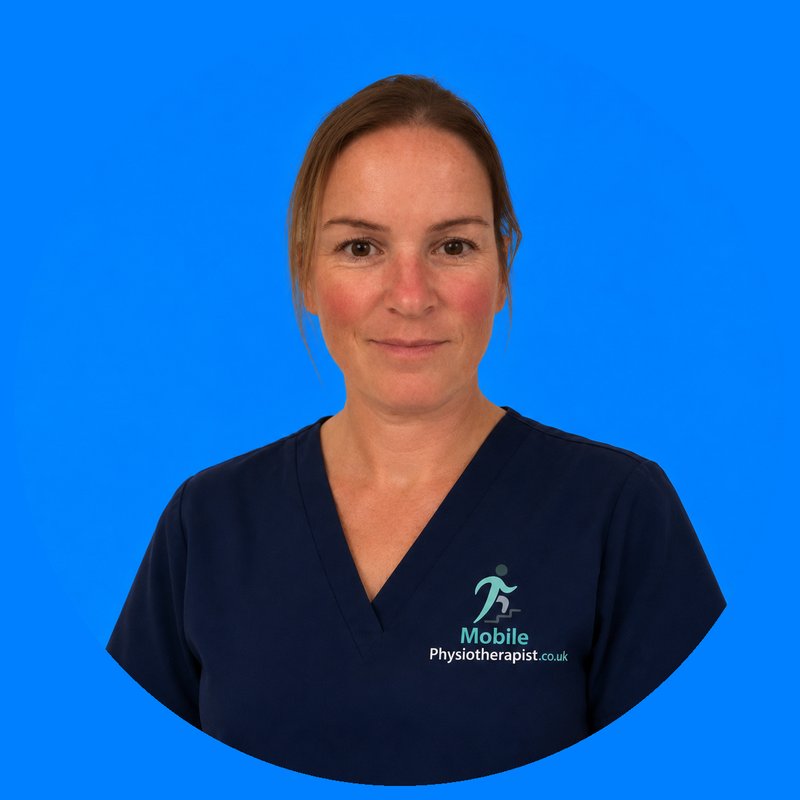
Rebecca Podmore
Chartered Physiotherapist — Frailty & Older Adults Rehabilitation
- Registration: HCPC PH68828, CSP member
- Specialisms: frailty and older adults rehabilitation, falls prevention, recovery after surgery, illness or a hospital stay, long-term condition management, contracture and positioning, and sports massage
- Phone: 07496 293456
- Please mention Mobile Physiotherapist.co.uk when you get in touch
- Email: info@rehabilit8physiotherapy.co.uk
Hip pain treated at home in Shrewsbury
Most hip pain does not need surgery and does not need a scan, but it does need the right diagnosis — because treatment for a worn hip joint, an irritated tendon and pain referred from the back have almost nothing in common. People in Shrewsbury usually get in touch once the pain has started shaping the day: shorter walks, avoided stairs, broken sleep.
Time spent waiting for an orthopaedic opinion is time the hip is usually getting weaker rather than better. Strength and walking tolerance built now carry through whatever that appointment concludes.
Hip problems we see most often
Hip osteoarthritis
Stiffness first thing in the morning, groin pain that can travel to the thigh or knee, and a walking distance that has quietly been shrinking. Strengthening and graded activity are the first-line treatment and the evidence for them is good.
Gluteal tendinopathy and trochanteric bursitis
Pain over the bony point on the outside of the hip, worse lying on that side at night, climbing stairs or standing on one leg. Often mislabelled as arthritis, and it needs a very different loading programme.
Hip impingement and labral irritation
Pinching groin pain at the end of range — deep squatting, getting in and out of the car, sitting for long periods. More common in younger and more active people.
Groin, hip flexor and adductor strains
Usually a clear moment of injury, or a sudden increase in activity. Recovery depends far more on graded loading than on rest.
Pain referred from the lower back
Buttock pain, pain travelling below the knee, or pins and needles. This is not a hip problem at all, and treating it as one is why some people make no progress for months.
After a hip fracture or a fall
Rebuilding walking, balance and confidence, which is largely work that happens after hospital discharge and continues well beyond it.
Hip, or back? They are not the same problem
A large share of "hip pain" turns out not to be the hip joint at all, and this is the most common reason people spend months doing exercises that were never going to help. As a rough guide:
- Groin pain, sometimes referring into the front of the thigh or as far as the knee, points to the hip joint itself.
- Pain over the bony point on the outside of the hip, worse lying on that side, points to the gluteal tendons and bursa — not the joint.
- Buttock pain travelling below the knee, or pins and needles and numbness, usually points to the lower back.
These three need genuinely different treatment, so the first appointment is spent working out which one you have before any programme is written.
What the first visit involves
- A proper conversation about how the pain behaves — when it started, what makes it worse, how it affects sleep, and what you have stopped doing because of it
- Assessment of hip movement, strength, balance and walking, plus a check of the lower back where the picture is unclear
- A look at the stairs, chair and bed you actually use, which is the practical advantage of being assessed at home
- A short, specific exercise programme matched to what your hip currently tolerates — not a generic sheet
- A straight answer about what is going on, roughly how long it should take, and whether anything needs a GP or consultant opinion
Treatment and how long it takes
Most hip rehabilitation is progressive strengthening, because the hip is a joint that responds to load and gets worse with avoidance. Alongside that, treatment usually includes hands-on work where it helps, advice on pacing and on how to sleep more comfortably, walking and stairs practice, and adjustments to the everyday movements that keep aggravating things.
Many hip problems improve meaningfully over six to twelve weeks. Long-standing tendon problems are slower and are honestly measured in months. Appointments usually start weekly or fortnightly and spread out as the programme takes hold — you are not asked to commit to a block of sessions before anyone knows what is wrong.
Already had a hip replacement?
This page is about hip pain that has not been operated on. If you have had a hip or knee replaced and want help with the recovery — walking, stairs, swelling and getting strength back — the hip and knee replacement rehab page for Shrewsbury covers that instead.
Home visits across Shrewsbury
Rebecca covers Shrewsbury and the surrounding villages — Bayston Hill, Bicton, Ford, Shawbury, Baschurch and the countryside around them — from her base in Newport. Fees may vary with travel distance and are confirmed before booking. If your care has been through the Royal Shrewsbury Hospital, rehabilitation works alongside it rather than replacing it.
Frequently asked questions
Do I need a GP referral?
No. This is a private service and you can book directly. Start with the free 15-minute telephone consultation, which is there to work out whether this is the right service for your hip before anyone commits to an appointment.
What actually causes hip pain if it is not arthritis?
Very commonly the gluteal tendons and the bursa on the outside of the hip, which cause pain when you lie on that side or climb stairs. Also hip impingement and labral irritation in younger and more active people, groin and hip flexor strains, and pain referred from the lower back. These need quite different programmes, which is why the assessment matters more than the label.
Will exercise make it worse?
Some discomfort during and shortly after exercise is normal and is not damage. Pain that is clearly worse the next morning means the dose was too high, not that exercise is wrong. The starting level is set from what your hip currently tolerates and built up from there, which is why a programme off the internet often flares things up when a tailored one does not.
Can you help after a hip fracture?
Yes. Rehabilitation after a hip fracture is mostly about walking, balance, confidence and getting strength back, and it is work that carries on well after hospital discharge. Doing it at home, on the surfaces and furniture you actually use, is a large part of why it works.
Can a painful hip be treated at home?
Yes. Most hip problems respond to a structured programme of strengthening, mobility and movement retraining, and doing that in your own home means the exercises are built around the chair, stairs and bed you actually use. Rebecca spent 14 years in orthopaedic rehabilitation, so hips before and after surgery are familiar ground.
Do you cover the villages around Shrewsbury?
Yes — Rebecca visits Shrewsbury and the villages around it from her base in Newport. Fees may vary with travel distance, always confirmed before anything is booked.