How much do private physiotherapists really earn in the UK?
Published • 4 min read
Written by the team at Mobile Physiotherapist, for physiotherapists
There is no such thing as a private physiotherapist salary, because most private physios are not paid a salary. What they earn is set by four numbers: what they charge, how many patients they see a day, how many days they work, and how many weeks a year. This article puts real 2026 figures against each one.
The NHS benchmark first
For 2025/26, Agenda for Change pay in England runs roughly £31,000 to £37,800 at Band 5, £38,700 to £46,600 at Band 6 and £47,800 to £54,700 at Band 7, before any high-cost-area supplement. Add the employer pension contribution, sick pay, annual leave and a predictable payslip, and that is the package you are comparing against. Be fair to it: the pension alone is worth a lot.
What private physiotherapists charge
In 2026, across our own network, a private home-visit initial assessment ranges from £60 to £115, with most physios charging £80 to £90, and follow-ups mostly £70 to £100. Clinic prices are usually a little lower per session because there is no travel, but the clinic has rent. London and the South East sit at the top of those ranges or above them. Specialist work (neurological rehabilitation, complex paediatrics, medico-legal reporting) commands more.
The maths that actually decides your income
Take a mobile physio at a deliberately conservative £75 a visit, below what most of our network charges:
| Visits a day | Days a week | Weeks a year | Turnover |
|---|---|---|---|
| 3 | 3 | 46 | £31,050 |
| 4 | 4 | 46 | £55,200 |
| 5 | 4 | 46 | £69,000 |
| 5 | 5 | 46 | £86,250 |
Two things to notice. First, the difference between three and five visits a day is more than double the income, so travel efficiency (a tight patch, clustered visits) is worth more than any price increase. Second, the five-day, five-visit row is a hard week with driving, notes and the phone on top. Most established mobile physios settle around four visits a day, four days a week, and use the fifth day for admin, referrers and life.
What comes off the top
Realistic annual running costs for a solo mobile practice are £8,000 to £12,000: fuel and car costs, professional and public liability insurance, HCPC and CSP fees, the ICO fee, notes and invoicing software, phone, a modest website, accountancy, CPD and kit. That turns the £55,200 row into roughly £44,000 to £47,000 of profit before tax. Sole trader income tax and Class 4 National Insurance on that sit around £9,000 to £10,000 depending on your other income, which leaves take-home in the mid-thirties, and you have no employer pension unless you fund one yourself.
Put next to the NHS, four days a week private at £75 lands close to a Band 7 salary in cash, with more autonomy and less security. Push the price to £85 in an area that supports it, or the visits to five, and private pulls clearly ahead. Sit at three visits a day at £60 and you will earn less than Band 5 and wonder why everyone recommended this.
The costs people forget
- Non-attendance and cancellations. Build a fair cancellation policy into your terms from day one. Even so, budget for 5 to 10 per cent of booked visits not happening.
- Holiday. The 46 weeks above already assumes six weeks off. If you take eight, your turnover drops by 4 per cent and nobody pays you for it.
- The ramp. A new private caseload does not arrive full. Most physios take three to nine months to reach a steady diary, which is why so many start alongside NHS or agency work.
- Your own time on the business. Invoicing, chasing, replying to enquiries, keeping the Google profile alive. An hour a day is normal and unpaid.
Sole trader or limited company?
Start as a sole trader. It is simpler, cheaper to run and your CSP professional liability cover (if you have it) applies to you as an individual. A limited company becomes worth discussing with an accountant once profit is well into the higher-rate band or you start building a team, and it needs its own insurance. Whatever you choose, set aside money for tax as it comes in; the trap is spending January's tax bill in the summer.
What lifts private income beyond the day rate
- Referral relationships. Case managers and care homes send steady, higher-value work with less marketing effort than the public ever will.
- Blocks rather than singles. A six-visit rehab block booked at assessment is better for the patient and steadier for you.
- Efficient geography. A ten-mile radius beats a forty-mile one every time.
- Eventually, associates. When your own diary is full and the phone keeps ringing, another physio delivering some of the work under your practice adds a margin. It also adds employment status, insurance and VAT questions, which is why it is the last module of our course, not the first.
The honest conclusion
Private physiotherapy in the UK pays about the same as a senior NHS post for a physio working a sensible four-day week at a fair price, and noticeably more for one with a tight patch, good referrers and the confidence to charge properly. What it pays for, more than money, is control of your diary. Run the four numbers for your own county before you believe anyone's figure, including ours.
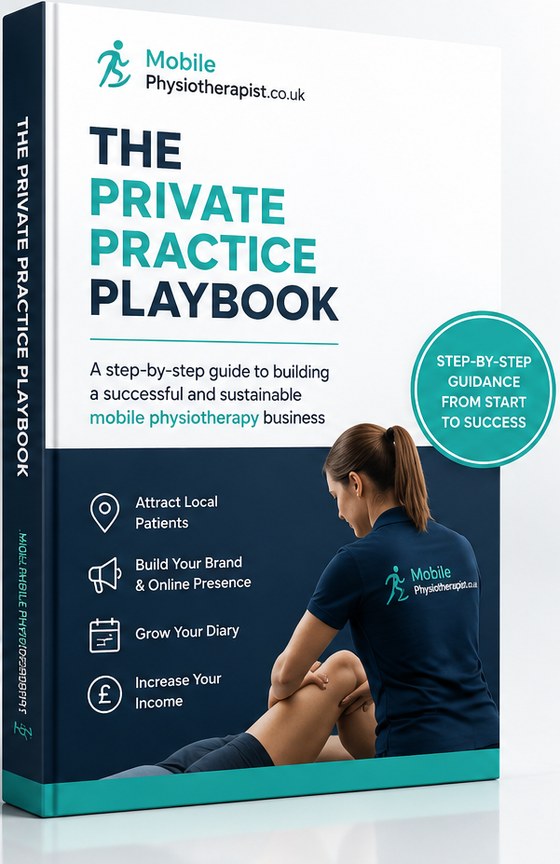
Everything you need to build a private practice, on your terms
Module 1 of our course is exactly this calculation, with a live income calculator you can set to your own price, visits and weeks. It is one of the two modules you can read free.
The Private Practice Playbook is 26,000 words of UK-specific, step-by-step guidance from the team behind a home-visit network of physiotherapists across England and Wales. Our real prices, our real numbers, and the mistakes we have already made so you do not have to.
- Proven strategies. Attract local patients and build the referral relationships that keep a diary full.
- Practical tools and templates. Calculators, checklists, letters and AI prompts, already written for you.
- Price and earn properly. What to charge, how to say it out loud, and the honest maths behind a private week.
- Flexible and self-paced. Read it in an evening, then work through it one module at a time.
Read the first two modules free Is your county free?
Ten modules, yours for a one-off £75. No subscription. Take a county listing with our network and the course is included, with the £75 coming off your first invoice.