Stroke Rehabilitation at Home After UHL Discharge: A Leicester Physio's Guide
Published · 10 min read
Local Physiotherapist — Jay Singh, Leicestershire
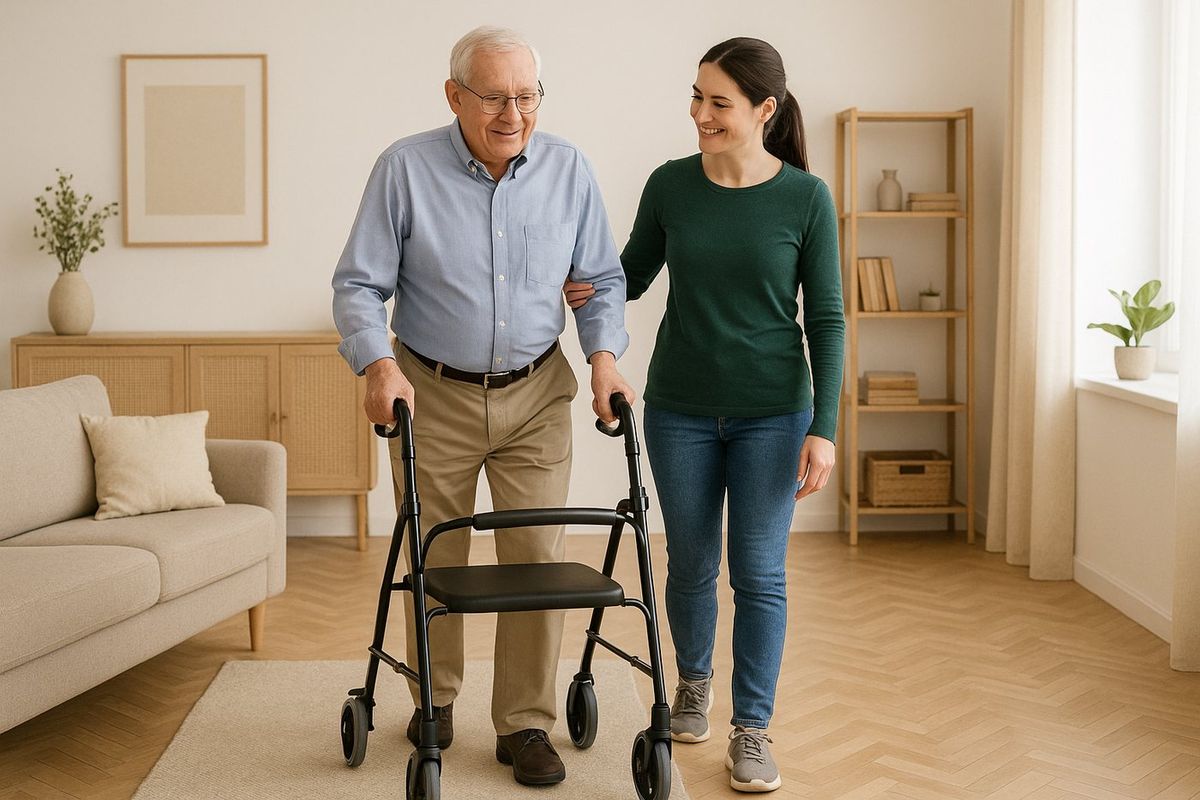
Stroke recovery doesn't end the day you leave the Leicester Hyper-Acute Stroke Unit. The biggest gains usually come in the weeks and months afterwards — in your own home, on your own stairs. Here's what good stroke rehab looks like once UHL discharges you, drawing on senior physiotherapist Jay Singh's experience working inside those teams.
Stroke care in Leicester: who treats you, and when
If you or a relative has had a stroke in Leicestershire, the journey almost always starts the same way — a 999 call, a CT scan at Leicester Royal Infirmary (LRI), and an admission to the Hyper-Acute Stroke Unit (HASU). After the first 72 hours, most patients move to the acute stroke ward, and then either home with the Leicestershire Partnership Trust Early Supported Discharge (ESD) team, or to inpatient rehab.
The NHS does an excellent job of acute and early stroke care. Where things can fall short — through no fault of the teams involved — is the period after ESD ends. ESD typically runs for 4–6 weeks. After that, ongoing community physiotherapy can be patchy, and patients commonly report the same thing: “I just stopped progressing.”
The 6–18 month window matters more than people realise
It's a common myth that all stroke recovery happens in the first three months. The evidence is clear — measurable gains in walking, balance, hand function and confidence are absolutely possible 6, 12, even 18+ months after stroke, especially with focused, goal-led physiotherapy. The brain doesn't stop adapting. What stops, often, is the input.
That's where private home physiotherapy can fill a real gap. Not to replace the NHS, but to extend the rehab dose during the period when the brain is most ready to change.
What home stroke rehab in Leicestershire actually looks like
When Jay sees a patient at home in Leicester, Loughborough, Hinckley or any of the surrounding towns, the assessment usually covers:
- Mobility and gait — the 10-metre walk test, observation on stairs, indoor and outdoor walking
- Balance — Berg Balance Scale, single-leg stance, reactive balance
- Strength — MRC grading on the affected side, sit-to-stand performance
- Tone and spasticity — Modified Ashworth Scale, especially for the upper limb
- Hand and arm function — grip, pinch, reach-and-grasp tasks
- The home environment — stairs, bathroom, bedroom, kitchen, the route to the front door
The reason home assessment matters so much in stroke is that you can see exactly what the patient is trying to get back to. A clinic gym is fine for measuring strength. It's no good for working out whether someone can safely make a cup of tea while their grandchild is in the kitchen. That's the work that actually changes someone's life.
What Jay actually does in sessions
Home stroke physiotherapy in Leicestershire mostly comes down to graded task practice — doing the things you want to do, repeatedly, with the right level of support, with hands-on facilitation where needed. That might be:
- Getting up and down the stairs more confidently
- Walking to the corner shop without the stick (or, just as often, walking more confidently with the stick)
- Reaching into a kitchen cupboard with the affected arm
- Standing at the sink long enough to do the washing-up
- Getting in and out of the car so you can attend a granddaughter's wedding
Jay tends to give a small home programme — usually 3–5 specific tasks — between visits. The job of the physio isn't to give you 30 exercises. It's to find the 3 that will actually move the needle.
Working with the NHS, not against it
Patients sometimes worry that paying for private physio means “coming off” NHS care. That's not how it works. Jay is happy to liaise with the LPT community stroke team, your GP, or your consultant in stroke or rehabilitation medicine. The aim is joined-up care, not duplication. If the NHS team is doing excellent work and adding more visits would just tire you out, he'll say so.
What about hand and arm recovery?
Upper-limb recovery is where many patients feel most stuck. NHS stroke services do brilliant work, but capacity for intensive arm rehab is limited. If you have any active movement in the affected hand — even a flicker — there are evidence-based approaches that can help: task-specific practice, mirror therapy, mental rehearsal, and graded loading. Jay tailors the programme to whatever you can already do.
Where Jay covers
Jay provides home stroke rehab across Leicestershire, including dedicated pages for each town:
- Stroke rehabilitation in Leicester
- Stroke rehabilitation in Loughborough
- Stroke rehabilitation in Hinckley
- Stroke rehabilitation in Melton Mowbray
- Stroke rehabilitation in Market Harborough
- Stroke rehabilitation in Coalville
- Stroke rehabilitation in Oadby
- Stroke rehabilitation in Wigston
For the full set, see the Leicestershire stroke rehabilitation hub.
How to know if home physio is right for you
If any of these sound familiar, it's worth a free phone call:
- You've been discharged from ESD but feel you have more to gain
- You had your stroke months or years ago and have plateaued
- You're getting NHS input but it's once every 4–6 weeks and you want more
- You're worried about confidence on stairs or outdoors
- You want hand or arm-specific work
The phone call is free and there's no pressure. If home physio isn't the right fit, the team will tell you and signpost you to whatever is.
Related guides
- Stroke rehabilitation — service overview
- Stroke recovery exercises at home
- Stroke rehabilitation across Leicestershire
- Home physiotherapy in Leicestershire — full guide
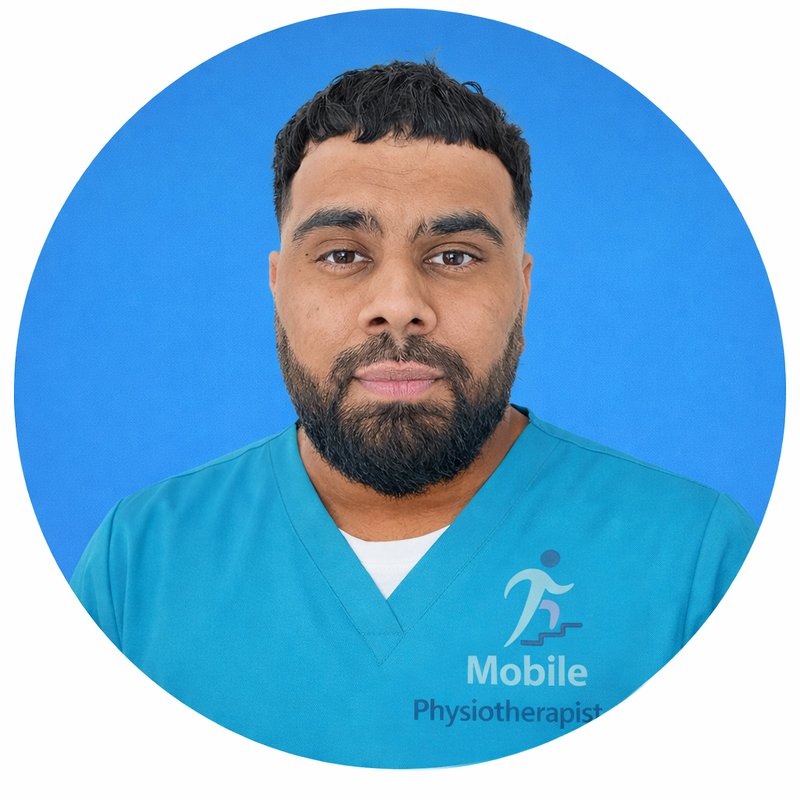
About Jay Singh
Jay Singh is a Senior Physiotherapist with 10+ years' NHS experience across acute, community, stroke, MSK, respiratory, and neurological rehabilitation. Currently working as a Senior Locum Physio across the East Midlands, Jay provides expert home visit physiotherapy across Leicestershire. He is HCPC registered (PH104786).