Sports Injury Rehabilitation in Lincolnshire
Published
Local Physiotherapist — Rachel Butt, South Lincolnshire
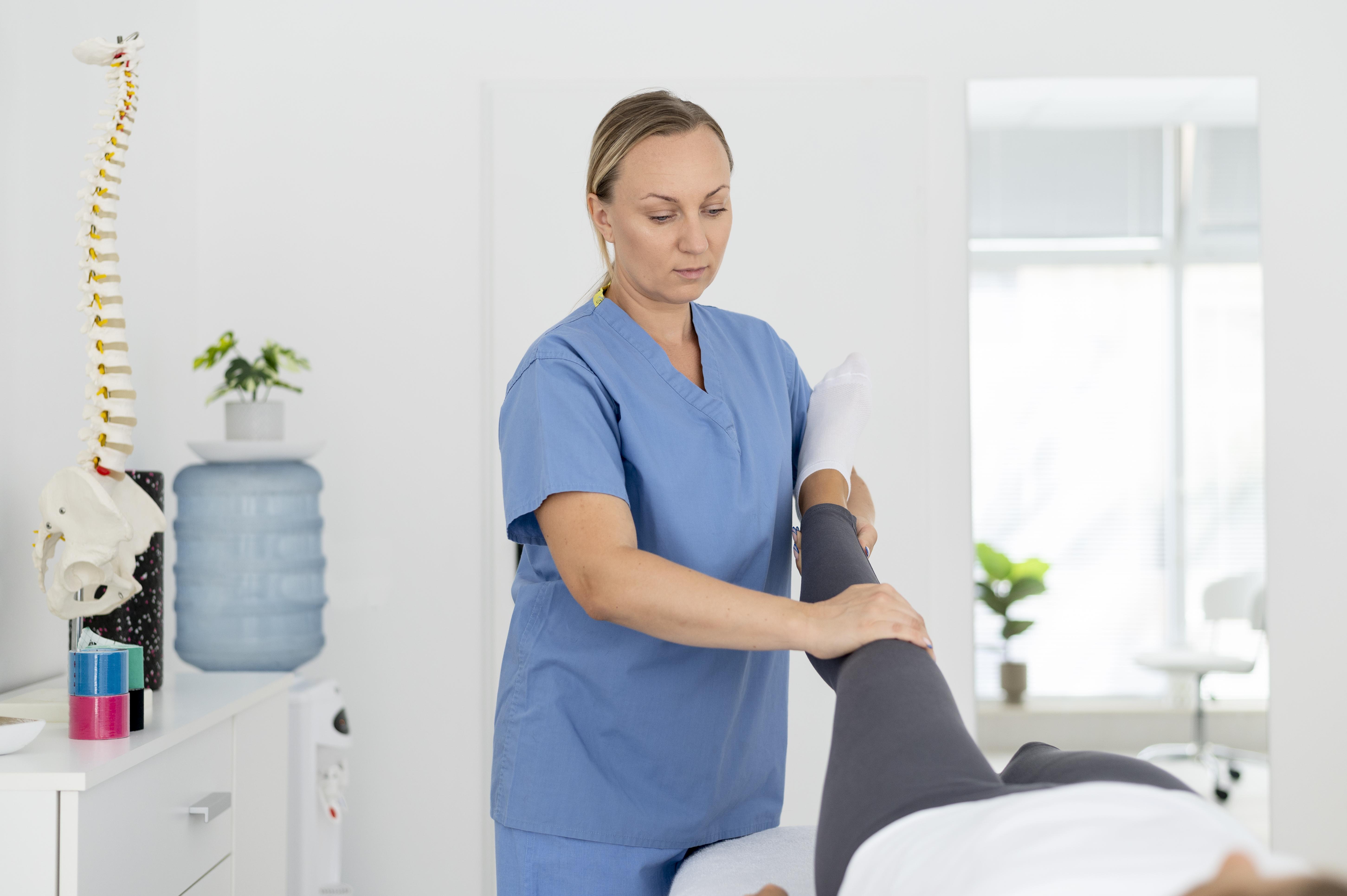
Most sports injuries settle on their own. The reason they come back is that people return to sport when the pain stops rather than when the tissue and the movement are ready, and those are two very different moments.
The first 48 hours
Current advice has moved on from RICE. The shorthand now is PEACE and LOVE: Protect, Elevate, Avoid anti-inflammatories in the very early stage, Compress, Educate — then Load, Optimism, Vascularisation and Exercise.
The important changes from the old advice are that prolonged rest is out, and that early anti-inflammatories may blunt the inflammatory response the tissue is relying on to heal. Protect it for a couple of days, then start loading it deliberately.
Get it assessed rather than guessing
A swollen ankle can be a straightforward lateral ligament sprain or a fracture. A pulled hamstring can be a low-grade strain or a tendon injury with a very different timeline. A knee that gave way and swelled within an hour needs a proper look. Guessing costs weeks.
Assessment establishes what is actually injured, how badly, what the realistic timeline is, and whether anything needs onward referral for imaging or an orthopaedic opinion.
The stages, and why people skip them
- Settle it. Reduce pain and swelling, restore basic range of movement. A few days to a couple of weeks.
- Rebuild strength. Progressive loading of the injured tissue and everything that supports it. This is the stage people abandon as soon as it stops hurting, and it is the stage that prevents reinjury.
- Restore control. Balance, proprioception and the ability to change direction without thinking about it. Almost always the missing piece in a recurrent ankle or knee.
- Return to sport. Sport-specific movement at full speed, built up gradually, before match exposure.
Return-to-play should be criteria, not a calendar
"Six weeks" is a guess. Better questions:
- Is strength within about 90 per cent of the other side?
- Can you hop, land and change direction on it without hesitation?
- Can you complete a full training session with no next-day reaction?
- Do you actually trust it? Athletes who do not trust a limb move differently on it, and that is how the next injury happens.
Meeting the criteria matters more than the date in the diary, and a physiotherapist should be willing to say so even when the fixture list disagrees.
Tendon problems are their own thing
Achilles, patellar, gluteal and elbow tendinopathies do not behave like muscle tears. They dislike complete rest and they dislike sudden spikes in load in equal measure. They respond to progressive, tolerable loading sustained over months, which requires patience but does work. Most of the frustration around tendon pain comes from expecting a six-week timeline for a six-month problem.
Why home-based rehab works for this
Sports rehabilitation is mostly exercise, and exercise is mostly done at home between appointments. Having the programme built around the space and equipment you actually have — a hallway, a set of stairs, a resistance band, whatever is in the garage — is what makes it get done. Appointments then check technique and progress the load rather than being the only time you do anything.
It also removes the drive, which for a fresh lower-limb injury in a rural county is not a small thing.
Who you would be seeing
Rachel Butt developed her sports injury work in private practice, including two days a week treating a younger athletic population, and now provides musculoskeletal triage and treatment for local sports teams. She also holds a Level 3 sports massage qualification.
Home visits across Lincolnshire
Sports injury assessment and rehabilitation is available at home across Stamford, Grantham, Bourne, Spalding, Sleaford, Boston and the rest of south Lincolnshire. For Lincoln and the north of the county, Olu Faleye visits people at home.
Related reading: MSK and sports injury rehabilitation in Stamford.
Book a home visit in Lincolnshire
A free phone enquiry is the easiest place to start — talk through what is going on and check whether home physiotherapy is the right fit. No GP referral is needed.
Please mention Mobile Physiotherapist.co.uk

About Rachel Butt
Rachel Butt is a chartered physiotherapist (MCSP, HCPC PH113364) providing home visit physiotherapy across Stamford, Grantham, Bourne, Spalding, Sleaford, Boston and the rest of south Lincolnshire, and runs an independent practice, Stamford Physiotherapy. She qualified from the University of Birmingham in 2017 and spent four years in NHS musculoskeletal outpatient services, reaching Band 6, before moving into private practice. Her work covers back pain and sciatica, sports injuries, post-operative recovery, arthritis and persistent pain. She assesses and diagnoses directly, so there is no wait for a GP referral before treatment can start.
Read Rachel's profile or call 07376 795289.
Please mention Mobile Physiotherapist.co.uk when you call.