Pulmonary Rehab at Home: COPD Support Across Leicestershire
Published · 10 min read
Local Physiotherapist — Jay Singh, Leicestershire
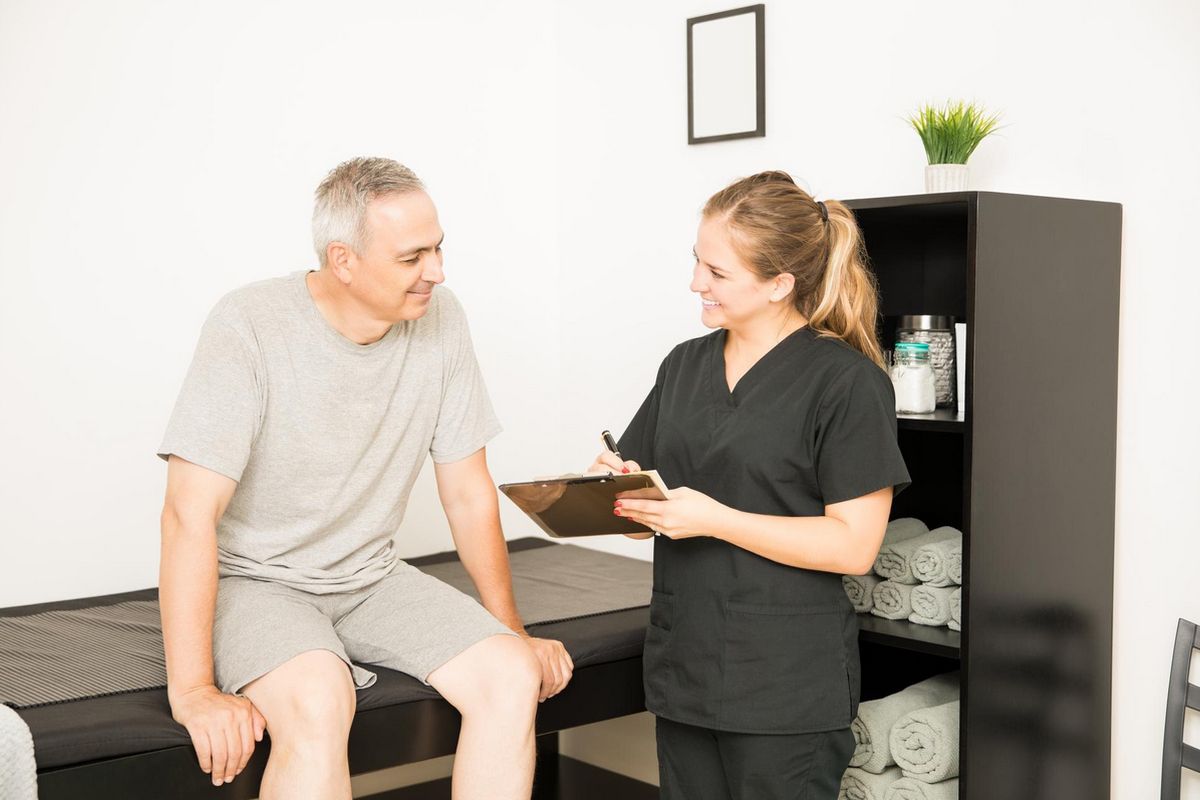
Leicestershire has one of the busiest respiratory caseloads outside London. Glenfield Hospital is a tertiary cardiothoracic centre, and COPD remains one of the most common reasons for hospital admission in the East Midlands. Home pulmonary rehab gives people who can't easily attend a hospital class — because of breathlessness, transport, or anxiety — access to the same evidence-based programme.
What is pulmonary rehab — and why does it work?
Pulmonary rehabilitation is a structured programme of exercise plus education for people with chronic lung disease. It's one of the strongest evidence bases in respiratory medicine: pulmonary rehab reliably improves exercise capacity, reduces breathlessness, reduces hospital admissions, and improves quality of life. The British Thoracic Society (BTS) guideline is clear about who should be offered it.
The catch? You have to be able to attend the class. In Leicestershire, NHS-funded pulmonary rehab classes run from venues including Glenfield Hospital and various community sites — but uptake is limited by transport, breathlessness on the way there, and waiting lists. A significant proportion of eligible patients never start, or drop out.
Home pulmonary rehab — what changes, what stays the same
The core principles don't change. The programme stays evidence-based:
- A baseline assessment with validated outcome measures (mMRC dyspnoea scale, 1-minute Sit-to-Stand or 6-minute walk where appropriate, oxygen saturations on exertion)
- A graded aerobic and resistance exercise programme
- Breathing-control techniques and pacing
- Airway clearance where indicated (active cycle of breathing, PEP devices)
- Education on medication, nutrition, anxiety/breathlessness cycle, exacerbation management
- Re-assessment at the end of the block to demonstrate measurable change
What changes is the setting — your living room, your stairs, your kitchen — and the dose. Sessions can be much more frequent and more flexible than a once-a-week clinic class, and can be paused and resumed around exacerbations.
Conditions home pulmonary physio works well for
- COPD — mild through to GOLD stage 3–4, including those on long-term oxygen
- Asthma with exercise limitation, anxiety or steroid-related deconditioning
- Bronchiectasis — with airway clearance work alongside exercise
- Interstitial lung disease (ILD), pulmonary fibrosis
- Long Covid / post-COVID syndrome with breathlessness and fatigue
- Recovery after pneumonia, severe chest infection or post-ICU stay
- Recently discharged from Glenfield, LRI or Leicester General
The breathlessness cycle and why exercise still matters
One of the hardest parts of teaching pulmonary rehab is convincing people that exercise is good for breathlessness. It feels obviously wrong. “I'm out of breath — surely the answer is to do less, not more?”
It feels right but the science isn't on its side. The breathlessness cycle works like this: breathlessness leads to avoidance, avoidance leads to deconditioning, deconditioning leads to more breathlessness at the same level of activity. Exercise breaks the cycle. The trick is starting at the right level — not pushing through — and progressing gradually.
What the first home visit looks like
The first session typically lasts about an hour. It covers:
- A full history — condition, medications, recent admissions, oxygen use, exacerbation pattern
- Resting and on-exertion oxygen saturations and heart rate
- An mMRC and CAT score (for COPD) to track over time
- A 1-minute Sit-to-Stand or 6-minute walk if appropriate
- A look at how breathlessness presents in your real environment — stairs, walking out to the bins, getting dressed
- An initial set of home exercises and a breathing-control technique
- Pacing strategies for the activities you most struggle with
Coordinating with the Glenfield team and your GP
Jay is happy to coordinate with your respiratory consultant at Glenfield, your GP and your respiratory nurse. If you're under the care of a community respiratory team, he won't duplicate what they're already doing — he'll add to it. The aim is faster progress, not crossed wires.
Where Jay covers in Leicestershire
Jay provides home pulmonary rehab across the county. The respiratory burden tends to be highest in the former coalfield communities and the LE5 area of Leicester, but it's a county-wide service:
- Respiratory physio in Leicester
- Respiratory physio in Loughborough
- Respiratory physio in Hinckley
- Respiratory physio in Coalville
- Respiratory physio in Melton Mowbray
- Respiratory physio in Market Harborough
Or see the full Leicestershire respiratory physiotherapy hub.
Long Covid: a quick note
Long Covid is one of the conditions where Jay has seen the biggest impact of well-paced home rehab. People are often told to “rest and pace,” which is correct — but only half the picture. Once the post-exertional symptom flares are stable, very gradually graded movement is the route forward. Jay works to your symptom thresholds, not against them.
Is home pulmonary rehab right for you?
It's worth a free phone call if any of these sound familiar:
- You've been offered NHS pulmonary rehab but can't get there
- You finished pulmonary rehab and your gains have faded
- You've had a recent exacerbation and feel weaker than before
- You have Long Covid and are stuck in a boom-bust cycle
- You're recovering from pneumonia or post-ICU deconditioning
Related guides
- Respiratory physiotherapy — service overview
- Respiratory physio across Leicestershire
- COPD exercises and breathing techniques
- Long Covid recovery physiotherapy guide
- Recovering from pneumonia: exercises and breathing
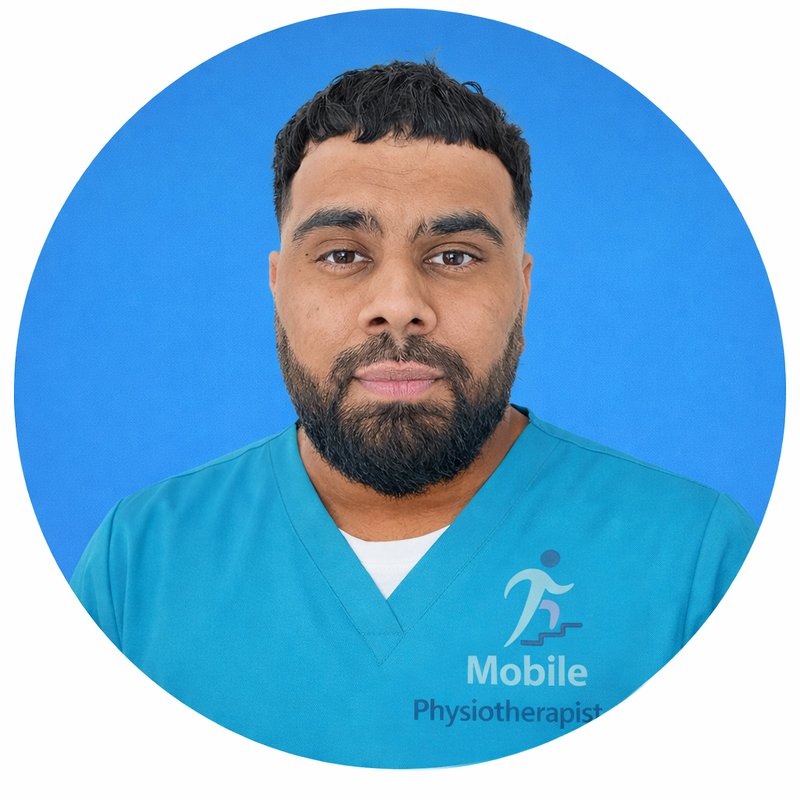
About Jay Singh
Jay Singh is a Senior Physiotherapist with 10+ years' NHS experience across acute, community, stroke, MSK, respiratory, and neurological rehabilitation. Currently working as a Senior Locum Physio across the East Midlands, Jay provides expert home visit physiotherapy across Leicestershire. He is HCPC registered (PH104786).