Parkinson's Physiotherapy at Home in Berkshire
Published
Local Physiotherapist — Rits Rana, Berkshire
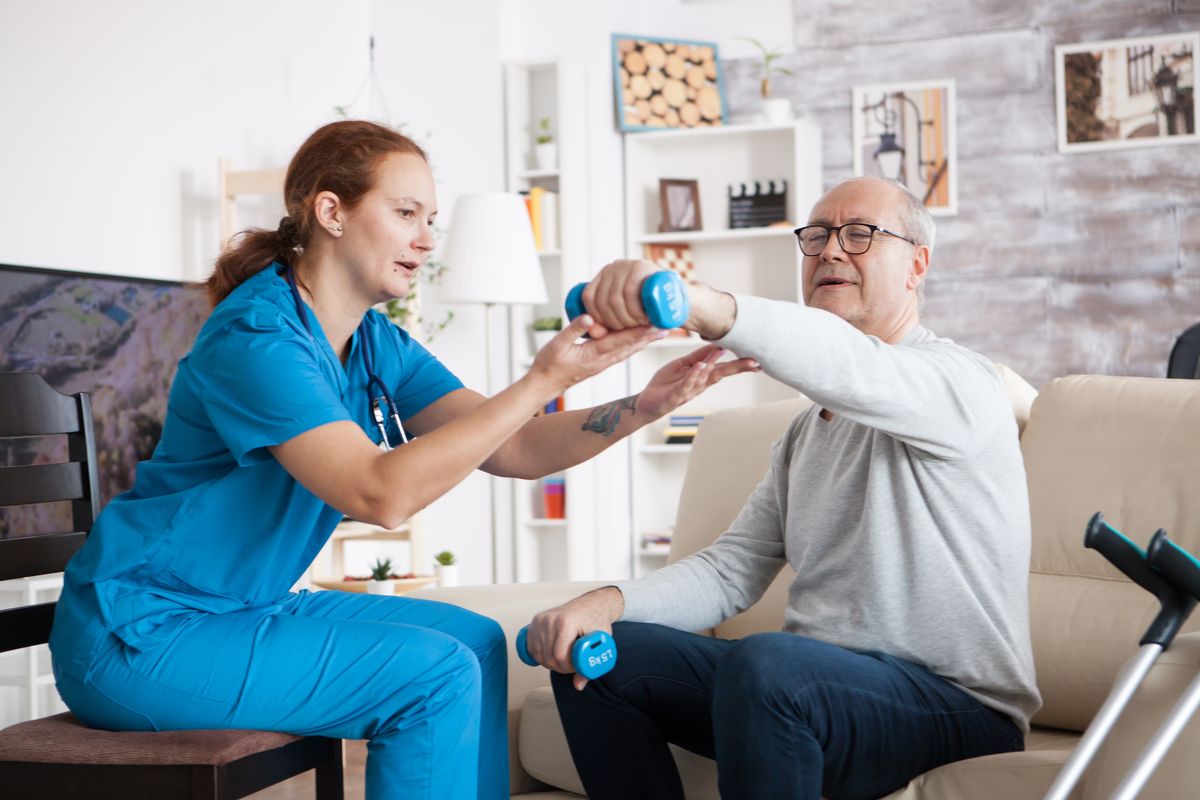
Parkinson's changes movement in ways that respond unusually well to being taught deliberately. Steps get smaller without the person noticing; turning becomes the moment things go wrong; the feet stick at doorways. Each of those has a specific physiotherapy answer, and none of them improves by waiting.
Start earlier than feels necessary
The common pattern is that physiotherapy is arranged after a fall, or when walking has already become difficult. By then the aim is recovery of something lost. Started earlier, the aim is maintenance — keeping stride length, arm swing, posture and confidence for longer, which is a far easier job.
If a diagnosis is recent and everything still feels manageable, that is the best possible time for an assessment and a programme.
Walking, stride length and arm swing
One of the earliest changes is that steps shorten and the arms stop swinging, usually without any awareness of it. The result is a shuffling gait that is both slower and less stable.
The evidence-based response is to make step size a conscious, practised target — deliberately larger steps, cued and rehearsed until they become the new normal. External cues help a great deal: a metronome or counting for rhythm, floor markers or lines to step over, verbal prompts from a partner. People are usually surprised by how much better walking looks within one session, and the work then goes into making it stick.
Freezing at doorways and turns
Freezing — feet stuck to the floor, often at a doorway, in a narrow space, when turning, or under time pressure — is frightening and a common cause of falls. It is also one of the most treatable things on this list, because there are reliable strategies:
- Shifting weight side to side before stepping off, rather than trying to force the first step
- Stepping over a real or imagined line on the floor
- Counting, or marching to a beat, to restore rhythm
- Turning in a wide arc rather than pivoting on the spot
- Removing the specific triggers in the home — narrow gaps, cluttered thresholds, tight turns between furniture
These have to be practised where the freezing actually happens, which is another argument for doing this at home rather than in a clinic.
Balance and falls
Parkinson's affects the automatic postural reflexes that normally correct a stumble, so falls risk rises. A home assessment covers standing balance, reaction to being unbalanced, turning, dual tasking (walking while talking or carrying), and the hazards in the house itself.
The programme that follows is progressive balance work rather than generic exercise, plus practical changes: lighting, rug removal, chair heights, grab rails, and a sensible view on walking aids — some aids help, and some make freezing worse, which is worth getting right.
Exercise has to be effortful to count
There is good evidence that vigorous, sustained exercise is beneficial in Parkinson's, and reasonable evidence that it may influence progression rather than only symptoms. The important word is vigorous. A gentle amble does not achieve what a properly challenging programme does.
The practical trick is finding something hard enough to matter and enjoyable enough to keep doing. That might be a structured home programme, cycling, boxing-style training, or dance-based exercise, all of which have supporting evidence.
Posture, turning in bed and getting out of a chair
Stooped posture develops gradually and pulls the centre of gravity forwards, which makes balance worse. Extension work and postural retraining help, and are best done as a daily habit rather than an occasional exercise.
Turning over in bed and getting out of a low chair are two specific things that become disproportionately difficult, and both have technique fixes that make an immediate difference — sequenced movements, a satin sheet strip, a firmer chair, a rehearsed pattern for standing.
As the condition changes
Parkinson's is progressive, and a programme written a year ago may no longer fit. Periodic review — every few months, or after any change in medication or a fall — keeps the exercises matched to where things actually are. That is easier to arrange privately than through a stretched community service.
Home visits across Berkshire
Physiotherapy for Parkinson's and other progressive neurological conditions, including multiple sclerosis, motor neurone disease and Huntington's disease, is available at home across Reading, Slough, Bracknell, Maidenhead, Windsor, Newbury and across Berkshire.
Related reading: stroke rehabilitation at home in Berkshire and falls prevention for older adults in Berkshire.
Book a home visit in Berkshire
A free phone enquiry is the easiest place to start — talk through what is going on and check whether home physiotherapy is the right fit. No GP referral is needed.
Please mention Mobile Physiotherapist.co.uk

About Rits Rana
Rits Rana is a chartered physiotherapist (HCPC PH106489, MCSP 119421) providing home visit physiotherapy across Reading, Slough, Bracknell, Maidenhead, Windsor, Newbury and across Berkshire, and runs an independent mobile practice, Mobile Rehab. The specialist ground is complex neurological rehabilitation — stroke, brain injury, Parkinson's, MS and motor neurone disease — alongside rehabilitation for older adults and musculoskeletal work at NHS Band 7 level. She assesses and diagnoses directly, so there is no wait for a GP referral before treatment can start.
Read Rits's profile or call 07818 106406.
Please mention Mobile Physiotherapist.co.uk when you call.