Stroke Rehabilitation at Home in Berkshire
Published
Local Physiotherapist — Rits Rana, Berkshire
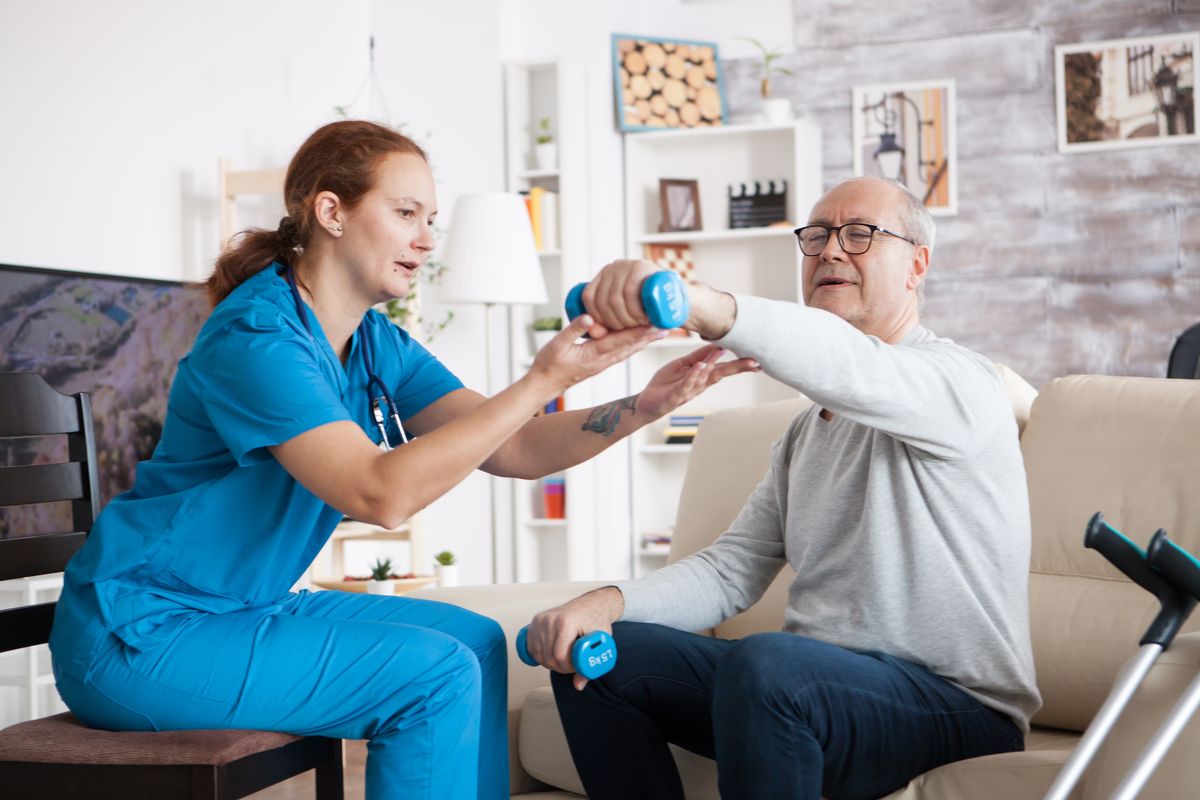
Most stroke recovery does not happen in hospital. It happens in the weeks and months afterwards, at home, in the ordinary business of standing up, walking to the kitchen and using a weak arm again. That is precisely where physiotherapy is most useful, and precisely where NHS input often runs out first.
What physiotherapy addresses after a stroke
A stroke can affect movement in several different ways at once, and rehabilitation has to take them separately:
- Weakness on one side — the arm, the leg, or both, often with the arm recovering more slowly
- Balance and walking — not just whether you can walk, but whether you can walk safely, turn, stop, and manage a kerb
- Tone and stiffness — muscles that tighten and shorten, which becomes harder to reverse the longer it is left
- Loss of sensation and awareness — including neglect of one side, which changes how everything else is taught
- Fatigue — the symptom people are least prepared for, and the one that most often derails a programme
- Confidence — fear of falling can restrict someone far more than the physical deficit does
Why the home is the right setting
Stroke rehabilitation works through repetition of task-specific practice. You get better at what you practise, in the context you practise it. Practising standing up from a plinth in a gym transfers only partly to standing up from your own low sofa; practising on the sofa transfers completely.
At home, a physiotherapist can work on the actual staircase you have to climb, the actual bathroom you have to manage, and the actual route to the front door. Equipment and adaptations can be judged against the real doorways and thresholds rather than described in the abstract.
Intensity is the thing that changes outcomes
The single most consistent finding in stroke rehabilitation research is that more practice produces more recovery. NHS community stroke teams do excellent work, but caseloads mean a limited block of visits, often ending before the person has plateaued.
Private home physiotherapy is frequently used to fill exactly that gap: to add sessions alongside NHS input, to continue once NHS input finishes, or to restart when someone has stalled six months down the line and been told nothing more can be done. That last assumption is often wrong.
"It has been a year, is it too late?"
No. The idea that recovery stops at six months is a rule of thumb that has been overtaken by the evidence. Recovery is fastest in the early weeks, which is why early intensive rehabilitation matters so much, but meaningful gains in strength, walking distance, balance and confidence are achievable years afterwards.
What changes later on is the emphasis. Later-stage work is often about capacity, endurance, efficiency of movement and preventing secondary problems — the shoulder pain, the tightening calf, the falls — rather than the dramatic early returns of function.
What a home programme looks like
An initial assessment covers what you can currently do, how you do it, what you want to be able to do, and what is standing in the way. It should end with two or three concrete goals that mean something to you — getting upstairs safely, walking to the end of the road, managing the kitchen alone — rather than an abstract score.
From there, sessions typically combine:
- Repeated, graded practice of the specific tasks in your goals
- Strength work for the affected side, including the arm where there is anything to work with
- Balance and gait re-education, indoors then outdoors
- Stretching and positioning to manage tone and protect the shoulder
- A written home programme, and training for family or carers who want to help safely
- Advice on walking aids, orthotics and referral on where something else is needed
Supporting the family too
Families usually want to help and are often unsure how, or are helping in ways that unintentionally reduce independence. Being shown how to assist a transfer safely, how much to help and when to stand back, is one of the most valuable parts of a home programme, and it is only possible in the home.
Stroke rehabilitation across Berkshire
Home stroke rehabilitation is available across Reading, Slough, Bracknell, Maidenhead, Windsor, Newbury and across Berkshire, including care and nursing homes. Rits led an NHS community physiotherapy team covering neurological and older people's services in the Windsor, Ascot, Maidenhead and Slough area, and she works with stroke, traumatic and acquired brain injury, Parkinson's disease, multiple sclerosis and motor neurone disease.
Related reading: stroke and neurological rehabilitation in Reading and falls prevention for older adults in Berkshire.
Book a home visit in Berkshire
A free phone enquiry is the easiest place to start — talk through what is going on and check whether home physiotherapy is the right fit. No GP referral is needed.
Please mention Mobile Physiotherapist.co.uk

About Rits Rana
Rits Rana is a chartered physiotherapist (HCPC PH106489, MCSP 119421) providing home visit physiotherapy across Reading, Slough, Bracknell, Maidenhead, Windsor, Newbury and across Berkshire, and runs an independent mobile practice, Mobile Rehab. The specialist ground is complex neurological rehabilitation — stroke, brain injury, Parkinson's, MS and motor neurone disease — alongside rehabilitation for older adults and musculoskeletal work at NHS Band 7 level. She assesses and diagnoses directly, so there is no wait for a GP referral before treatment can start.
Read Rits's profile or call 07818 106406.
Please mention Mobile Physiotherapist.co.uk when you call.