Falls Prevention for Older Adults in Berkshire
Published
Local Physiotherapist — Rits Rana, Berkshire
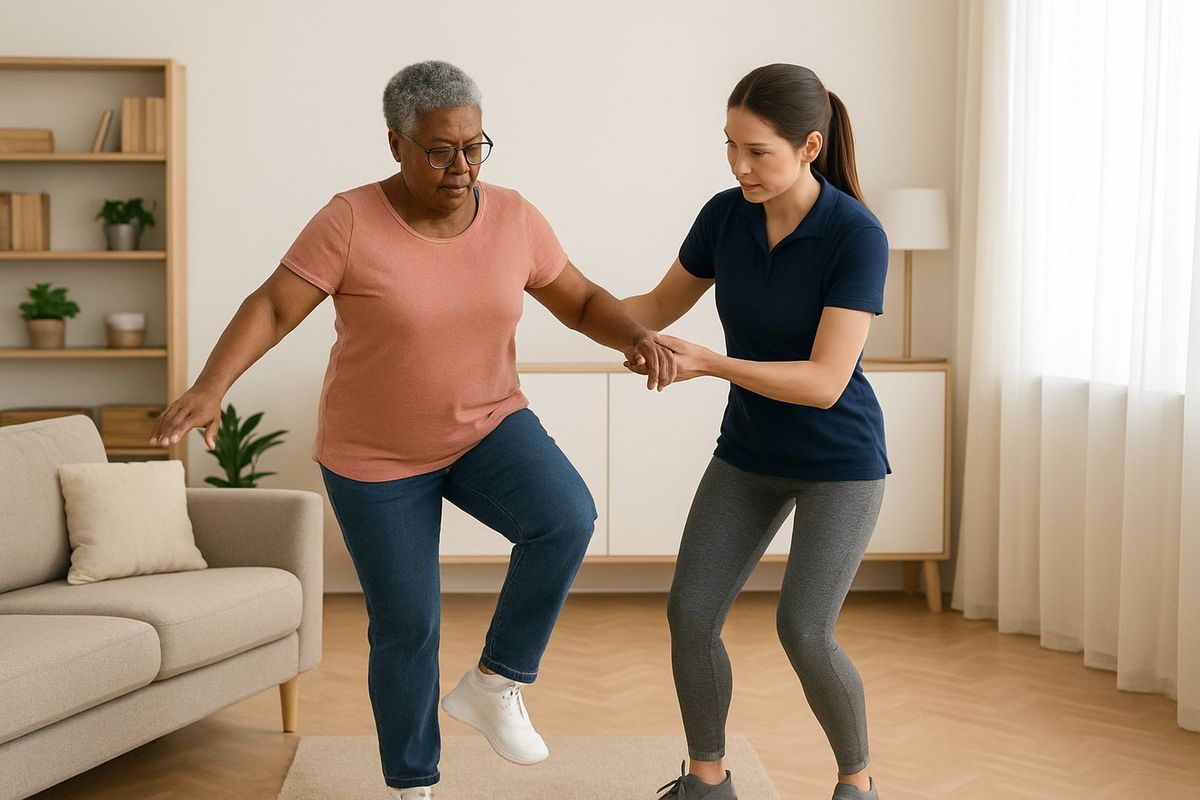
Around one in three people over 65 falls each year, and one in two over 80. Those are big numbers, and they are not inevitable. Falls have identifiable causes, and most of those causes can be reduced.
Why falls happen
A fall almost never has one cause. It is usually several small things lining up at once:
- Leg weakness, particularly around the hips and thighs, which is what stops a stumble becoming a fall
- Poor balance, including the automatic corrections that normally happen without thinking
- Medication — sedatives, blood pressure tablets and anything causing dizziness, and especially several at once
- Vision — uncorrected changes, or new varifocals, which are a well-known trip risk on stairs
- Home hazards — loose rugs, trailing flexes, poor lighting, cluttered thresholds
- Footwear — loose slippers are one of the most common culprits in the home
- Health conditions — Parkinson's, stroke, arthritis, neuropathy, low blood pressure on standing
- Fear of falling, which reduces activity, which reduces strength, which increases the risk again
What actually reduces falls
The evidence here is unusually clear. Exercise programmes that specifically challenge balance and progressively strengthen the legs reduce the rate of falls in older people living at home. Generic gentle activity does not do it; the balance component has to be genuinely challenging, and the strength work has to get harder over time.
Alongside exercise, the things that add up are a medication review, an eye test, treating foot problems and sorting the footwear, and a proper look at the home itself.
What a home falls assessment covers
An assessment at home should include:
- A history of any falls or near misses — what you were doing, where, and what time of day
- Strength testing, particularly sit-to-stand from a chair
- Standing and dynamic balance, and how you recover when unbalanced
- Walking assessment, including turning, which is where a great many falls happen
- A check of blood pressure lying and standing, where dizziness on standing is reported
- A walk through the house looking for straightforward hazards
- A review of any walking aid — whether it is the right type and set to the right height
- A written exercise programme to start straight away
Simple changes worth making now
- Remove loose rugs, or fix them down properly
- Improve lighting on stairs and landings, and keep a light within reach of the bed
- Keep everyday items between waist and shoulder height so there is no reaching or stooping
- Wear supportive, well-fitting shoes indoors rather than loose slippers
- Ask a GP or pharmacist to review medications if there are several, or if any cause dizziness
- Get vision checked annually, and take particular care on stairs with varifocals
Rebuilding confidence
After a fall, confidence often takes longer to recover than the body does. The way through it is graded exposure — practising the specific things that feel risky, in a controlled way, with someone alongside, until they stop feeling risky.
That might mean the stairs, or stepping outside onto an uneven path, or getting up from a low chair. It works best in the place where those things actually happen, which is another argument for doing this at home rather than in a clinic.
If someone has already fallen
A fall that caused no injury is still worth acting on — it is the clearest warning sign there is, and the point at which intervention works best. Do not wait for a second one.
Seek medical advice first if the fall involved a loss of consciousness, a blow to the head, or if there is any suspicion of a fracture.
Home visits across Berkshire
Falls prevention assessments and strength and balance programmes are available at home across Reading, Slough, Bracknell, Maidenhead, Windsor, Newbury and across Berkshire, including care and nursing homes.
Book a home visit in Berkshire
A free phone enquiry is the easiest place to start — talk through what is going on and check whether home physiotherapy is the right fit. No GP referral is needed.
Please mention Mobile Physiotherapist.co.uk

About Rits Rana
Rits Rana is a chartered physiotherapist (HCPC PH106489, MCSP 119421) providing home visit physiotherapy across Reading, Slough, Bracknell, Maidenhead, Windsor, Newbury and across Berkshire, and runs an independent mobile practice, Mobile Rehab. The specialist ground is complex neurological rehabilitation — stroke, brain injury, Parkinson's, MS and motor neurone disease — alongside rehabilitation for older adults and musculoskeletal work at NHS Band 7 level. She assesses and diagnoses directly, so there is no wait for a GP referral before treatment can start.
Read Rits's profile or call 07818 106406.
Please mention Mobile Physiotherapist.co.uk when you call.