Falls Prevention for Older Adults in Lincolnshire
Published
Local Physiotherapist — Rachel Butt, South Lincolnshire
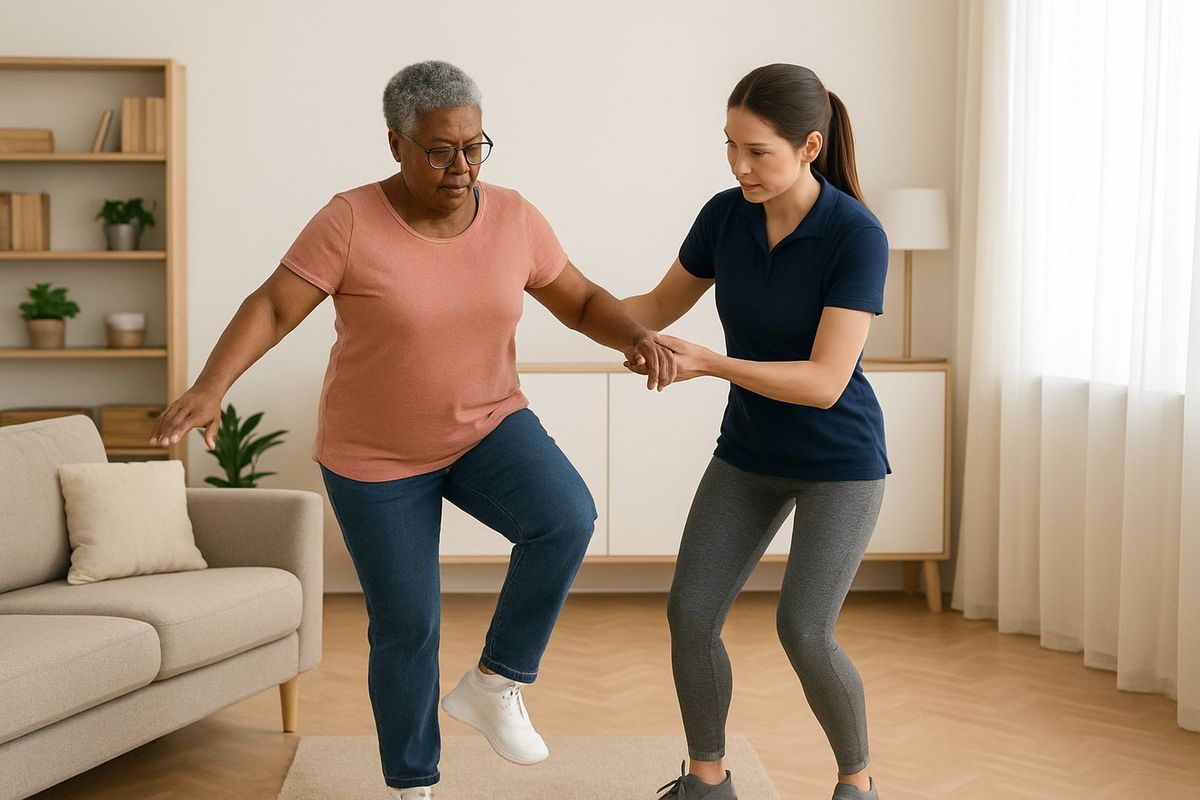
Around one in three people over 65 falls each year, and one in two over 80. Those are big numbers, and they are not inevitable. Falls have identifiable causes, and most of those causes can be reduced.
Why falls happen
A fall almost never has one cause. It is usually several small things lining up at once:
- Leg weakness, particularly around the hips and thighs, which is what stops a stumble becoming a fall
- Poor balance, including the automatic corrections that normally happen without thinking
- Medication — sedatives, blood pressure tablets and anything causing dizziness, and especially several at once
- Vision — uncorrected changes, or new varifocals, which are a well-known trip risk on stairs
- Home hazards — loose rugs, trailing flexes, poor lighting, cluttered thresholds
- Footwear — loose slippers are one of the most common culprits in the home
- Health conditions — arthritis, stroke, Parkinson's, neuropathy, low blood pressure on standing
- Fear of falling, which reduces activity, which reduces strength, which increases the risk again
What actually reduces falls
The evidence here is unusually clear. Exercise programmes that specifically challenge balance and progressively strengthen the legs reduce the rate of falls in older people living at home. Generic gentle activity does not do it; the balance component has to be genuinely challenging, and the strength work has to get harder over time.
Alongside exercise, the things that add up are a medication review, an eye test, treating foot problems and sorting the footwear, and a proper look at the home itself.
What a home falls assessment covers
- A history of any falls or near misses — what you were doing, where, and what time of day
- Strength testing, particularly sit-to-stand from a chair
- Standing and dynamic balance, and how you recover when unbalanced
- Walking assessment, including turning, which is where a great many falls happen
- A check of blood pressure lying and standing, where dizziness on standing is reported
- A walk through the house looking for straightforward hazards
- A review of any walking aid — whether it is the right type and set to the right height
- A written exercise programme to start straight away
Simple changes worth making now
- Remove loose rugs, or fix them down properly
- Improve lighting on stairs and landings, and keep a light within reach of the bed
- Keep everyday items between waist and shoulder height so there is no reaching or stooping
- Wear supportive, well-fitting shoes indoors rather than loose slippers
- Ask a GP or pharmacist to review medications if there are several, or if any cause dizziness
- Get vision checked annually, and take particular care on stairs with varifocals
Rural living adds its own risks
A great deal of Lincolnshire is villages and isolated properties, which brings uneven paths, unlit lanes, steps up to older cottages and long distances to help if something happens. Any home assessment worth having looks at getting to the car, the front path and the outbuildings, not only the carpet.
Rebuilding confidence
After a fall, confidence often takes longer to recover than the body does. The way through it is graded exposure — practising the specific things that feel risky, in a controlled way, with someone alongside, until they stop feeling risky.
That might mean the stairs, or stepping outside onto an uneven path, or getting up from a low chair. It works best in the place where those things actually happen, which is another argument for doing this at home rather than in a clinic.
If someone has already fallen
A fall that caused no injury is still worth acting on — it is the clearest warning sign there is, and the point at which intervention works best. Do not wait for a second one.
Seek medical advice first if the fall involved a loss of consciousness, a blow to the head, or if there is any suspicion of a fracture.
Home visits across Lincolnshire
Falls prevention assessments and strength and balance programmes are available at home across Stamford, Grantham, Bourne, Spalding, Sleaford, Boston and the rest of south Lincolnshire. For Lincoln and the north of the county, Olu Faleye visits people at home.
Book a home visit in Lincolnshire
A free phone enquiry is the easiest place to start — talk through what is going on and check whether home physiotherapy is the right fit. No GP referral is needed.
Please mention Mobile Physiotherapist.co.uk
About Rachel Butt
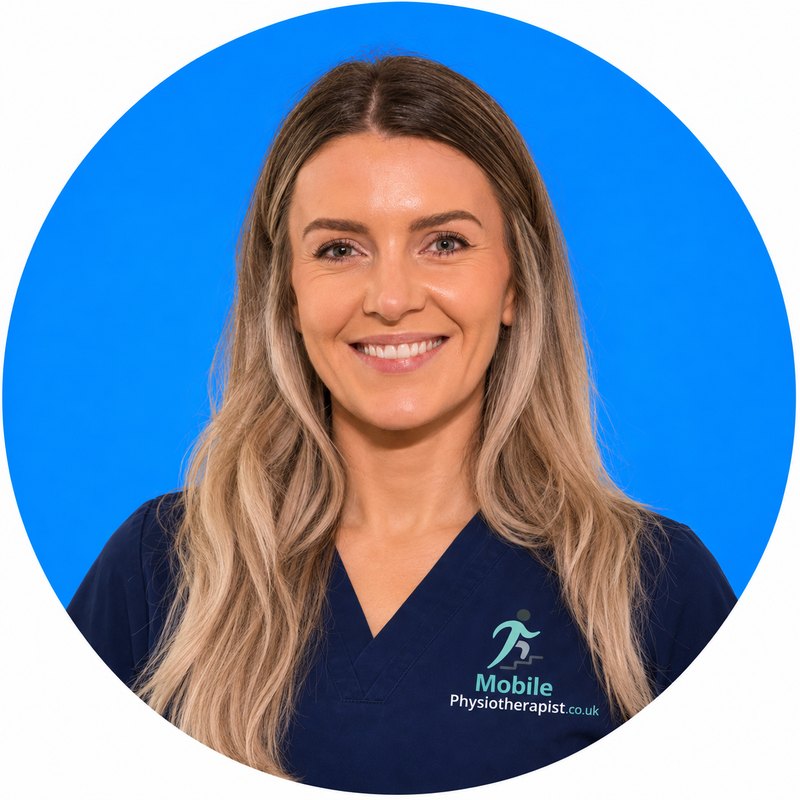
Rachel Butt is a chartered physiotherapist (MCSP, HCPC PH113364) providing home visit physiotherapy across Stamford, Grantham, Bourne, Spalding, Sleaford, Boston and the rest of south Lincolnshire, and runs an independent practice, Stamford Physiotherapy. She qualified from the University of Birmingham in 2017 and spent four years in NHS musculoskeletal outpatient services, reaching Band 6, before moving into private practice. Her work covers back pain and sciatica, sports injuries, post-operative recovery, arthritis and persistent pain. She assesses and diagnoses directly, so there is no wait for a GP referral before treatment can start.
Read Rachel's profile or call 07376 795289.
Please mention Mobile Physiotherapist.co.uk when you call.