Achilles Tendinopathy: Treatment and Exercises
Published
Local Physiotherapist - Saleh Elmsmari, West Midlands
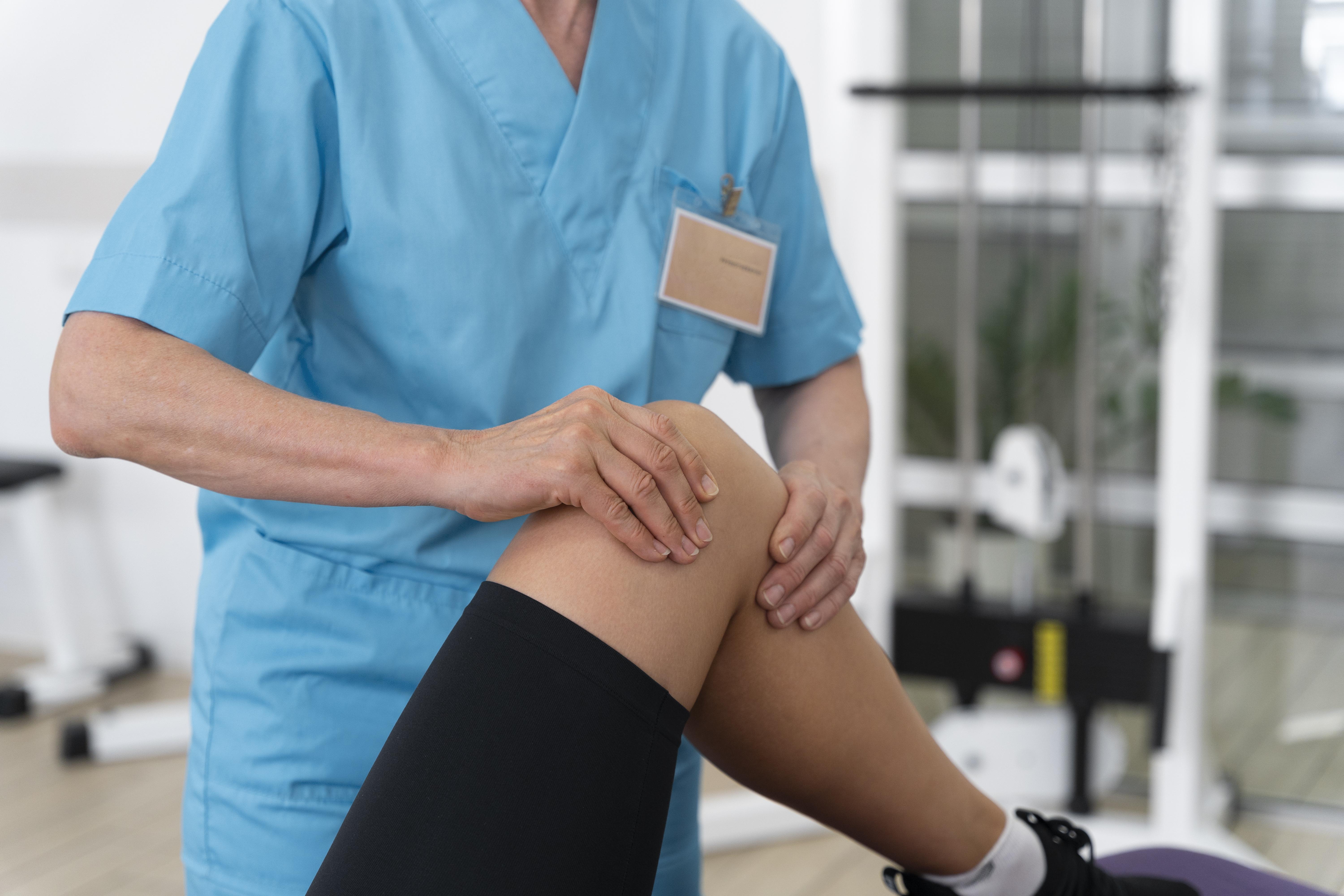
Pain at the back of the heel that does not go away? Achilles tendinopathy is a common but stubborn condition that affects runners, walkers and less active people alike. The good news is that with the right approach — particularly progressive loading exercises — most people recover fully without surgery.
The Achilles tendon is the largest tendon in the body, connecting the calf muscles to the heel bone. It absorbs and releases enormous forces during walking, running and jumping. When the tendon is overloaded beyond its capacity, it becomes painful and dysfunctional — a condition now called tendinopathy rather than tendinitis, because inflammation is not always the primary feature.
Insertional vs mid-portion tendinopathy
Achilles tendinopathy comes in two main forms, and the treatment differs slightly:
- Insertional: Pain where the tendon attaches to the heel bone. Often aggravated by stretching and compression. More common in less active people and older adults.
- Mid-portion: Pain 2 to 6 cm above the heel attachment. More common in runners and active people. Responds well to eccentric loading exercises.
Knowing which type you have helps guide the right exercises. A physiotherapist can identify this through examination.
What causes Achilles tendinopathy?
Tendinopathy develops when the tendon's load capacity is exceeded. Common triggers include:
- Sudden increase in activity: Increasing running distance or intensity too quickly
- New activity: Starting a new sport or exercise programme
- Inappropriate footwear: Shoes with poor support or worn-out soles
- Tight calf muscles: Increased load on the tendon
- Age: Tendon capacity decreases with age, particularly after 40
- Weight gain: Increased load on the tendon
- Medical conditions: Some conditions and medications (e.g. fluoroquinolone antibiotics) can affect tendon health
Symptoms
Typical symptoms include:
- Pain and stiffness at the back of the heel, especially in the morning
- Pain that eases with gentle activity but worsens after exercise
- Tenderness when squeezing the tendon
- A thickened or nodular feeling in the tendon
- Pain when pushing off during walking or running
The key principle: progressive loading
The most important thing to understand about tendinopathy is that rest alone does not work. When you rest a tendon, it loses capacity. When you return to activity, it cannot cope and becomes painful again. This is the frustrating cycle many people get stuck in.
The solution is progressive loading — gradually challenging the tendon with controlled exercises so that it rebuilds its capacity over time. This is the most evidence-supported treatment for tendinopathy. Think of it like weight training for the tendon: start light, build gradually, and the tendon gets stronger.
Stage 1: Isometric loading (pain relief and baseline)
If pain is significant (more than 5 out of 10), start with isometric exercises — holding a position without moving. These can reduce pain while maintaining some tendon load.
Isometric calf hold
Stand on the bottom step of a staircase with your heels hanging off the edge. Rise onto your toes on both feet, then lift one foot off. Hold the raised position on one leg for 45 seconds. Repeat 5 times with a 2-minute rest between. Do this twice daily.
If this is too painful, do it with both feet on the step.
Stage 2: Eccentric heel drops (the core exercise)
Once pain is manageable (less than 5 out of 10), progress to eccentric heel drops. This is the Alfredson protocol, the most studied exercise programme for Achilles tendinopathy.
For mid-portion tendinopathy
- Stand on the bottom step with your heels hanging off the edge
- Rise onto both toes
- Lift one foot and slowly lower the other heel below the step (count to 3)
- Use both feet to rise back up
- Do 3 sets of 15 repetitions, twice daily
Progress to single-leg rises, then add weight in a backpack.
For insertional tendinopathy
Do the same exercise but from a flat surface rather than a step — do not drop the heel below the level of the floor, as this compresses the tendon against the heel bone and can worsen insertional pain.
Stage 3: Heavy slow resistance
Once you can do single-leg heel drops with weight without pain during or after, progress to heavy slow resistance training. This involves slow, controlled calf raises with additional weight:
- Do 3 seconds up, 3 seconds down
- 3 sets of 10 to 15 repetitions
- 3 times per week (not daily — the tendon needs recovery time)
- Gradually increase the weight
Stage 4: Energy storage and return to activity
The final stage rebuilds the tendon's ability to absorb and release energy — essential for running, jumping and sport. This includes:
- Skipping rope
- Pogo hops (small hops in place)
- Jumping and landing drills
- Running progression (walk-run intervals, gradually increasing running)
- Sport-specific drills
Each stage should be pain-guided: discomfort up to 3 out of 10 during exercise is acceptable, and pain should not increase the next morning. If it does, reduce the load.
Activity modification
While you are rehabilitating, you do not necessarily need to stop all activity. The key is to modify:
- Reduce running volume and intensity to a pain-free level
- Avoid hill running and speed work until the tendon is stronger
- Replace some running with cycling or swimming for cardiovascular fitness
- Avoid stretching the calf aggressively — this can compress the tendon
- Consider a small heel lift in both shoes to temporarily reduce tendon load
Other treatment options
While exercise is the cornerstone, other treatments can support recovery:
- Footwear modification: Shoes with a slight heel and good arch support can reduce tendon load
- Taping or strapping: Can offload the tendon during activity
- Manual therapy: Your physiotherapist may use massage or mobilisation to address calf tightness and joint stiffness
- Shockwave therapy: May help chronic cases that have not responded to exercise
- Ice: After exercise, 15 minutes of ice can help manage pain
Injections and surgery are rarely needed and are a last resort for cases that have not responded to a comprehensive loading programme over several months.
When to see a physiotherapist
Achilles tendinopathy can be slow to resolve and easy to aggravate. A physiotherapist can:
- Confirm the diagnosis and identify whether it is insertional or mid-portion
- Rule out other causes of heel pain (e.g. retrocalcaneal bursitis, plantar fasciitis)
- Design a progressive loading programme tailored to your stage
- Guide your return to running or sport safely
- Address contributing factors such as calf tightness, foot posture or hip strength
Frequently asked questions
How long does Achilles tendinopathy take to heal?
Achilles tendinopathy typically takes 3 to 6 months to resolve with proper management. Some cases take longer. The tendon heals slowly because it has a poor blood supply. Consistency with progressive loading exercises is the most important factor in recovery. Rest alone does not heal tendinopathy — the tendon needs controlled load to rebuild.
Should I stop running with Achilles tendinopathy?
Not necessarily. Complete rest can actually worsen tendinopathy. The approach is to modify activity — reduce volume and intensity to a level that does not cause pain exceeding 3 out of 10 during or after exercise. As the tendon strengthens through loading exercises, you can gradually increase running. Your physiotherapist can guide this progression.
Are heel drops good for Achilles tendinopathy?
Yes. Heavy slow resistance exercises, particularly heel drops (eccentric calf raises), are the most evidence-supported treatment for Achilles tendinopathy. The Alfredson protocol is a well-known programme. Start with double-leg heel drops and progress to single-leg, then add weight. Your physiotherapist can tailor the programme to your stage of recovery.
Heel pain not improving?
Our physiotherapists can diagnose your Achilles pain, design a progressive loading programme and guide your return to activity. Find a physio near you, or explore our joint pain and muscle injury treatment.
About Saleh Elmsmari
Saleh Elmsmari is a Chartered Physiotherapist with a PhD in Sports, Exercise & Rehabilitation Science and over 3 years of post-graduate experience across musculoskeletal, neurological and orthopedic care. He is HCPC registered and a CSP member, providing home physiotherapy visits across the West Midlands.