Sports Injury Rehabilitation & Sports Massage in Warwickshire
Published
Mobile Physiotherapist — Warwickshire
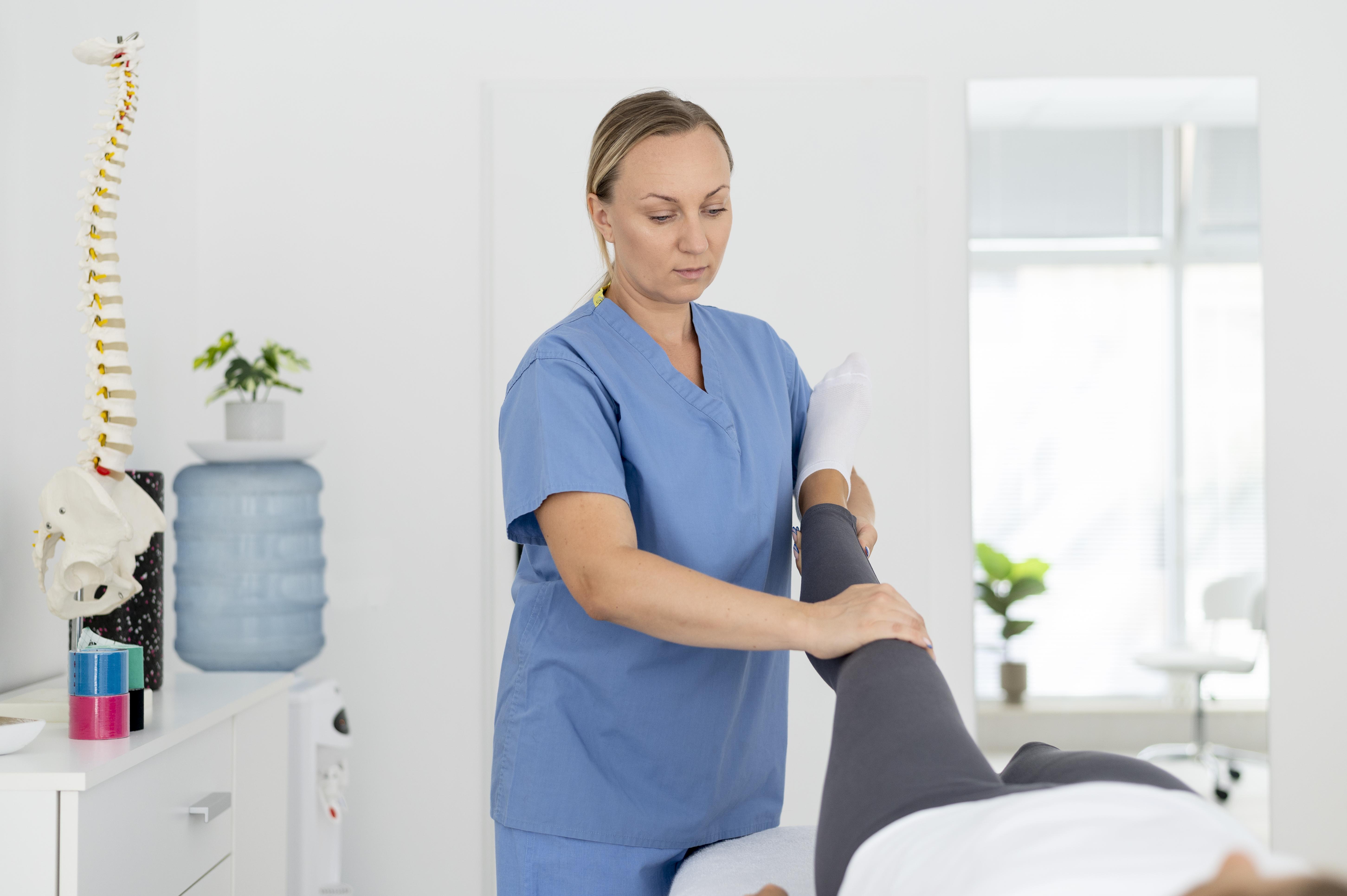
Whether you play competitively or run at weekends, a sports injury raises the same two questions: what actually happened, and when can you get back to it safely? Home physiotherapy across Warwickshire can answer both — with assessment, hands-on treatment and a structured return to full activity.
Getting back to sport, not just out of pain
There is a difference between an injury that has stopped hurting and an injury that has actually healed. Pain usually settles well before the tissue has regained its full strength and load tolerance, which is why so many people return to sport, feel fine for two or three sessions, and then go over on the same ankle or feel the same hamstring grab.
Proper rehabilitation closes that gap. It means rebuilding strength and load tolerance past the point where the pain stopped, so the tissue can handle what you are about to ask of it.
Pitch-side experience, applied at home
A physiotherapist who works pitch-side sees injuries at the moment they happen, which is a different job from seeing them a fortnight later in a clinic. If returning to a team sport matters to you, it is worth asking whether the person treating you has that experience and how they decide when someone is ready to play again.
That work covers the injuries that turn up week after week in amateur sport: hamstring and calf strains, ankle sprains, knee problems, groin pain, shoulder injuries and the overuse complaints that build gradually over a season. The same approach applies whether you play competitively or run at weekends.
What sports injury treatment involves
- Assessment and diagnosis: what was injured, how badly, and what caused it — because the cause is often somewhere other than where it hurts
- Hands-on treatment: joint mobilisation where movement is restricted, soft-tissue work where muscle is tight or scarred
- Sports massage: to address tightness, reduce discomfort and support tissue recovery
- Sports taping: to manage swelling, offload the injured structure and support a controlled return to training
- Progressive loading: a structured programme that rebuilds strength through the full range, at a pace the tissue will accept
- Return-to-play planning: clear markers for when to progress, rather than guessing
Sports massage as part of treatment
Within a physiotherapy appointment, soft-tissue work is used where the assessment shows it will help — releasing tight or guarded muscle, working on trigger points, and improving tissue mobility around an injury. It is a tool rather than a treatment in its own right, and it works best alongside loading the injured tissue properly.
Used this way it is a treatment technique with a specific purpose, not a standalone rub-down. It is included within a normal appointment rather than charged separately.
Muscle energy techniques and neuromuscular technique
Where a muscle has tightened protectively around an injury, stretching it directly often achieves very little — the tightness is a response, not the root problem. Muscle energy techniques use your own gentle contraction and relaxation to restore length, and neuromuscular technique works on specific points of tension within the muscle.
These sit alongside joint mobilisation for the joint-based restrictions. Which one is used depends on what the assessment finds.
Acupuncture and dry needling for sports injuries
Some physiotherapists also use medical acupuncture or dry needling for persistent muscle tightness and trigger points that have not responded to hands-on work alone. It is not offered by our Warwickshire physiotherapist, so ask on the free phone call if it is something you are specifically looking for.
Common injuries treated at home
- Hamstring, calf and quadriceps strains — including the recurrent ones
- Ankle sprains and the instability that often follows them
- Knee pain, including runner's knee, patellar tendon problems and post-ACL rehabilitation
- Shoulder injuries from throwing, racket sports and contact
- Groin and hip pain, common in footballers
- Achilles and shin problems from running loads
- Tennis and golfer's elbow, and other overuse injuries
Why home visits suit sports rehabilitation
Rehabilitation is mostly what you do between appointments. Working through the programme in the space where you will actually be doing it — with whatever equipment you have, or none — means the exercises are realistic rather than dependent on a gym you may not get to.
It also removes the travel, which matters when you are on crutches or cannot drive comfortably. Home visits are available across Rugby, Nuneaton, Leamington Spa, Warwick, Stratford-upon-Avon and across Warwickshire.
How long does it take?
It depends on the injury and how long it has been going on. A straightforward muscle strain caught early may need a handful of sessions. A long-standing problem that has been worked around for months usually takes longer, because there is more to undo.
You should get an honest estimate at the first assessment, along with clear markers for progress — so you can tell whether treatment is working rather than simply hoping it is.
Book a home visit in Warwickshire
A free phone enquiry is the easiest place to start — talk through what is going on and check whether home physiotherapy is the right fit. No GP referral is needed.
Please mention Mobile Physiotherapist.co.uk

About Mobile Physiotherapist
Mobile Physiotherapist provides HCPC and CSP registered home visit physiotherapy across Rugby, Nuneaton, Bedworth, Leamington Spa and wider Warwickshire. The treatment described in this article is not currently offered by our Warwickshire physiotherapist. Contact the office and we will be happy to help you find the right service.
Contact the office or see who covers Warwickshire.
Please mention Mobile Physiotherapist.co.uk when you call.