Knee Arthritis Exercises to Reduce Pain and Stiffness
Published
Local Physiotherapist - Lizzie Thornton, Staffordshire Moorlands & Cheshire East
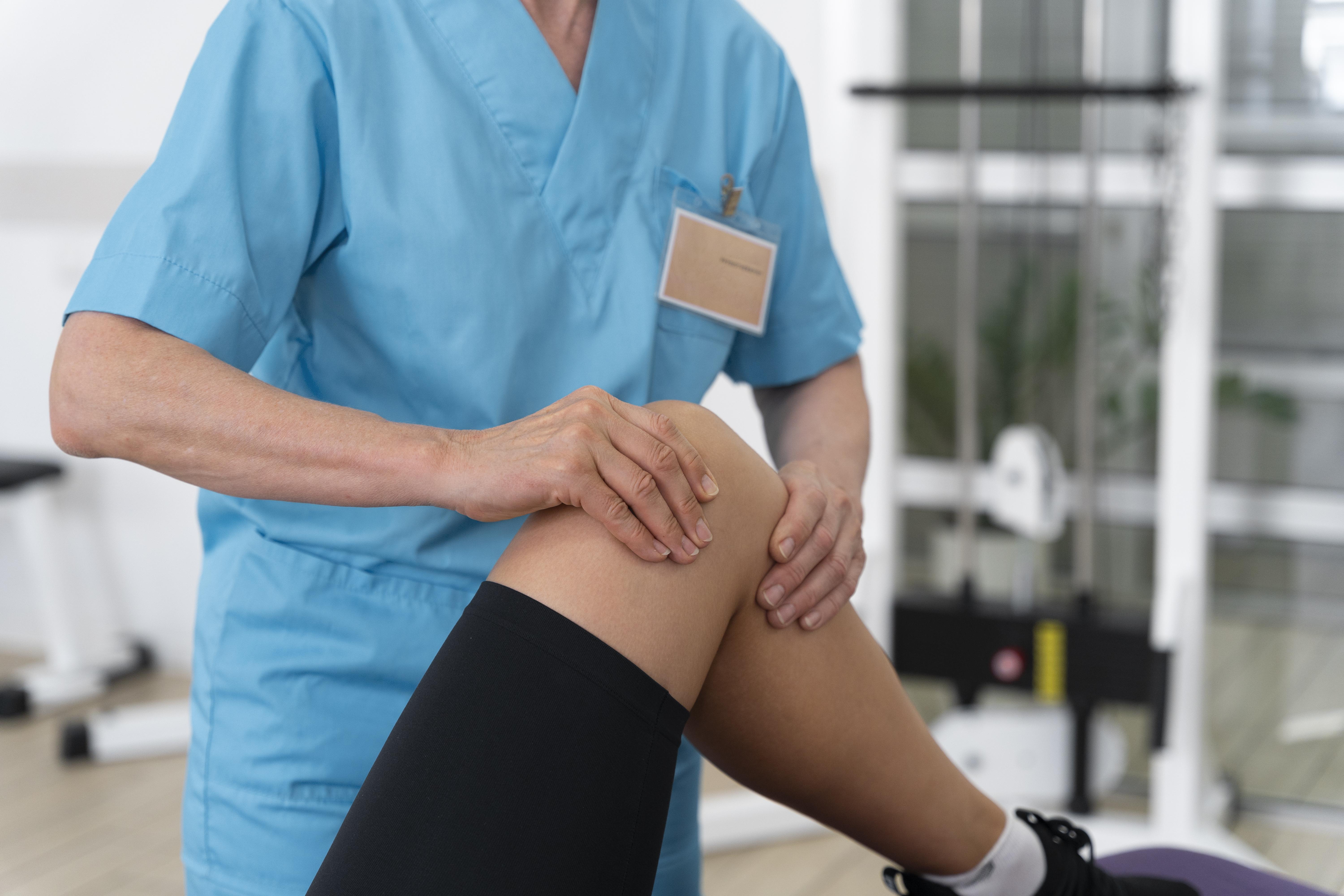
Knee osteoarthritis affects millions, causing pain, stiffness, and difficulty with daily activities. Exercise is the most effective non-surgical treatment, reducing pain and improving function. This guide provides a comprehensive exercise programme you can do at home.
Why exercise works for knee arthritis
Strong evidence shows that exercise:
- Reduces knee pain by 30-40%
- Improves physical function
- Strengthens muscles that support the knee
- Maintains joint cartilage health
- Reduces inflammation
- Helps with weight management
- May delay need for surgery
Understanding knee arthritis pain
Pain with knee arthritis typically:
- Worsens with activity initially, then eases
- Is worse after rest (morning stiffness)
- Improves with gentle movement
- Varies day to day
Some discomfort during exercise is normal and does not mean you are causing damage. The key is finding the right balance.
Essential knee exercises
1. Quadriceps sets (static quads)
Purpose: Strengthen front thigh muscle
How to do it:
- Sit or lie with leg straight
- Tighten the muscle on front of thigh
- Push knee down
- Hold 5 seconds
- Relax
- Repeat 10-15 times, 3 times daily
Why it matters: The quadriceps is the most important muscle for knee stability.
2. Straight leg raise
Purpose: Strengthen quadriceps without bending knee
How to do it:
- Lie on your back
- Bend one knee, foot flat
- Keep other leg straight
- Tighten thigh muscle
- Lift leg 15cm off bed
- Hold 5 seconds
- Lower slowly
- Repeat 10 times each leg
Progression: Add ankle weights when this becomes easy.
3. Knee extension (sitting)
Purpose: Strengthen quadriceps through range
How to do it:
- Sit on a chair
- Straighten one knee fully
- Hold 5 seconds
- Lower slowly
- Repeat 10 times each leg
Progression: Add ankle weights.
4. Hamstring curls (standing)
Purpose: Strengthen back of thigh
How to do it:
- Stand holding a worktop
- Bend one knee, bringing heel towards buttock
- Hold 3 seconds
- Lower slowly
- Repeat 10 times each leg
5. Mini squats
Purpose: Functional leg strengthening
How to do it:
- Stand holding worktop, feet hip-width apart
- Bend knees slightly (30 degrees max)
- Keep back straight
- Hold 3 seconds
- Straighten
- Repeat 10 times
Important: Only shallow squats. Deep squats may aggravate knee arthritis.
6. Sit-to-stand
Purpose: Functional strengthening for daily activities
How to do it:
- Sit on firm chair
- Feet flat on floor
- Lean forward slightly
- Push through legs to stand
- Lower slowly
- Repeat 10 times
Progression: Use lower chair or try without hands.
7. Step-ups
Purpose: Strengthen legs functionally
How to do it:
- Use bottom stair or small step (10-15cm)
- Step up with one leg
- Bring other leg up
- Step down
- Repeat 10 times each leg leading
Progression: Use higher step as strength improves.
8. Calf raises
Purpose: Strengthen calves, improve balance
How to do it:
- Stand holding worktop
- Rise up onto toes
- Hold 3 seconds
- Lower slowly
- Repeat 10-15 times
Range of motion exercises
9. Knee flexion (heel slides)
Purpose: Maintain knee bending
How to do it:
- Lie on back or sit
- Slide heel towards buttock
- Bend knee as far as comfortable
- Hold 5 seconds
- Straighten
- Repeat 10 times each leg
10. Knee extension stretch
Purpose: Maintain full knee straightening
How to do it:
- Sit with leg extended on bed or floor
- Place rolled towel under ankle
- Gently push knee down towards bed
- Hold 10-30 seconds
- Repeat 3 times each leg
Low-impact aerobic exercise
Cardiovascular exercise is essential for overall health and weight management.
Best options for knee arthritis
- Walking: On level ground, start with 10 minutes
- Cycling: Stationary bike ideal, low resistance
- Swimming: Excellent non-weight-bearing option
- Water aerobics: Buoyancy reduces joint stress
- Elliptical trainer: Lower impact than walking
Activities to avoid
- Running or jogging
- High-impact aerobics
- Deep squats or lunges
- Kneeling for prolonged periods
- Activities involving twisting (modify as needed)
Sample weekly programme
Daily strengthening (20 minutes)
- Quadriceps sets: 15 reps, 3 times daily
- Straight leg raises: 10 reps each leg
- Knee extension sitting: 10 reps each leg
- Hamstring curls: 10 reps each leg
- Mini squats: 10 reps
- Sit-to-stand: 10 reps
- Calf raises: 15 reps
Daily range of motion (10 minutes)
- Heel slides: 10 reps each leg
- Knee extension stretch: 3 reps each leg
Aerobic exercise (most days, 20-30 minutes)
- Walking, cycling, or swimming
- At comfortable pace
- Build up gradually
Managing pain during exercise
The 2-hour rule
Some increase in pain during and immediately after exercise is acceptable, but:
- Pain should return to baseline within 2 hours
- If pain persists longer, reduce exercise intensity
- Mild discomfort is OK, sharp pain is not
Pain management strategies
- Apply heat before exercise (warm shower or heat pack)
- Apply ice after exercise (20 minutes)
- Take pain medication 30-60 minutes before if needed
- Exercise when pain is lowest
- Start with fewer reps, build gradually
Progression guidelines
Progress when current exercises feel easy:
- Increase repetitions (up to 15-20)
- Add resistance (ankle weights, resistance bands)
- Try more challenging variations
- Increase aerobic exercise duration
Adding resistance
When exercises become easy (typically 4-6 weeks):
- Start with 0.5-1kg ankle weights
- Gradually increase weight
- Use resistance bands for variety
Common mistakes to avoid
- Doing too much too soon: Start gently, build gradually
- Stopping when it hurts: Some discomfort is normal
- Inconsistency: Regular exercise is key
- Poor technique: Quality over quantity
- Ignoring other leg: Exercise both legs equally
- Stopping too early: Benefits take weeks to build
When to seek professional help
Consider specialist knee arthritis physiotherapy if:
- Unsure which exercises are safe
- Pain not improving after 6-8 weeks
- Need help with technique
- Want personalized programme
- Considering surgery and want to optimize fitness
Complementary strategies
Weight management
Every kilogram lost reduces knee stress by 4kg during walking. Even modest weight loss (5-10%) significantly reduces pain.
Footwear
- Wear supportive, cushioned shoes
- Replace worn footwear
- Consider insoles if needed
- Avoid high heels
Walking aids
- Use a walking stick if it helps
- Hold stick in opposite hand to painful knee
- Do not see it as giving up — it helps you stay active
Pacing
- Balance activity with rest
- Break tasks into smaller chunks
- Avoid prolonged standing or walking
- Take regular breaks
Realistic expectations
Timeline for improvement
- Weeks 1-2: May feel slightly worse as muscles adapt
- Weeks 3-6: Starting to notice improvements
- Weeks 6-12: Significant pain reduction and improved function
- Ongoing: Continued improvement with consistent exercise
What to expect
- Exercise will not cure arthritis
- You will still have some pain
- Good days and bad days are normal
- Benefits require ongoing exercise
- Most people see significant improvement
Long-term management
Exercise for knee arthritis is a lifelong commitment:
- Make it part of your daily routine
- Vary exercises to maintain interest
- Join a class for motivation
- Track progress to stay motivated
- Adjust programme as needs change
The bottom line
Exercise is the most effective treatment for knee arthritis. Key principles:
- Include strengthening, range of motion, and aerobic exercise
- Exercise daily or most days
- Start gently, progress gradually
- Some discomfort is normal, sharp pain is not
- Be consistent — regular exercise is crucial
- Combine with weight management and other strategies
- Be patient — benefits take weeks to build
With the right exercise programme, most people with knee arthritis can significantly reduce pain and improve function, maintaining an active, independent lifestyle.
Need expert guidance for knee arthritis?
Our physiotherapy service provides personalized exercise programmes for knee osteoarthritis, delivered in your home. We ensure correct technique, appropriate progression, and help you manage pain while staying active.

About Lizzie Thornton
Lizzie Thornton is a specialist community physiotherapist with over 15 years of experience managing arthritis and chronic pain. She is HCPC registered and a member of the Chartered Society of Physiotherapy. Lizzie has helped hundreds of people with knee arthritis reduce pain and improve function through home physiotherapy visits across Staffordshire Moorlands and Cheshire East.