Recovering at Home After a Hip or Knee Replacement in Rutland
Published
Local Physiotherapist — Twinkle Patel, Rutland
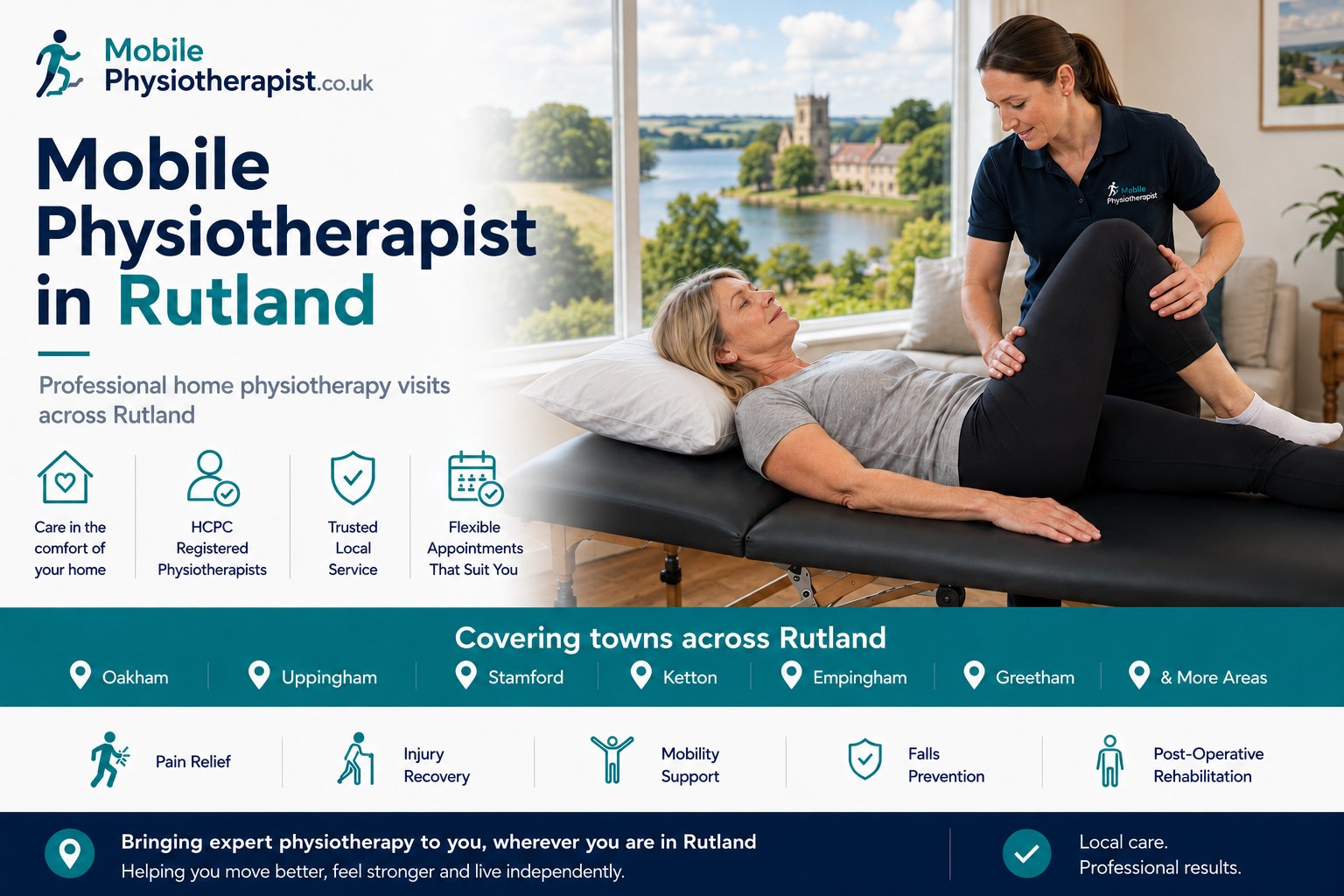
A joint replacement is a very successful operation — but the result you end up with depends heavily on the rehabilitation that follows it. The surgery fixes the joint; the rehab decides how well you use it.
Why the first twelve weeks matter
The early weeks set the ceiling for your recovery, particularly after a knee replacement. Range of movement that is not regained in the first three months becomes progressively harder to get back, and stiffness that sets in early can be difficult to reverse. Consistent, well-judged work in that window is the single biggest thing you can control.
NHS physiotherapy after joint replacement varies a great deal by area and by how busy the service is. Many people are discharged with a sheet of exercises and a review some weeks later, which is fine for some and not nearly enough for others.
What home rehabilitation involves
Twinkle works through the recovery in stages, adjusting as you progress:
- Early weeks — controlling swelling, restoring range of movement, waking the muscles up again, and getting you moving safely with whatever walking aid you need
- Middle phase — progressive strengthening, weaning off aids, normalising your walking pattern, and practising stairs
- Later phase — balance, endurance, confidence outdoors, and getting back to the things you actually want to do — the garden, the shops, walking the dog
Working at home means the programme is built around your real stairs, your real chair height, and your real bathroom, rather than a gym.
Hips and knees recover differently
After a hip replacement, people often feel better quickly, and the main risks are doing too much too soon and letting a limp become a habit. Attention goes on hip strength, walking pattern, and any movement precautions your surgeon has given you.
After a knee replacement, progress is usually slower and more uncomfortable, and getting the knee fully straight matters as much as bending it. Swelling management and steady, patient work on range of movement are the priorities.
Getting the balance right
The commonest mistakes are opposite ones: doing far too little because it hurts, or charging ahead and stirring up swelling that then sets you back. A good programme sits between the two and changes week to week. Some discomfort during and after exercise is expected and normal; pain that is still raised the next morning usually means the dose was too high.
If you are still waiting for surgery
Time on a waiting list is not wasted time. Going into surgery stronger — often called prehabilitation — is consistently linked with a faster, smoother recovery afterwards. Work on leg strength, general fitness and, where relevant, getting confident with the walking aid you are likely to need is all worth doing before the operation, not just after it.
Joint replacement rehab across Rutland
Twinkle provides post-operative home physiotherapy across Rutland, including Oakham, Uppingham, Cottesmore, Ketton, Ryhall and the surrounding villages, picking up rehabilitation after treatment at Rutland Memorial Hospital, Peterborough City Hospital, Leicester Royal Infirmary and Kettering General Hospital. See also walking practice and confidence.
How to book with Twinkle
If you would like to arrange a home visit, contact Twinkle directly for a free phone call. She can talk through your situation, confirm whether home physiotherapy is appropriate, and agree the best first appointment for your needs.
- Phone: 07767 564 616
- Please mention Mobile Physiotherapist.co.uk when you call
- Email: info@aspire-physio.site
- Profile: View Twinkle Patel's profile

About Twinkle Patel
Twinkle Patel is an HCPC registered specialist physiotherapist with a Master's degree in community-based rehabilitation and geriatrics, providing home visit physiotherapy across Rutland. Twinkle works with elderly rehabilitation and falls prevention, stroke and neurological rehabilitation, balance and dizziness problems, back, neck and joint pain, and post-operative recovery.
Read Twinkle's profile or call 07767 564 616.
Please mention Mobile Physiotherapist.co.uk when you call.