How to Get Up Safely After a Fall
Published
Local Physiotherapist — Steve McLaren, Tyne and Wear
Many people who fall are not badly hurt. The real danger is often what happens next: not being able to get up, and lying on the floor for hours. Knowing what to do, and having practised it, makes a real difference.
Why lying on the floor is dangerous
Around half of older people who fall without injury cannot get up on their own. Lying on the floor for a long time — often called a "long lie" — brings problems of its own. People get cold, dehydrated and sore. Skin over the hips and heels can break down. Muscles can be damaged by the pressure. And a long lie shakes confidence badly, so people often move less afterwards, which makes the next fall more likely.
So the aim is two things: know how to get up if it is safe, and have a way to get help quickly if it is not.
First: stop and check
Do not rush. Stay where you are for a moment and get your breath back. Then check yourself over:
- Do you have pain in your hip, back, neck or head?
- Can you move your arms and legs normally?
- Do you feel dizzy, sick or confused?
If you are hurt, or you are not sure, do not try to get up. Call for help instead. A hip that hurts badly after a fall, especially if the leg looks shorter or turned out, must not be stood on.
How to get up, step by step
If you are not hurt and feel ready, this is the safest general way. It works best near a sturdy chair or a low, solid piece of furniture.
- Roll onto your side. Bend your knees, turn your head the way you are rolling, and roll over.
- Get onto your hands and knees. Push up with your arms, one at a time. Rest here if you need to.
- Crawl to a sturdy chair. Not something on wheels, and not a light chair that could tip.
- Put your hands on the seat of the chair.
- Bring one foot forward and put it flat on the floor, so you are half kneeling.
- Push up with your arms and your front leg, and turn to sit on the chair.
- Sit and rest for a few minutes before doing anything else. Then tell someone what happened.
If you cannot get up
- Call for help — a personal alarm, a mobile phone, or bang on the wall or floor to get a neighbour's attention
- Keep warm — pull down a blanket, coat, towel or anything within reach
- Keep moving a little — shift your weight and move your ankles and legs every so often to ease the pressure
- Shuffle towards a phone or a warmer spot if you can do it safely, on your bottom or side
Get ready before it happens
The best time to plan for a fall is before one happens.
- Wear a personal alarm and actually wear it, including in the bathroom and at night. The ones that detect a fall on their own help if you are knocked out or confused.
- Keep a phone at floor level in the room you use most, or carry a mobile in a pocket.
- Put a spare blanket somewhere low you could reach from the floor.
- Tell someone your routine, so they notice if you do not call or answer.
Practising with a physiotherapist
Getting up from the floor is a skill, and like any skill it is far easier the second time than the first. A physiotherapist can practise it with you in your own home, safely, in small steps. Often it starts the other way round — practising getting down to the floor and back up, bit by bit, until the whole thing feels possible.
Many people are surprised they can do it. And knowing you can get up takes away a lot of the fear, which makes you more likely to keep active, which in turn makes a fall less likely.
A physiotherapist will also work on the strength in your legs and arms that makes getting up easier, and look at why the fall happened in the first place.
After any fall, tell your GP
Even if you were not hurt. A fall is the strongest sign that another one may follow, and it is worth having the cause looked at, including your tablets, blood pressure and eyesight.
Home physiotherapy across Tyne and Wear
Home visits after a fall are available across North Shields, Tynemouth, Whitley Bay, Newcastle, Gateshead, South Shields, Sunderland and across Tyne and Wear.
Book a home visit in Tyne and Wear
A free phone call is the easiest place to start — talk through what is going on and check whether home physiotherapy is the right fit. No GP referral is needed.
Please mention Mobile Physiotherapist.co.uk
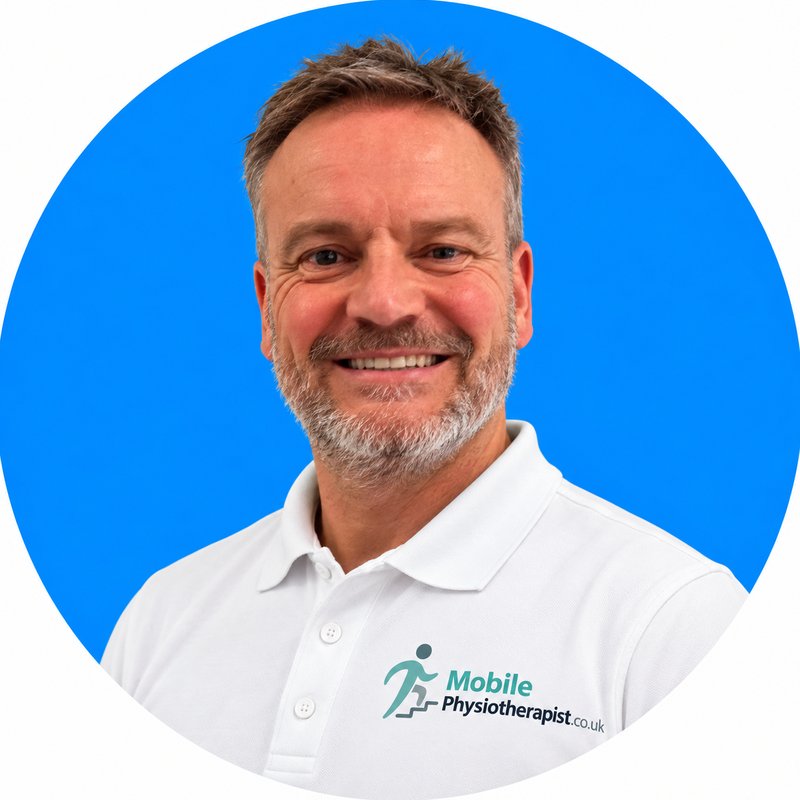
About Steve McLaren
Steve McLaren is a chartered physiotherapist (MCSP, HCPC PH52681) providing home visit physiotherapy across North Shields, Tynemouth, Whitley Bay, Newcastle, Gateshead, South Shields, Sunderland and across Tyne and Wear. He qualified in 1997 and has spent more than 20 years in community rehabilitation, treating people in their own homes. He works in the NHS in Newcastle, in a rapid response team that treats frail older people at home and in the emergency department, and his particular interest is falls prevention. He lives in North Shields.
Read Steve's profile or call 07788 974385.
Please mention Mobile Physiotherapist.co.uk when you call.