Falls Prevention for Older Adults in Surrey
Published · 8 min read
Local Physiotherapist — Anas Mohamed Armouch, Surrey
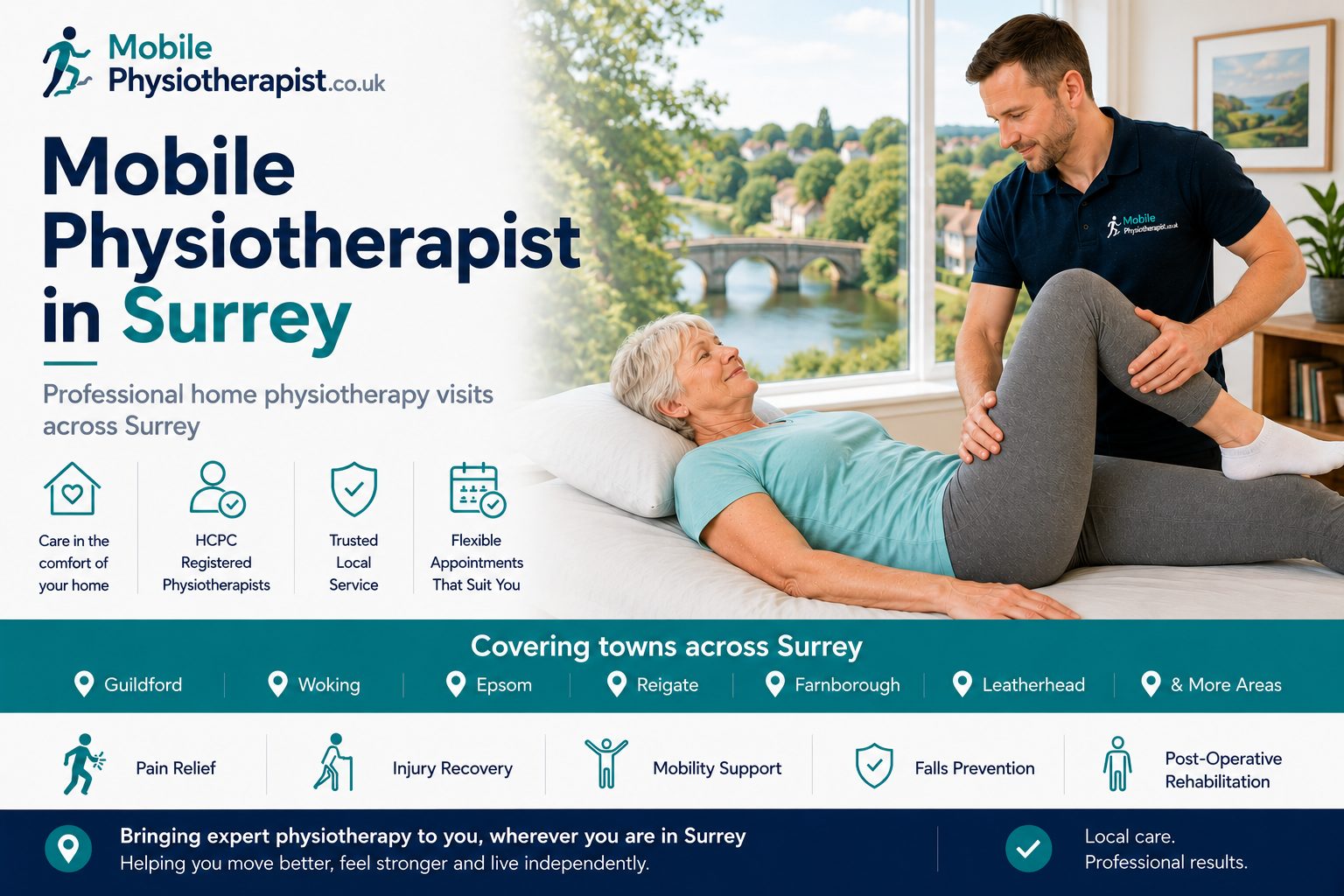
Falls are not an inevitable part of getting older, and the risk factors behind most of them are treatable. Strength and balance training has some of the best evidence in the whole of physiotherapy — but it works best when started before a serious fall, rather than after.
The warning signs that come first
Most people have months of quieter signals before a significant fall: holding the furniture while crossing a room, taking the stairs one at a time, avoiding going out in poor weather, or needing several attempts to stand up from a low chair. Any of these is a good reason to get assessed.
Families often notice a relative has quietly stopped doing things — the shopping trip, the garden, the stairs — and put it down to age. Very often it is avoidable loss of strength and confidence instead.
What raises the risk
- Reduced leg strength, particularly the muscles used to stand up and climb stairs
- Impaired balance and slower reactions when unsteady
- Certain medications, and especially combinations of them
- Poor vision, or new glasses that alter depth perception
- Home hazards — loose rugs, trailing leads, poor lighting, no bannister
- Fear of falling, which reduces activity and so accelerates the decline
What a home falls assessment involves
A home assessment lets Anas see the real spaces where problems occur. It typically covers strength, balance and walking, how you manage sit-to-stand from your own chair and bed, stairs and thresholds, footwear, and the specific places in your home where you feel least confident.
Where equipment or a small adaptation would genuinely help — a second bannister, a raised chair, a grab rail in the right place — you will get a straight recommendation rather than a catalogue.
What actually reduces falls
The evidence points clearly at progressive strength and balance training, done regularly and made gradually harder over time. Gentle movement alone is not enough; the programme has to challenge balance safely in order to improve it. That is why a tailored, progressed programme beats a generic exercise sheet.
Anas has worked in nursing home physiotherapy since March 2025, supporting older adults with mobility, balance, strength and falls prevention, including residents living with stroke, Parkinson's disease and dementia. Where memory or cognition is part of the picture, the programme is kept simple and built into daily routine.
After a fall
Confidence usually takes longer to recover than the injury. Rehabilitation addresses both: rebuilding the physical capacity, and rebuilding trust in it through graded practice of the tasks that now feel risky.
Falls prevention across Surrey
Falls prevention and elderly rehabilitation are available at home across Surrey, including Kingston upon Thames, Surbiton, Epsom and Leatherhead.
Get in touch: call Anas on 07476 449888 or email Anas.
Please mention Mobile Physiotherapist.co.uk when you call.

About Anas Mohamed Armouch
Anas Mohamed Armouch is a chartered physiotherapist (MCSP) and HCPC registered practitioner (PH138031) providing home visit physiotherapy across West Molesey, Kingston upon Thames and wider Surrey. Anas graduated from the University of Brighton and has worked in private musculoskeletal practice since 2023, treating acute injuries, chronic pain, postural problems and sports injuries, alongside nursing-home rehabilitation with older adults covering falls prevention, balance and stroke, Parkinson's and dementia care. Anas also runs an independent practice, The Town Physio.
Read Anas's profile or call 07476 449888.
Please mention Mobile Physiotherapist.co.uk when you call.