Falls Prevention for Older Adults in Merseyside
Published
Local Physiotherapist — Naveen Ramakrishnan, Merseyside
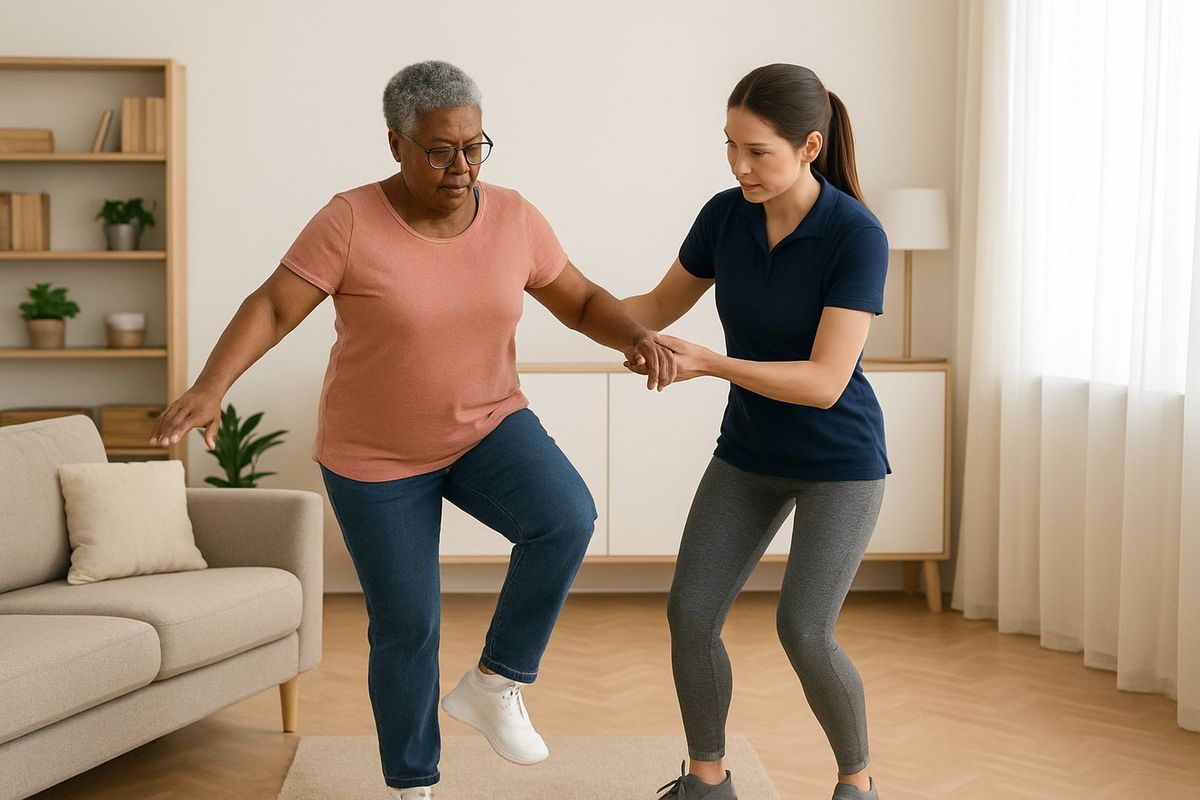
Around one in three people over 65 has a fall each year. Most cause no serious injury — but they change something. People become more careful, then more hesitant, then less active, and that reduction in activity is itself what makes the next fall more likely.
Falls are not simply part of getting older
This is the most useful thing to know, because the assumption that falling is inevitable stops people seeking help that genuinely works. Falls risk is made up of specific, identifiable factors, and most of them can be improved.
What actually contributes
- Reduced leg strength — particularly the ability to stand up from a chair without using the arms
- Impaired balance, which declines measurably without practice
- Changes in walking pattern — shorter steps, less foot clearance, slower reactions
- Medication, especially several at once, or anything causing drowsiness or dizziness
- Vision changes, including the adjustment period after new glasses
- Home hazards — loose rugs, trailing flexes, poor lighting, no bathroom rail
- Fear of falling, which changes how people move in ways that make falling more likely
That last one is frequently underestimated. Someone who is frightened of falling tends to walk stiffly, look down, take small shuffling steps and hold onto furniture. Every one of those makes a trip more likely, not less.
What the evidence supports
Strength and balance training is the intervention with the strongest evidence behind it. Not general activity — specific, progressive work on the muscles and reactions used to stay upright, continued over time and made gradually harder.
Doing it at home has a practical advantage: the programme is built around your actual environment, your actual chair height, your actual stairs. And there is no journey to an appointment, which is often the reason people stop attending a class after a few weeks.
What a falls assessment covers
A first appointment lasts 60 minutes and typically includes:
- History of any falls or near-misses — what happened, where, and at what time of day
- Testing leg strength, balance and walking pattern
- Watching the movements that matter: standing from a chair, turning, managing stairs
- A walk through the home looking for straightforward hazards
- A review of walking aids, and whether the one being used is the right height and type
- A written exercise programme to start straight away
Simple changes worth making now
- Remove loose rugs, or fix them down properly
- Improve lighting on stairs and landings, and keep a light within reach of the bed
- Keep everyday items between waist and shoulder height so there is no reaching or stooping
- Wear supportive, well-fitting shoes indoors rather than loose slippers
- Ask a GP or pharmacist to review medications if there are several, or if any cause dizziness
- Get vision checked annually
Rebuilding confidence
After a fall, confidence often takes longer to recover than the body does. The way through it is graded exposure — practising the specific things that feel risky, in a controlled way, with someone alongside, until they stop feeling risky.
That might mean the stairs, or stepping outside onto an uneven path, or getting up from a low chair. It works best in the place where those things actually happen, which is another argument for doing this at home rather than in a clinic.
If someone has already fallen
A fall that caused no injury is still worth acting on — it is the clearest warning sign there is, and the point at which intervention works best. Do not wait for a second one.
Seek medical advice first if the fall involved a loss of consciousness, a blow to the head, or if there is any suspicion of a fracture.
Home visits across Merseyside
Falls prevention assessments and strength and balance programmes are available at home across Liverpool, Birkenhead, St Helens, Southport, Bootle and across Merseyside.
Book a home visit in Merseyside
A free phone enquiry is the easiest place to start — talk through what is going on and check whether home physiotherapy is the right fit. No GP referral is needed.
Please mention Mobile Physiotherapist.co.uk

About Naveen Ramakrishnan
Naveen Ramakrishnan is a chartered physiotherapist (HCPC registered (PH127898), MCSP 115383) with around 14 years of experience, providing home visit physiotherapy across Liverpool, Birkenhead, St Helens, Southport, Bootle and across Merseyside. He specialises in musculoskeletal and sports injury rehabilitation, back and neck pain, joint pain, post-operative and orthopaedic recovery and older adults rehabilitation. He assesses and diagnoses directly, so there is no wait for a GP referral before treatment can start.
Read Naveen's profile or call 07553 370300.
Please mention Mobile Physiotherapist.co.uk when you call.