Dizziness, Vertigo and Unsteadiness: How Home Physiotherapy Helps in Rutland
Published
Local Physiotherapist — Twinkle Patel, Rutland
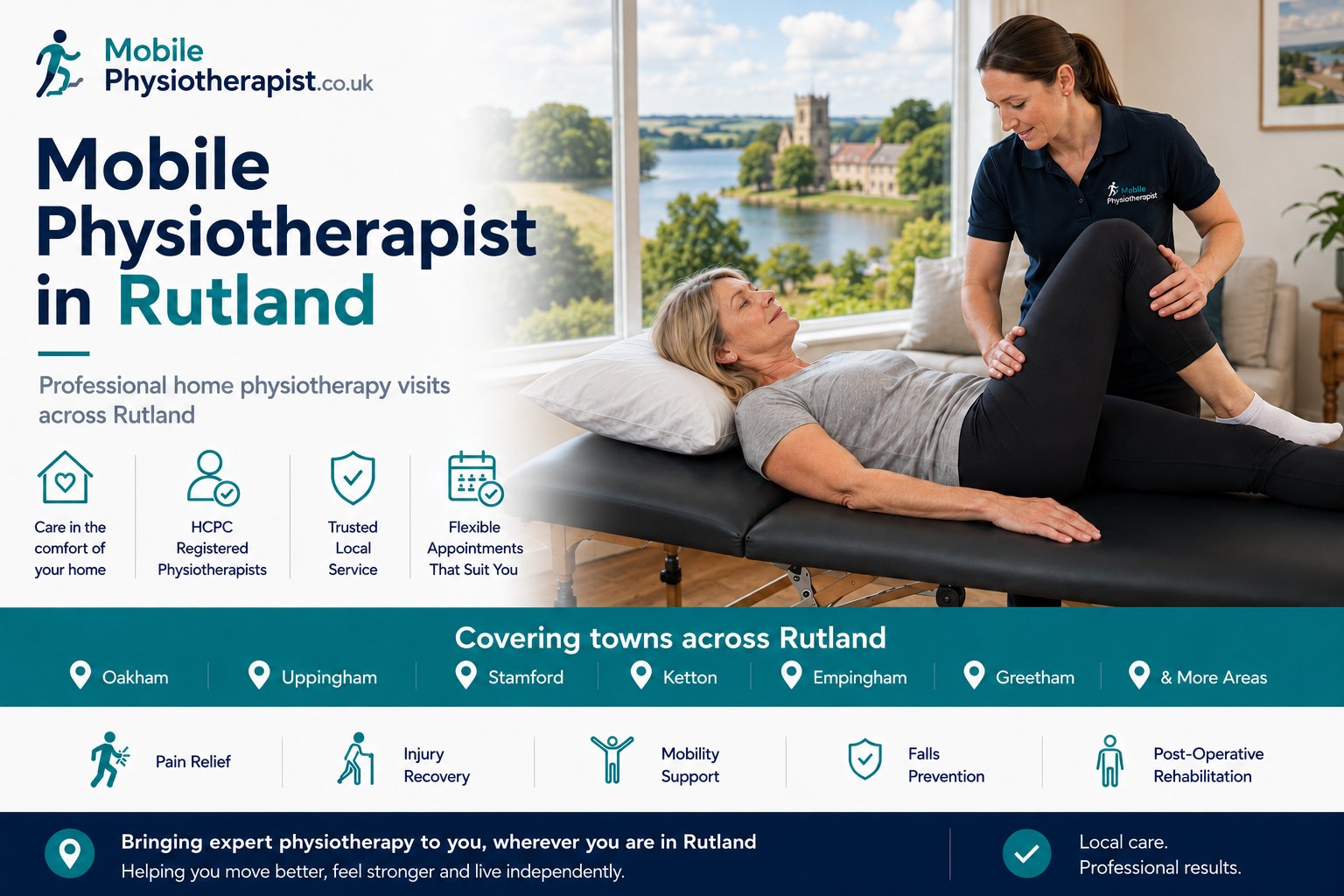
Dizziness is one of the most common reasons older adults visit their GP — and one of the most under-treated. Many people are told to "wait it out" when in fact the cause is mechanical, identifiable, and often resolves quickly with the right assessment and exercises.
Dizziness is a symptom, not a diagnosis
"Dizzy" means different things to different people. It might be a spinning sensation, a floating or swimmy feeling, light-headedness on standing, or a general unsteadiness on your feet. Those descriptions point to very different causes, which is why the first job is always to work out what kind of dizziness you actually have.
Common causes that respond well to physiotherapy include benign paroxysmal positional vertigo (BPPV), where tiny crystals in the inner ear move out of place; vestibular hypofunction, where one balance organ is not working as well as the other; and general balance decline where the eyes, inner ear and sensation in the feet stop working together smoothly.
What a vestibular assessment involves
Twinkle carries out a full vestibular assessment at home. That includes a careful history to separate central from peripheral causes and to flag anything that needs a medical opinion instead, then physical testing:
- Oculomotor testing — watching how your eyes move and hold a target
- Positional tests, including the Dix-Hallpike and Roll tests, which reproduce BPPV so it can be identified and treated
- Balance testing on different surfaces and with eyes open and closed
- Gait analysis — how you walk, turn and change direction
Some of these tests deliberately provoke your symptoms for a few seconds. That is how the cause is pinpointed, and doing it at home means you are somewhere safe and familiar, with somewhere to sit or lie down straight away.
Treatment: what actually helps
Treatment depends entirely on the cause, which is why the assessment matters so much:
- BPPV is usually treated with repositioning manoeuvres such as the Epley. Many people improve markedly within one or two sessions.
- Vestibular hypofunction responds to gaze stabilisation exercises, which retrain the reflex that keeps vision steady when your head moves.
- Habituation exercises gradually reduce sensitivity to the movements that set symptoms off.
- Balance retraining rebuilds steadiness on different surfaces and in the situations that feel risky.
Why dizziness and falls go together
Dizziness is a significant falls risk, and the two feed each other: unsteadiness makes people move less and avoid going out, which weakens the legs and further degrades balance. Treating the dizziness and rebuilding strength together tends to work far better than either alone. If falls are already a worry, our guide to falls prevention and elderly rehabilitation in Rutland covers the strength and confidence side.
When to see a doctor first
Physiotherapy is not the right first step for every kind of dizziness. Sudden severe vertigo with new headache, double vision, slurred speech, weakness or numbness needs urgent medical attention rather than a physiotherapy appointment. Dizziness only on standing may be a blood pressure or medication issue for your GP. Part of the assessment is being honest about when something else is needed — Twinkle will say so and suggest who to see.
Vestibular physiotherapy across Rutland
Twinkle provides vestibular and balance rehabilitation at home across Rutland, including Oakham, Uppingham, Cottesmore, Ketton, Ryhall, Langham and the surrounding villages. See also falls prevention in Oakham and walking practice and confidence.
How to book with Twinkle
If you would like to arrange a home visit, contact Twinkle directly for a free phone call. She can talk through your situation, confirm whether home physiotherapy is appropriate, and agree the best first appointment for your needs.
- Phone: 07767 564 616
- Please mention Mobile Physiotherapist.co.uk when you call
- Email: info@aspire-physio.site
- Profile: View Twinkle Patel's profile

About Twinkle Patel
Twinkle Patel is an HCPC registered specialist physiotherapist with a Master's degree in community-based rehabilitation and geriatrics, providing home visit physiotherapy across Rutland. Twinkle works with elderly rehabilitation and falls prevention, stroke and neurological rehabilitation, balance and dizziness problems, back, neck and joint pain, and post-operative recovery.
Read Twinkle's profile or call 07767 564 616.
Please mention Mobile Physiotherapist.co.uk when you call.