Breathing Problems and COPD: Home Physiotherapy in Gwent
Published
Local Physiotherapists — Rajan Kurian and the My Rehab at Home team, Gwent
In Gwent, and especially in the old mining valleys, long-term chest problems such as COPD are common. Getting out of breath makes people do less, and doing less makes them weaker and more breathless. Physiotherapy cannot cure COPD, but it can break that circle and make everyday life easier.
The breathlessness circle
Being out of breath is frightening, so it is natural to avoid what causes it. But when you do less, your muscles weaken. Weaker muscles need more oxygen for the same job, so you get breathless sooner. Then you do even less. The aim of physiotherapy is to turn that around, safely and step by step.
Ways to ease breathlessness
- Breathing out through pursed lips – breathe in gently through your nose, then out slowly through your lips as if blowing out a candle. It slows your breathing and helps you feel more in control.
- Positions that help – sitting leaning forward with your forearms resting on your knees or a table, or standing leaning on a worktop, lets your breathing muscles work more easily.
- Blow as you go – breathe out during the hard part of a movement, such as standing up, lifting or climbing a step.
- Pacing – break jobs into smaller parts, sit down to wash and dress, and rest before you are exhausted, not after.
Clearing phlegm
If you bring up a lot of phlegm, there are ways to shift it with less effort and less coughing. One is called the active cycle of breathing. It mixes relaxed breathing, a few deeper breaths, and a "huff", which is like breathing out hard to steam up a mirror. A physiotherapist can teach you how to do it and which positions help.
Exercise really does help
Regular exercise is one of the most helpful things for people with COPD. It will not change the lungs, but it makes the muscles more efficient, so you can do more before you get out of breath.
The NHS runs pulmonary rehabilitation classes, and if you can get to one, they are well worth doing. Ask your GP or practice nurse. Home physiotherapy suits people who cannot manage the class, are waiting for one, or want to keep going after it ends. A home programme might include standing up from your chair, marching on the spot, step-ups on the bottom stair, and arm exercises, building up slowly.
Everyday tasks
A physiotherapist who visits can look at what is hard in your own home: the stairs, getting washed and dressed, carrying shopping in, getting to the toilet at night. Small changes and better ways of doing things can save a lot of breath.
After a flare-up or a hospital stay
A chest infection or flare-up often leaves people weaker. A few home visits afterwards can help you get back to where you were, sooner.
Have a plan for bad days
Make sure you know what to do if your breathing gets worse. Ask your GP or nurse about a written plan, and whether you should have a rescue pack of tablets at home.
When to get urgent help
Call 999 if you are too breathless to speak, your lips or face are turning blue, you have chest pain, or you are confused or very drowsy.
Who in the team helps
Sophie and Fliss on the My Rehab at Home team both work with people who have breathing problems. You can also read our general guide to COPD exercises and breathing techniques.
Home visits across Gwent
Home physiotherapy for breathing problems is available across Newport, Cwmbran, Pontypool, Abergavenny, Monmouth, Chepstow, Ebbw Vale and across Gwent. Getting stronger helps breathing too: see strength and mobility rehabilitation in Ebbw Vale and Tredegar.
Book a home visit in Gwent
A free phone call is the easiest place to start — talk through what is going on and check whether home physiotherapy is the right fit. No GP referral is needed.
Please mention Mobile Physiotherapist.co.uk
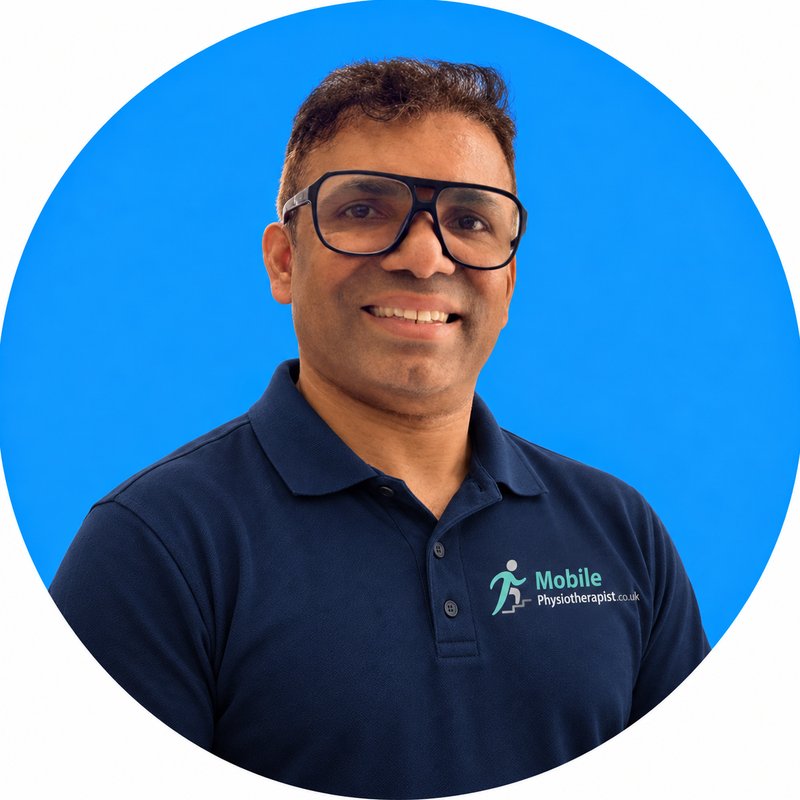
About Raj and the My Rehab at Home team
Rajan Kurian (HCPC PH113871) founded My Rehab at Home, a team of five physiotherapists who visit people at home across Newport, Cwmbran, Pontypool, Abergavenny, Monmouth, Chepstow, Ebbw Vale and across Gwent. Raj also works in the NHS as a First Contact Physiotherapist in GP surgeries and a Senior Physiotherapist in local hospitals. He works with Sophie, Fliss, Anna and Katie, whose interests include falls and balance, recovery after surgery, stroke and neurological conditions, vertigo and dizziness, jaw (TMJ) problems and rehabilitation after an amputation.
Read Raj's profile or call 01594 203707.
Please mention Mobile Physiotherapist.co.uk when you call.