Balance Exercises for Seniors: A Complete Home Programme
Published
Local Physiotherapist - Lizzie Thornton, Staffordshire Moorlands & Cheshire East
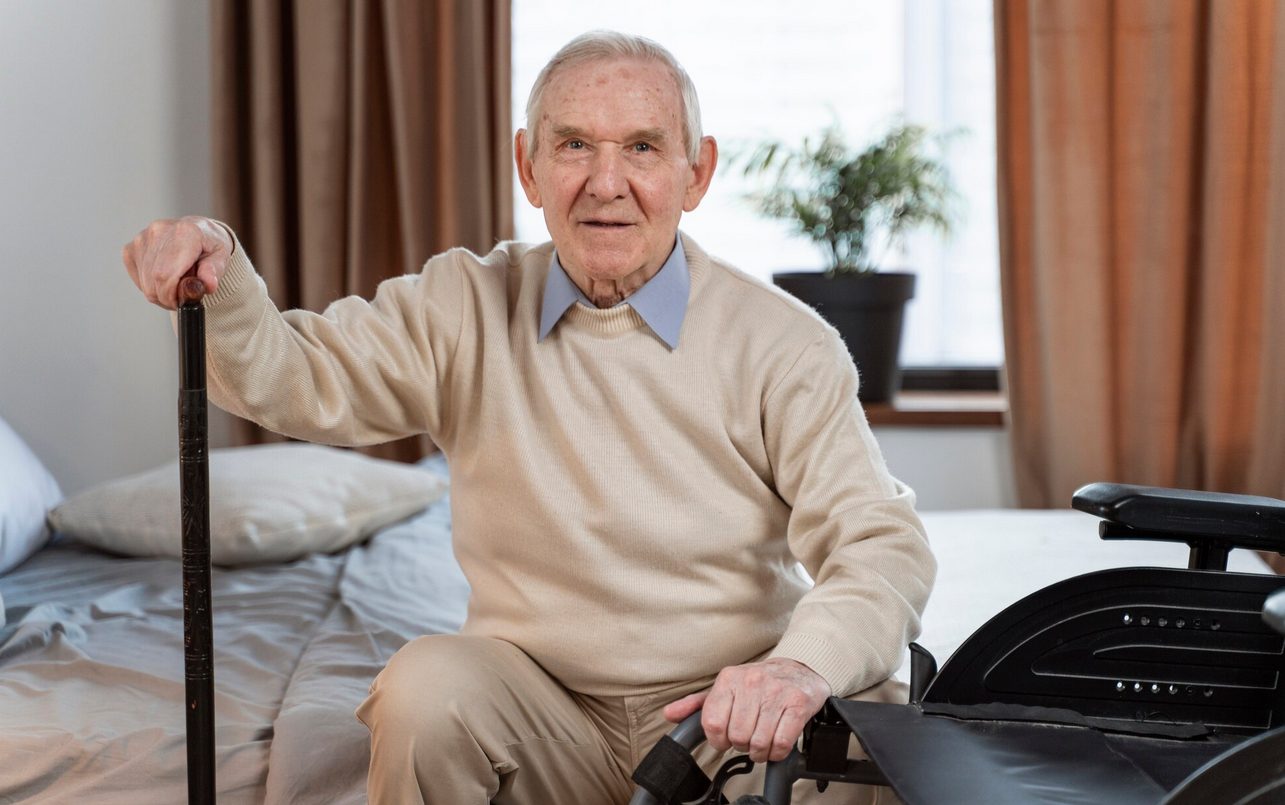
Balance naturally declines with age, but it does not have to. Regular balance exercises can improve your stability, boost confidence, and significantly reduce your risk of falling. This programme is designed to be safe and effective for older adults to do at home.
Why balance matters
Good balance is essential for:
- Walking safely without fear of falling
- Managing stairs confidently
- Reaching for items without losing stability
- Recovering if you stumble
- Maintaining independence
- Staying active and social
Research shows that balance training can reduce fall risk by up to 30%. Combined with professional falls prevention support, the benefits are even greater.
Safety first
Before you start:
- Always exercise near a sturdy surface (worktop, table, or wall) for support
- Wear supportive, non-slip footwear
- Clear the area of trip hazards
- Start with easier exercises and progress gradually
- Stop if you feel dizzy, unwell, or experience pain
- Consider having someone with you initially
Level 1: Beginner balance exercises
Start here if you feel unsteady or have not exercised recently.
1. Standing balance with support
Purpose: Build basic standing stability
How to do it:
- Stand at a worktop or sturdy table
- Hold on with both hands
- Stand tall with feet hip-width apart
- Hold for 30 seconds
- Repeat 3 times
Progression: Hold with one hand, then fingertips only.
2. Weight shifting side to side
Purpose: Improve lateral stability
How to do it:
- Stand at a worktop, holding with both hands
- Feet hip-width apart
- Shift your weight to your right foot
- Lift your left foot slightly off the ground
- Hold for 3 seconds
- Shift weight to your left foot
- Lift your right foot slightly
- Repeat 10 times each side
3. Heel raises
Purpose: Strengthen calves and improve ankle stability
How to do it:
- Stand at a worktop, holding with both hands
- Rise up onto your toes
- Hold for 3 seconds
- Lower slowly
- Repeat 10 times
Progression: Hold with one hand, then no hands.
4. Marching on the spot
Purpose: Dynamic balance and coordination
How to do it:
- Stand at a worktop for support
- Lift your right knee up
- Lower it down
- Lift your left knee up
- Continue alternating for 30 seconds
- Repeat 3 times
Progression: Lift knees higher, use less hand support.
Level 2: Intermediate balance exercises
Progress to this level when Level 1 exercises feel comfortable and you can do them with minimal hand support.
5. Single leg balance
Purpose: Core balance exercise for fall prevention
How to do it:
- Stand near a worktop for safety
- Lift your right foot slightly off the ground
- Balance on your left leg
- Hold for 10-30 seconds
- Repeat on the other leg
- Do 3 times each side
Progression: Start with hand support, progress to fingertips, then no support. Eventually try with eyes closed.
6. Tandem stance
Purpose: Narrow base balance (important for walking)
How to do it:
- Stand at a worktop
- Place one foot directly in front of the other (heel to toe)
- Hold for 10-30 seconds
- Repeat with the other foot in front
- Do 3 times each side
Tip: This is challenging. Start with hand support and progress gradually.
7. Heel-to-toe walking
Purpose: Dynamic balance and coordination
How to do it:
- Walk along a worktop or wall for support
- Place your heel directly in front of your toes with each step
- Walk 10 steps forward
- Turn around and walk back
- Repeat 3 times
Progression: Use less hand support, eventually walk without support.
8. Side stepping
Purpose: Lateral stability and hip strength
How to do it:
- Stand at a worktop
- Step sideways to the right
- Bring your left foot to meet it
- Take 10 steps to the right
- Then 10 steps back to the left
- Repeat 3 times
Level 3: Advanced balance exercises
These exercises are for people with good basic balance who want to challenge themselves further.
9. Single leg balance with arm movements
Purpose: Balance with distraction
How to do it:
- Balance on one leg (near support for safety)
- While balancing, raise your arms out to the sides
- Bring them back down
- Raise them above your head
- Bring them back down
- Repeat 5 times, then switch legs
10. Clock reaches
Purpose: Multi-directional balance
How to do it:
- Stand on your right leg
- Imagine you are standing in the center of a clock
- Reach your left leg forward (12 o'clock)
- Return to center
- Reach to the side (3 o'clock)
- Return to center
- Reach backwards (6 o'clock)
- Return to center
- Repeat 3 times, then switch legs
11. Single leg balance on a cushion
Purpose: Advanced proprioception training
How to do it:
- Place a firm cushion on the floor
- Stand on it with one foot (near support)
- Balance for 10-30 seconds
- Repeat on the other leg
- Do 3 times each side
Caution: This is challenging. Only attempt if you have good balance.
12. Turning in circles
Purpose: Rotational balance and dizziness tolerance
How to do it:
- Stand in an open space (near support)
- Turn slowly in a circle to the right
- Complete one full rotation
- Pause
- Turn slowly in a circle to the left
- Repeat 3 times each direction
Caution: Stop if you feel dizzy.
How often should you exercise?
Frequency
Aim for balance exercises 3-5 times per week for best results. Daily practice is even better.
Duration
Each session should last 15-20 minutes. Quality is more important than quantity.
Progression
Progress to the next level when exercises feel comfortable and you can complete them with good control. This typically takes 2-4 weeks per level.
Combining balance with strength training
Balance and strength work together. Include these strength exercises alongside your balance work:
- Sit-to-stand: 10 repetitions, 3 times daily
- Calf raises: 10 repetitions, twice daily
- Hip abduction: 10 repetitions each leg, twice daily
- Mini squats: 10 repetitions, twice daily
For a complete programme, consider professional falls prevention physiotherapy that combines balance, strength, and functional training.
Making exercises functional
Apply your balance skills to daily activities:
- Practice standing on one leg while brushing your teeth
- Do heel raises while waiting for the kettle to boil
- Practice tandem stance while washing up
- Walk heel-to-toe along a line on your floor
Tracking your progress
Keep a simple record of:
- Which exercises you can do
- How long you can balance on each leg
- Whether you need hand support
- How confident you feel
Review monthly to see your improvement. This boosts motivation and helps identify areas needing more work.
Common mistakes to avoid
- Progressing too quickly: Master each level before moving on
- Exercising without nearby support: Always have something to grab if needed
- Holding your breath: Breathe normally throughout
- Looking down: Keep your head up and look forward
- Inconsistency: Regular practice is key
When to seek professional help
Consider professional assessment if:
- You have fallen in the past year
- You feel very unsteady
- You experience dizziness with balance exercises
- You are not sure if exercises are safe for you
- You want a personalized programme
- You are not making progress
The role of professional physiotherapy
Falls prevention physiotherapy provides:
- Assessment of your specific balance deficits
- Personalized exercise programme
- Progression guidance
- Hands-on support and correction
- Home safety assessment
- Ongoing monitoring and motivation
The bottom line
Balance exercises are one of the most effective ways to prevent falls and maintain independence. The key principles are:
- Start at an appropriate level for your ability
- Exercise near support for safety
- Practice regularly (3-5 times per week)
- Progress gradually as you improve
- Combine balance with strength training
- Be patient — improvement takes weeks, not days
- Make it a lifelong habit
Remember, it is never too late to improve your balance. Even people in their 80s and 90s can make significant gains with regular practice.
Want personalized balance training?
Our falls prevention service provides tailored balance and strength programmes delivered in your home. We assess your specific needs, teach you exercises safely, and support you to build confidence and reduce your fall risk.

About Lizzie Thornton
Lizzie Thornton is a specialist community physiotherapist with over 15 years of experience in falls prevention and elderly care. She is HCPC registered and a member of the Chartered Society of Physiotherapy. Lizzie has designed and delivered hundreds of balance training programmes through home physiotherapy visits across Staffordshire Moorlands and Cheshire East.