Back and Neck Pain Relief in South Yorkshire
Published • Updated
Local Physiotherapist — Hamoodi Othman, South Yorkshire
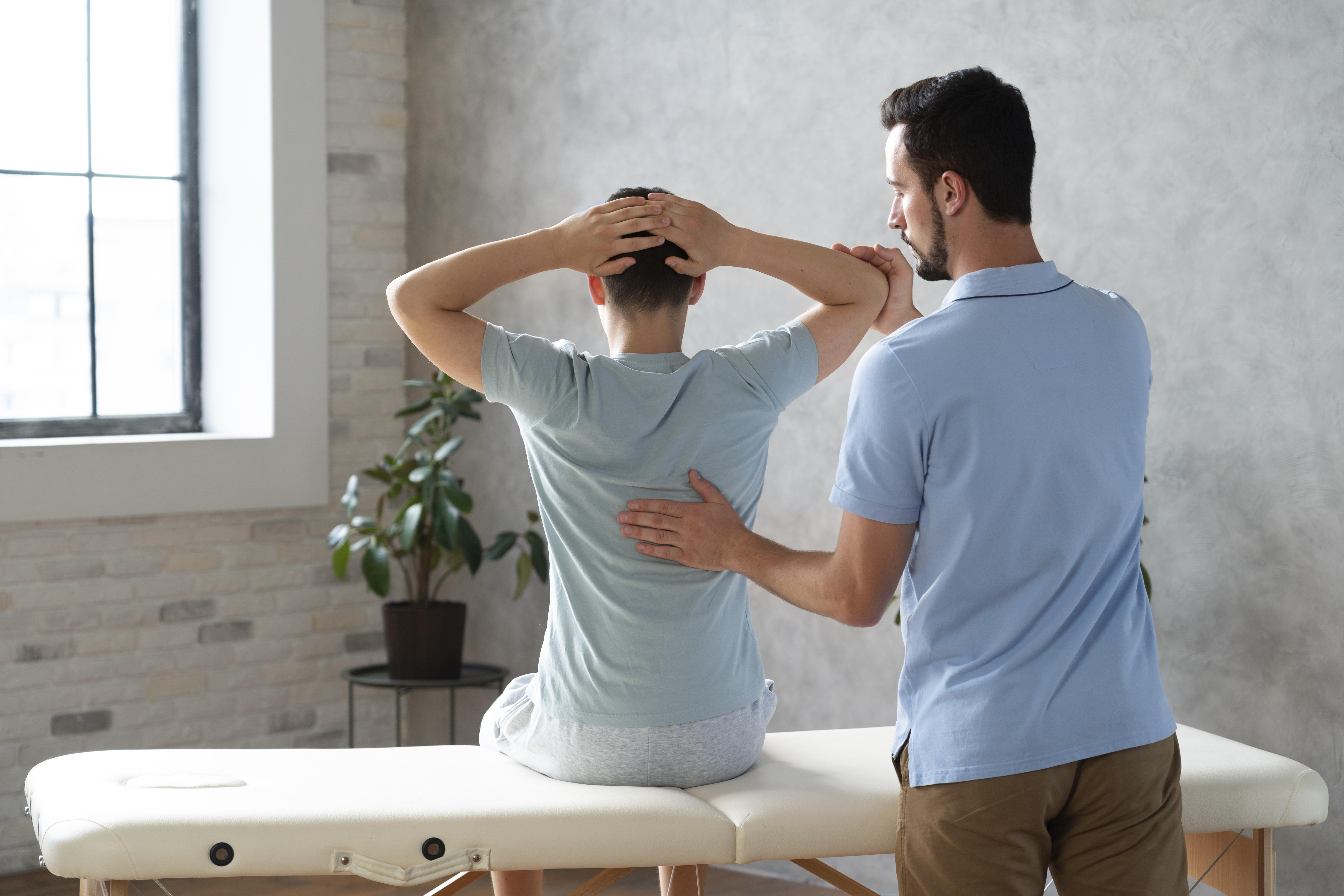
Back and neck pain can be frightening, especially when it comes on suddenly. The good news is that most of it is not caused by serious damage, and most people get better. This guide explains what usually causes it, what helps at home, and the warning signs that mean you should get medical help quickly.
It is written for people across South Yorkshire. It is general advice, not a diagnosis. If you are worried, speak to your GP, NHS 111 or a physiotherapist.
What usually causes back and neck pain?
Often there is no single injury anyone can point to. Doctors call this “non-specific” pain. That sounds vague, but it is reassuring. It means nothing serious has been found, and the pain is coming from sore, sensitive muscles and joints around the spine.
Common triggers include:
- Doing more than usual, such as a weekend of gardening or decorating.
- Staying still for too long, in the car, at a desk or in one chair.
- Awkward or repeated lifting, common in warehouse, care and building work.
- Stress, worry and poor sleep. These do not mean the pain is “in your head”, but they can make the body more sensitive to it.
- Getting older. Discs and joints change with age, but many people with these changes on a scan have no pain at all.
Neck pain often builds up slowly from looking down at a phone, laptop or book. It can also follow a jolt, such as a car accident.
What helps at home in the first few weeks
Most new episodes of back or neck pain ease a great deal within a few weeks. These simple steps help most people:
- Keep moving gently. Short rests are fine, but long spells in bed tend to make you stiffer. Aim for little and often, such as a short walk every hour or two.
- Carry on with normal life as far as you can, even if you do things more slowly for a while.
- Try heat. A warm bath or a wrapped hot water bottle can ease tight muscles. Never put heat straight on the skin.
- Ask about pain relief. A pharmacist or GP can advise what is safe for you, especially if you take other medicines.
- Pace yourself. Hoover one room, then sit down for a cup of tea.
Some pain when you move is normal and does not mean you are doing harm. If something makes the pain much worse for hours afterwards, do a little less next time, then build up again.
Sleeping with back or neck pain
- On your side: a pillow between your knees keeps your hips and lower back level.
- On your back: a pillow under your knees takes strain off the lower back.
- For neck pain: use enough pillow to keep your head level with your spine. One firm pillow often works better than a tall stack.
- Getting out of bed: roll onto your side, bend your knees, then push up with your arms as your legs go over the edge.
There is no single best mattress. Choose what you find comfortable.
Desk work, driving and screens
You do not need perfect posture. What matters most is not staying in one position for too long.
- Set the top of your screen at about eye level. Raise a laptop and use a separate keyboard.
- Keep your feet flat and your lower back supported. A rolled towel can help.
- Get up every 30 to 45 minutes, even just to fill a glass of water.
- On longer drives, such as up the M1 or A1(M), stop for a short walk every hour or so if you can.
Lifting, carrying and everyday jobs
Bending and lifting are not dangerous in themselves. Your back is strong and built to move. But while it is sore, make jobs easier:
- Keep the load close and avoid twisting while you hold something heavy.
- Split shopping into two lighter bags, one in each hand.
- Kneel or sit on a low stool for weeding.
As the pain settles, build back up to normal lifting. Avoiding it for months can leave you weaker.
A note on sciatica
Sometimes back pain comes with pain that travels down one leg, often past the knee, with pins and needles or numbness. This is usually called sciatica. It is common and most cases settle over a few weeks to a few months, but it needs a slightly different approach. Our guide to sciatica treatment at home in Sheffield and South Yorkshire explains it in more detail.
Warning signs that need urgent medical help
Serious causes of back and neck pain are rare. But it is important to know the signs, because some need treatment the same day.
Call 999 or go to A&E straight away if you have back pain with:
- Numbness or tingling around your bottom, genitals or inner thighs (the area you would sit on in a saddle).
- New difficulty passing urine, or losing control of your bladder or bowels.
- Weakness, numbness or pins and needles in both legs.
- Changes in sexual function that came on with the back pain.
These can be signs of cauda equina syndrome, where the nerves at the bottom of the spine are squeezed. It is an emergency. Do not wait for a physiotherapy or routine GP appointment.
Also call 999 if neck pain comes on suddenly with a severe headache, dizziness, double vision, slurred speech, trouble swallowing or weakness down one side.
Speak to your GP urgently, or call NHS 111, if you have back or neck pain with:
- Weight loss you cannot explain.
- A high temperature, or feeling hot and shivery.
- Pain that started after a fall, a car accident or another injury.
- Weakness in an arm or leg that is getting worse, or clumsy hands.
- Constant, severe pain that is worse at night and does not ease with rest.
- A past history of cancer.
When physiotherapy helps
It is worth getting advice if the pain is not easing after two or three weeks, keeps coming back, or is stopping you working, sleeping or getting out. It also helps if you feel scared to move. Physiotherapy is mostly the right exercises and clear advice, with hands-on treatment where it helps. The aim is to get you moving with confidence and give you a plan for any flare-ups.
What a home assessment involves
When you are in pain, the car journey and the waiting room can be the hardest part. A home visit removes that. Hamoodi Othman, a Senior Physiotherapist based in Sheffield, will usually:
- Listen first: how the pain started, what makes it better or worse, and what you want to get back to.
- Check for warning signs, and tell you who to contact if anything needs a doctor.
- Watch how you move: bending, turning, walking, and getting up from your own chair and bed.
- Test your nerves where needed: strength, feeling and reflexes in your arms or legs.
- Look at your set-up: chair, desk, bed and pillow, because this is where your pain happens.
- Agree a plan: a few simple exercises, written down, and clear advice for now.
Many people need only a few sessions, with exercises between them. Longer-standing pain may need a longer plan, and Hamoodi will be honest about which is likely. See his prices.
Hamoodi is HCPC registered and has worked in the NHS at Sheffield Teaching Hospitals, Barnsley Hospital and Rotherham Doncaster & South Humber NHS. He also speaks Arabic. He sees adults aged 18 and over, and his service is not for emergencies.
Home visits across South Yorkshire
- Sheffield, Chapeltown and Stocksbridge
- Barnsley, Penistone and Wombwell
- Rotherham, Wickersley and Maltby
- Doncaster, Thorne and Mexborough
Frequently asked questions
Should I rest in bed when my back hurts?
Short rests are fine when pain is bad, but long spells in bed usually make things stiffer. For most people, keeping gently active helps them recover.
Do I need a scan for back or neck pain?
Usually not. Most back and neck pain can be assessed without a scan. A scan may be needed if there are warning signs or the pain is not improving as expected.
Do I need a GP referral to see Hamoodi?
No. You can call Hamoodi directly for a free phone enquiry. He will tell you if he thinks you should see your GP first.
When should I call 999 about back pain?
Call 999 or go to A&E straight away if back pain comes with numbness around your bottom or genitals, new problems with your bladder or bowels, or weakness in both legs. These can be signs of cauda equina syndrome.
How to book
Start with a free phone enquiry of 5 to 10 minutes to talk through your pain and check a home visit is right for you.
- Call: 07821 402 634
- Please mention Mobile Physiotherapist.co.uk when you call
- Email: moody-o@hotmail.com
View Hamoodi's full profile View pricing
About Hamoodi Othman
Hamoodi Othman is a Senior Physiotherapist specialising in orthopaedic, post-operative, musculoskeletal and trauma rehabilitation. Based in Sheffield, he provides home visit physiotherapy across South Yorkshire. He holds an MSc in Physiotherapy and a BSc in Sports Therapy, and is HCPC registered (PH131379).