Recovering From a Stroke at Home on the West Sussex Coast
Published
Local Physiotherapist — Becky Eaton, West Sussex coast
Coming home after a stroke is a big step. The ward had a routine and people on hand. At home, everyday things like getting out of bed, using the stairs or making a cup of tea can suddenly feel much harder. The right help, in your own home, makes a real difference to how much you get back.
Recovery does not stop when you leave hospital
Many people make the fastest progress in the first few months after a stroke, but improvement can carry on for years. Movement, balance and confidence can all keep getting better with the right practice. It is never too late to ask for help.
What does stroke physiotherapy work on?
- Walking and balance, indoors first, then outside, so you feel safe on your own
- Getting up and moving about: out of bed, out of a chair, on and off the toilet, in and out of the car
- The weaker arm and hand, so they can join in with everyday tasks again
- Stiffness and tight muscles (spasticity), which can make movement harder and cause pain
- Tiredness, which is very common after a stroke, by pacing activity through the day
Why at home?
Practising in your own home means practising the things you actually need to do: your own stairs, your own bathroom, the step down to the garden. It also means no tiring journey before the session even starts. Family members and carers can join in, so they know how to help safely between visits.
Specialist help makes a difference
Stroke rehabilitation is a specialist area. A neurological physiotherapist understands how the brain relearns movement, and can spot small changes that help you move more easily. Approaches such as Bobath, careful exercise, and equipment like splints or electrical stimulation can all play a part, chosen to suit you.
What families and carers can do
- Encourage the person to do as much as they safely can for themselves, even if it is slower
- Keep up the exercises between visits, little and often
- Make the home safe: clear walkways, good lighting, rails where they help
- Look after yourself too. Caring is tiring, and support is available
When to get help quickly
Call 999 straight away if you notice new signs of a stroke: a face drooping, an arm that cannot be lifted, or speech that becomes slurred. Do not wait to see if it passes.
How home physiotherapy helps
NHS stroke teams often visit for a few weeks after discharge. Private home physiotherapy can start sooner, add more practice, or carry on once that support ends, so you keep improving rather than levelling off.
Home visits along the West Sussex coast
Stroke and neurological rehabilitation is available at home in Chichester, Bognor Regis, Littlehampton, Rustington, Arundel, Worthing, Lancing, Shoreham-by-Sea and along the West Sussex coast.
Book a home visit on the West Sussex coast
A free phone call is the easiest place to start — talk through what is going on and check whether home physiotherapy is the right fit. No GP referral is needed.
Please mention Mobile Physiotherapist.co.uk
About Becky Eaton
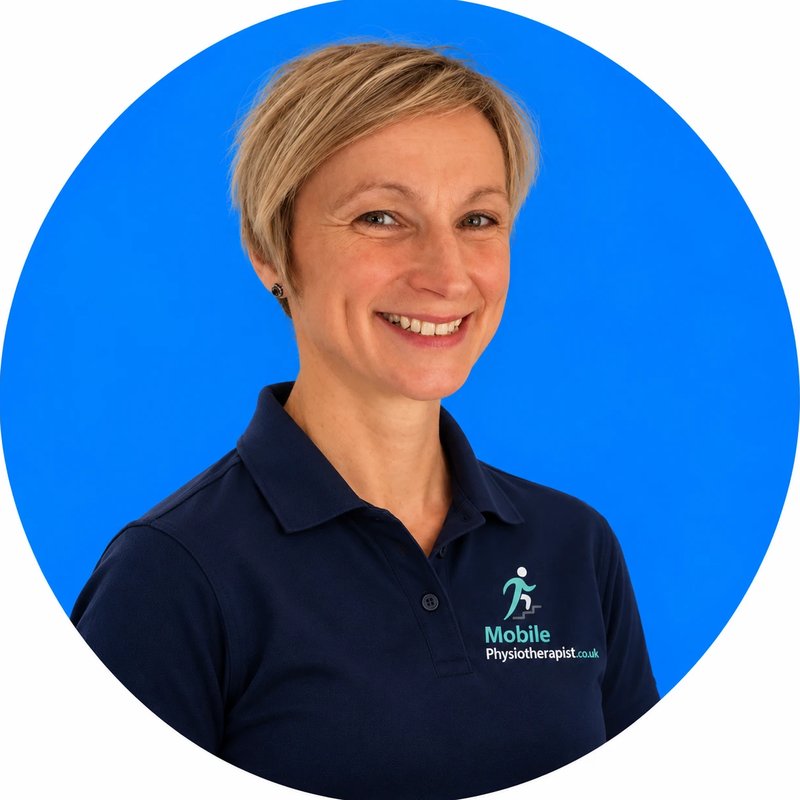
Becky Eaton is a specialist neurological physiotherapist, HCPC registered (PH45318) and a member of the Chartered Society of Physiotherapy. She has 30 years' experience, including the National Hospital for Neurology and Neurosurgery and the Sussex Rehabilitation Centre, runs her own practice, Becky Eaton Associates, and provides home visit physiotherapy in Chichester, Bognor Regis, Littlehampton, Rustington, Arundel, Worthing, Lancing, Shoreham-by-Sea and along the West Sussex coast.
Read Becky's profile or call 07905 151916.
Please mention Mobile Physiotherapist.co.uk when you call.