Recovering From a Stroke at Home in Burnley and East Lancashire
Published
Local Physiotherapist — Claire Ingham, East Lancashire
Coming home after a stroke is a big step, and often a daunting one. In hospital there were people on hand. At home, walking to the kitchen, managing the stairs or using an arm that will not do what it used to can feel very different. The good news is that recovery often carries on for months after a stroke, and home is a good place for it.
Recovery does not stop when you leave hospital
The brain can relearn and reorganise after a stroke, and that is helped by practice: doing the movements you want to get back, many times, in a way that is just hard enough. The first months are often when progress is quickest, but people keep improving long after that.
NHS community therapy after discharge is usually for a set number of weeks. Many people want more help than that, or want to carry on once those sessions end. Private home physiotherapy can fill that gap.
Why practise at home?
- It is real: your own stairs, your own bed, your own chair and your own front step
- No journeys: no lifts or taxis while you cannot drive, and no tiring trip before the session even starts
- Family can join in: relatives and carers learn how to help, and how to practise between visits
- Goals that matter: making a cup of tea, getting to the bus stop or walking the dog
What neurological physiotherapy involves
A specialist neurological physiotherapist looks closely at how you move: balance, strength, muscle tone and stiffness, how you take weight through each leg, and how your arm and hand are working. Treatment is a mix of hands-on work and practice of everyday tasks.
Claire Ingham is trained in the Bobath concept, including advanced and upper limb courses, an approach that focuses on how you move and how to make everyday movement easier and more efficient. She spent three years at the Manchester Neurotherapy Centre working with adults after a stroke, a brain injury or a spinal cord injury.
Help with walking and the arm
Some people benefit from extra help alongside exercise. Let's Go Physio offers 2D gait analysis to look closely at how you walk, orthotics such as an ankle splint to help with a dropping foot, and FES (functional electrical stimulation), which uses small electrical pulses to help muscles work. Whether any of these would help you is something to talk through at your assessment.
What to expect
The first visit is an assessment and a conversation about what you want to get back to. You then get a plan and exercises you can do between visits, which change as you improve. No GP referral is needed, and Let's Go Physio will give you a price for your visits before you book.
When to call 999
If you, or someone you are with, has new signs of a stroke, such as a face drooping on one side, an arm that cannot be lifted, or slurred speech, call 999 straight away. Do not wait for a physiotherapy visit.
Home visits across East Lancashire
Stroke rehabilitation is available at home in Blackburn, Burnley, Clitheroe, Accrington, Nelson, Colne and across East Lancashire.
Book a home visit in East Lancashire
Call or email Let's Go Physio to talk through what is going on and get a price for your visits. No GP referral is needed.
Please mention Mobile Physiotherapist.co.uk
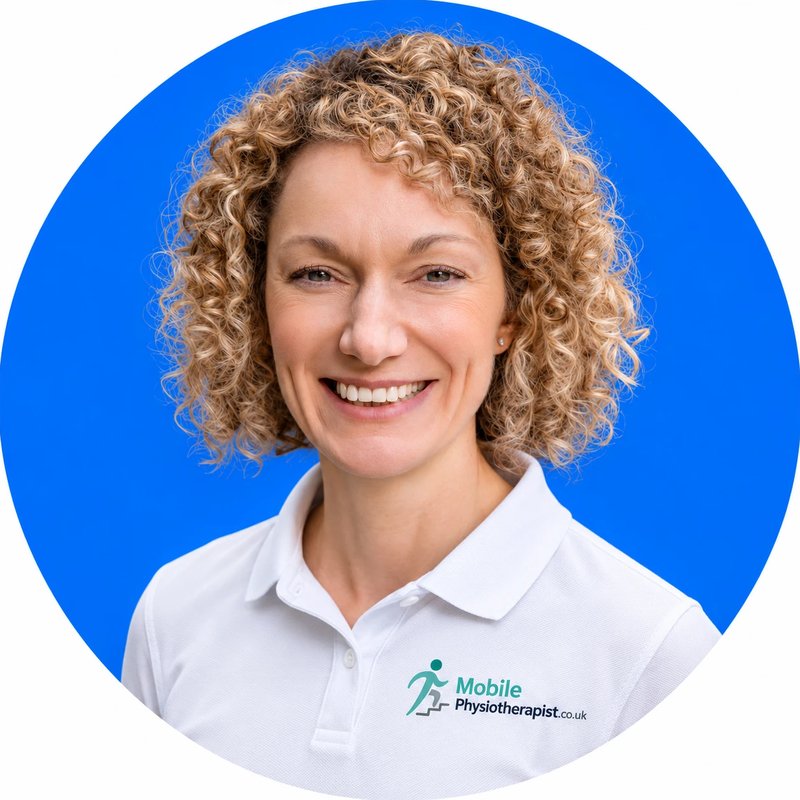
About Claire Ingham
Claire Ingham is an HCPC registered chartered physiotherapist (PH68405) and the director of Let's Go Physio in Nelson. A specialist in neurological physiotherapy with more than 20 years of experience, she and her team visit babies, children and adults at home in Blackburn, Burnley, Clitheroe, Accrington, Nelson, Colne and across East Lancashire.
Read Claire's profile or call 01282 222720.
Please mention Mobile Physiotherapist.co.uk when you call.