Recovering From a Hip or Knee Replacement at Home in Mid Glamorgan
Published
Local Physiotherapist — Louise Spence, Mid Glamorgan
Most people are home within a few days of a hip or knee replacement. That is good news, but it also means much of the hard work of recovery happens at home, often with a sheet of exercises and a lot of questions. The right help in those first weeks makes a real difference to how well the new joint works.
The first few weeks
Expect the joint to be sore, swollen and stiff, and expect to tire easily. That is normal. Most people use a frame or crutches at first, then move on to sticks and then to walking without them. The speed of that varies a great deal, and comparing yourself with a neighbour who had the same operation rarely helps.
Pain relief matters. Taking it as the hospital advised makes the exercises possible, and the exercises are what bring the movement and strength back.
The exercises that matter
- Bending and straightening, especially after a knee replacement, where getting the knee fully straight and bending it well early on shapes how it works for years
- Strengthening the muscles around the joint, the thigh and buttock muscles in particular, which weaken quickly after surgery
- Walking a little more each day, indoors and then outside
- Standing balance, so you feel steady at the sink, the kettle and the front door
Little and often works better than one long session. A home physiotherapist checks you are doing each exercise properly and makes them harder as you improve, so you keep moving forward.
Stairs, steps and valley streets
Many homes in the valleys have steep stairs, steps up to the front door and hills straight outside. The rule for stairs is simple: the good leg goes up first, and the operated leg goes down first, with the stick or crutch moving with it. Practising on your own stairs and your own front steps, with someone showing you, takes the worry out of it.
Everyday things
A higher chair, a raised toilet seat and a perching stool in the kitchen can make the first weeks easier. Ask your surgeon or the hospital team about driving, sleeping positions and any movements to avoid, as advice differs between operations and surgeons.
When to get help quickly
Contact the hospital or your GP straight away if the wound becomes red, hot or starts to leak, or if you feel feverish. Call 999 if you have new pain or swelling in your calf together with chest pain or sudden breathlessness, as these can be signs of a blood clot.
How home physiotherapy helps
The NHS usually gives a short course of physiotherapy after a joint replacement. Private home visits can start sooner, add more practice, or carry on once that course ends, so you keep improving rather than levelling off. You do not need to travel to a clinic while you are still on crutches, and the plan is built around your own home.
Home visits across Mid Glamorgan
Hip and knee replacement rehabilitation is available at home in Bridgend, Porthcawl, Llantrisant, Pontypridd, Tonypandy, Aberdare, Merthyr Tydfil, Caerphilly and across Mid Glamorgan.
Book a home visit in Mid Glamorgan
A free phone call is the easiest place to start — talk through what is going on and check whether home physiotherapy is the right fit. No GP referral is needed.
Please mention Mobile Physiotherapist.co.uk
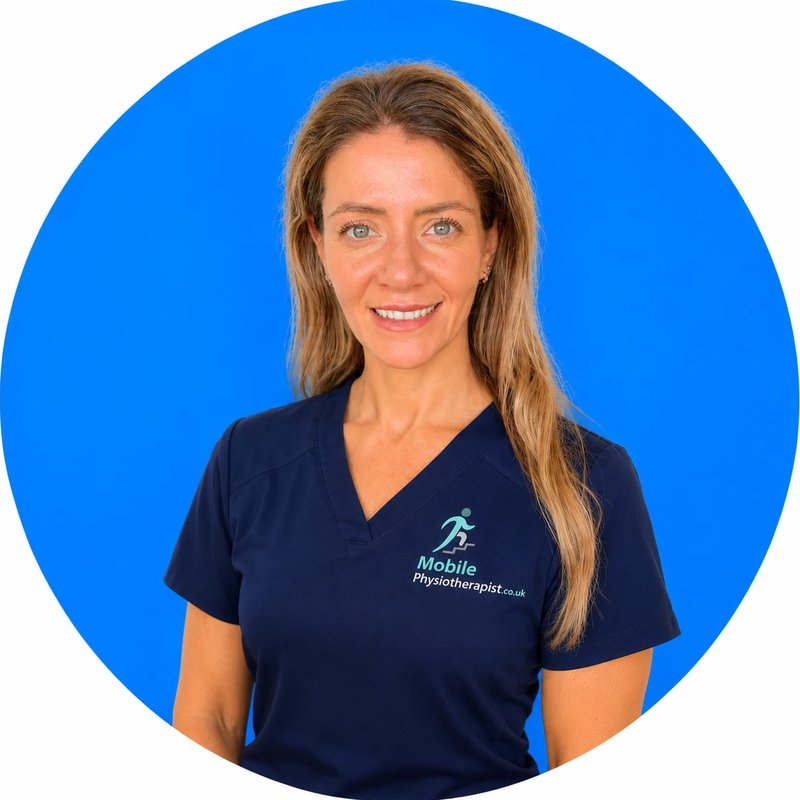
About Louise Spence
Louise Spence is an HCPC registered physiotherapist (PH79985), a member of the Chartered Society of Physiotherapy and the founder of Vale Home Physio. She has 20 years' experience in NHS and private hospitals, community rehabilitation and elite sport, and provides home visit physiotherapy in Bridgend, Porthcawl, Llantrisant, Pontypridd, Tonypandy, Aberdare, Merthyr Tydfil, Caerphilly and across Mid Glamorgan.
Read Louise's profile or call 07891 187237.
Please mention Mobile Physiotherapist.co.uk when you call.