Recovering at Home After a Hip or Knee Replacement in Exeter and East Devon
Published
Local Physiotherapist — Katie Dutson, Devon
A new hip or knee can give you years of life with less pain, but the operation is only half the story. The work you put in over the following weeks makes a big difference to how well the joint moves and how soon you are back to normal. Much of that work happens at home, which is why home physiotherapy fits so well.
The first few weeks
Most people go home within a few days of the operation, walking with a frame or crutches. The first weeks are about getting the joint moving, keeping the swelling down and building up how far you can walk.
It is normal to feel tired, stiff and sore at first. Little and often is the rule: short walks around the house and your exercises several times a day are better than one long effort.
Why exercises matter so much
After a knee replacement, getting the knee to bend and straighten fully is one of the main goals, and it is much easier in the early weeks than later on. After a hip replacement, the focus is on strength around the hip so that you walk evenly and feel steady.
The exercises from the hospital are a good start. A physiotherapist checks that you are doing them well, moves you on as you get stronger, and spots early on if something is not going to plan.
What a home visit adds
- Practice where it counts: your own stairs, getting in and out of your own bed, chair, bath or car
- Walking aids: when to move from a frame to crutches, from two crutches to one, and then to none
- No journeys: no lifts or taxis while you cannot drive
- Confidence: a plan for getting back to the things you had the operation for, such as walks, gardening or the grandchildren
Experience with joints and bones
Katie Dutson has spent much of her career in trauma and orthopaedics, including as a clinical specialist at the Nuffield Orthopaedic Hospital in Oxford and as lead trauma and orthopaedic physiotherapist in Winchester. Her co-founder at East Devon Home Physio, Louise Clover, most recently helped people recover from hip, knee and shoulder surgery at the Exeter Nuffield Hospital.
What to expect
The first assessment at home takes about an hour, with a plan made with you. Follow-up visits are usually 45 minutes. No GP referral is needed, so you can arrange visits for when you get home from hospital.
When to call your GP or the hospital
Get medical advice straight away if the wound becomes red, hot or leaks, if you have a fever, if your calf becomes painful or swollen, or if you suddenly feel short of breath. These are not things to wait for a physiotherapy visit about.
Home visits across Exeter and East Devon
Physiotherapy after a hip or knee replacement is available at home in Exeter, Exmouth, Topsham, Sidmouth, Honiton, Crediton, Tiverton, Cullompton and across Exeter, East and Mid Devon.
Book a home visit in Exeter, East or Mid Devon
A free phone call is the easiest place to start — talk through what is going on and check whether home physiotherapy is the right fit. No GP referral is needed.
Please mention Mobile Physiotherapist.co.uk
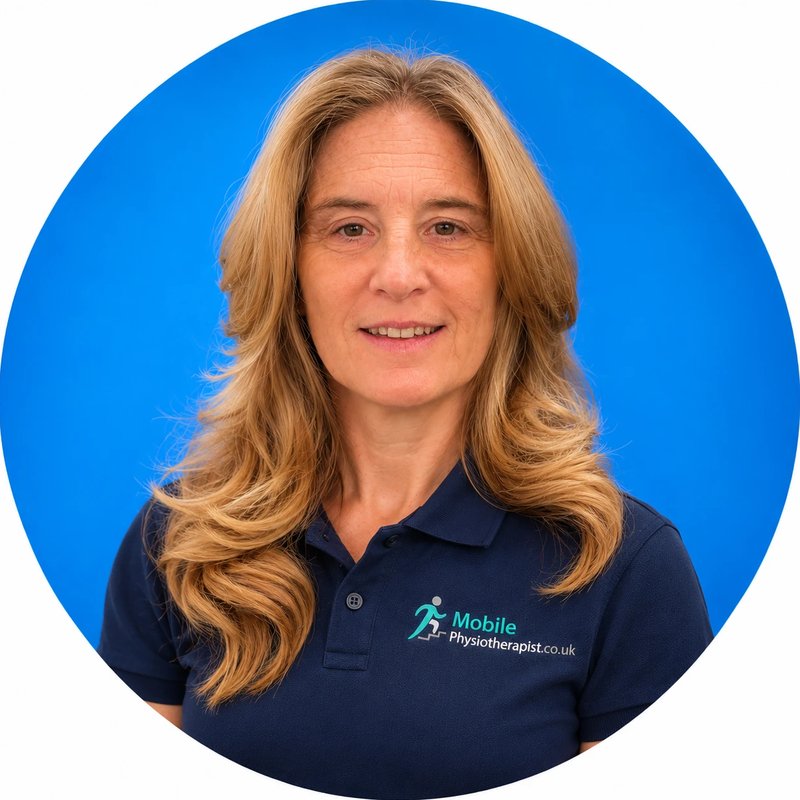
About Katie Dutson
Katie Dutson is an HCPC registered chartered physiotherapist (PH48151) who has worked since 1994, much of it in trauma and orthopaedics. In 2020 she set up East Devon Home Physio with Louise Clover, and their team provides home visit physiotherapy in Exeter, Exmouth, Topsham, Sidmouth, Honiton, Crediton, Tiverton, Cullompton and across Exeter, East and Mid Devon.
Read Katie's profile or call 01392 311336.
Please mention Mobile Physiotherapist.co.uk when you call.