Staying Steady at Home: Falls Prevention in Exeter and East Devon
Published
Local Physiotherapist — Katie Dutson, Devon
About one in three people over 65 has a fall each year. Many falls cause no serious injury, but they knock confidence. People go out less, move less and get weaker, which makes another fall more likely. The right exercise can break that circle, and it can all be done at home.
Why do falls happen?
There is rarely just one reason. Common ones are:
- Weaker leg muscles, so getting up from a chair or climbing stairs is harder
- Poorer balance, especially when turning or reaching
- Some medicines, or several medicines together, that cause dizziness
- Problems with eyesight or feet
- Things around the home: rugs, poor lighting, clutter and steep or unlit stairs
- Getting weaker after an illness or a stay in hospital
Exercise that really reduces falls
The research is clear that exercise which challenges your balance and builds leg strength, done regularly over a few months, cuts the number of falls. Gentle walking on its own is good for you, but it is not enough to make you steadier.
The exercises are simple: standing up from a chair without using your hands, standing on one leg while holding the worktop, walking heel to toe, and rising up onto your toes. The skill is in choosing the right level, so it is hard enough to help but safe enough to do alone.
What a home falls check involves
You: simple tests such as how many times you can stand up from a chair in thirty seconds, how long you can balance with one foot in front of the other, and how you walk and turn.
Your home: the stairs and rails, lighting, rugs, the bathroom, the height of your bed and chair, and the route to the toilet at night.
Your goals: what you have stopped doing and would like to do again, such as getting to the shops, along the seafront or to the bus stop on your own.
You are then given a short routine that gets harder as you get stronger. The first assessment takes about an hour, and follow-up visits are usually 45 minutes.
If you have already fallen
Tell your GP, even if you were not hurt. If you could not get up by yourself, practising how to get up from the floor safely is an important part of the plan. The NHS has falls services in Devon, and your GP can refer you. Private home physiotherapy can help if you would rather not wait, or if you want more visits.
Home visits across Exeter and East Devon
Falls checks and strength and balance programmes are available at home, and in care homes, in Exeter, Exmouth, Topsham, Sidmouth, Honiton, Crediton, Tiverton, Cullompton and across Exeter, East and Mid Devon.
Book a home visit in Exeter, East or Mid Devon
A free phone call is the easiest place to start — talk through what is going on and check whether home physiotherapy is the right fit. No GP referral is needed.
Please mention Mobile Physiotherapist.co.uk
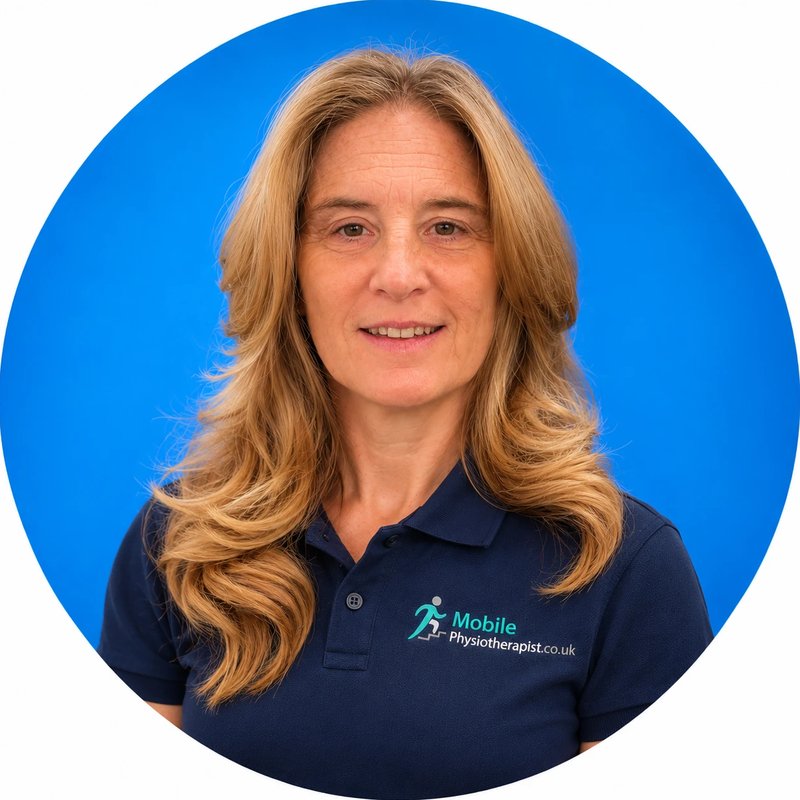
About Katie Dutson
Katie Dutson is an HCPC registered chartered physiotherapist (PH48151) who has worked since 1994, much of it in trauma and orthopaedics. In 2020 she set up East Devon Home Physio with Louise Clover, and their team provides home visit physiotherapy in Exeter, Exmouth, Topsham, Sidmouth, Honiton, Crediton, Tiverton, Cullompton and across Exeter, East and Mid Devon.
Read Katie's profile or call 01392 311336.
Please mention Mobile Physiotherapist.co.uk when you call.